

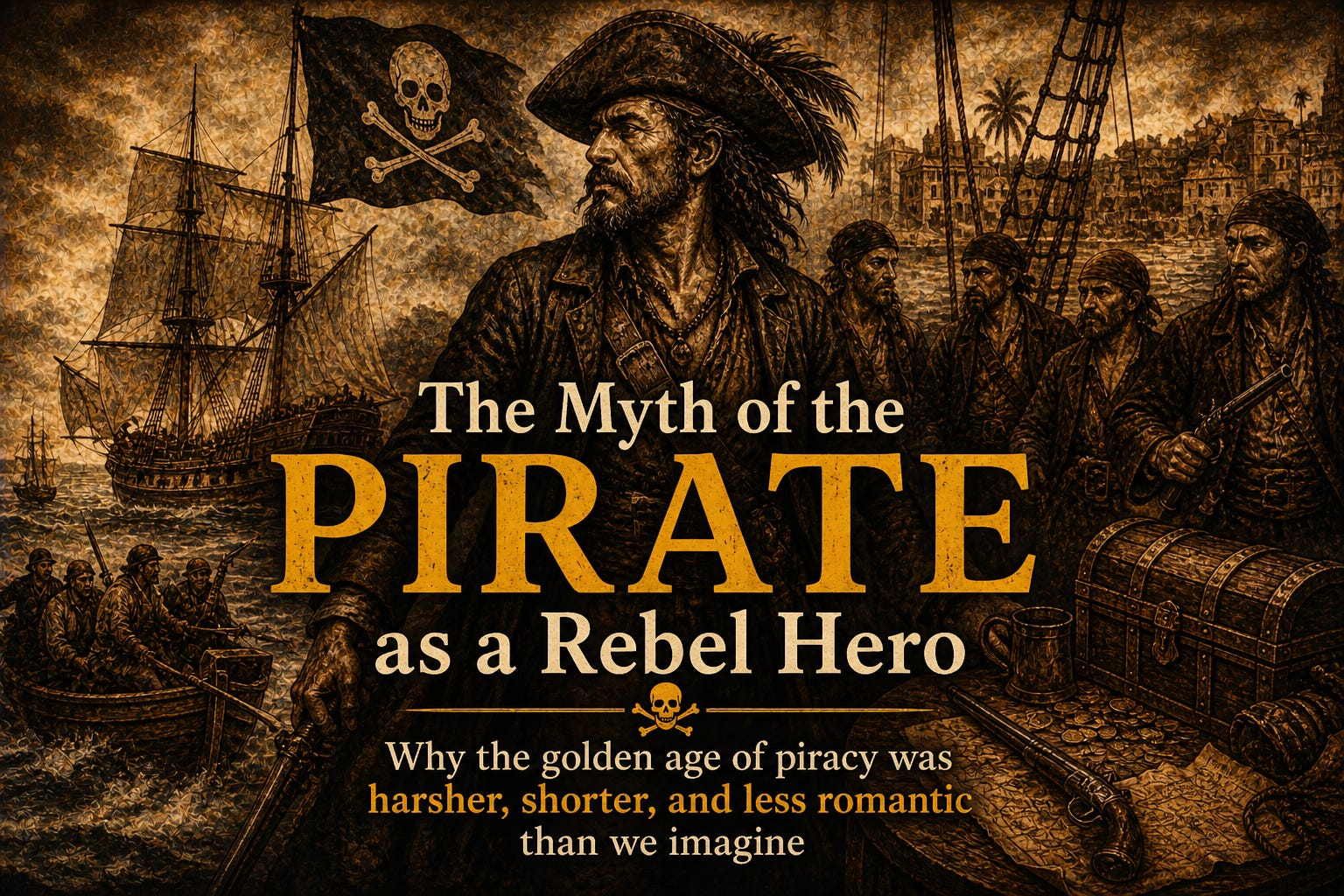
If you asked most people to picture a pirate, the image would come easily. A swaggering figure on the deck of a ship, half rogue, half hero, living outside the rules, chasing freedom on the open sea.
It is a character shaped by film, fiction, and folklore. A charming outlaw who rejects authority and carves his own path.
The reality was far less appealing.
Pirates were not romantic rebels. They were products of a harsh maritime world, operating within systems of violence, survival, and profit.
Life before piracy
To understand pirates, it helps to look at where they came from.
Many were sailors, men who had served in merchant fleets or naval vessels during the late seventeenth and early eighteenth centuries. Life at sea was brutal. Pay was low or irregular. Discipline was severe. Conditions were harsh and often dangerous.
War made things worse and better at the same time.
Privateering, state sanctioned piracy, allowed sailors to attack enemy ships and claim a share of the profits. It offered opportunity, but only within strict limits. When wars ended, many of these sailors found themselves without work, skills tied to the sea, and few alternatives.
Piracy was not a romantic choice. It was often a continuation of a life shaped by hardship and limited options.
Order within disorder
One of the most persistent myths about pirates is that they lived in complete freedom, rejecting all forms of authority.
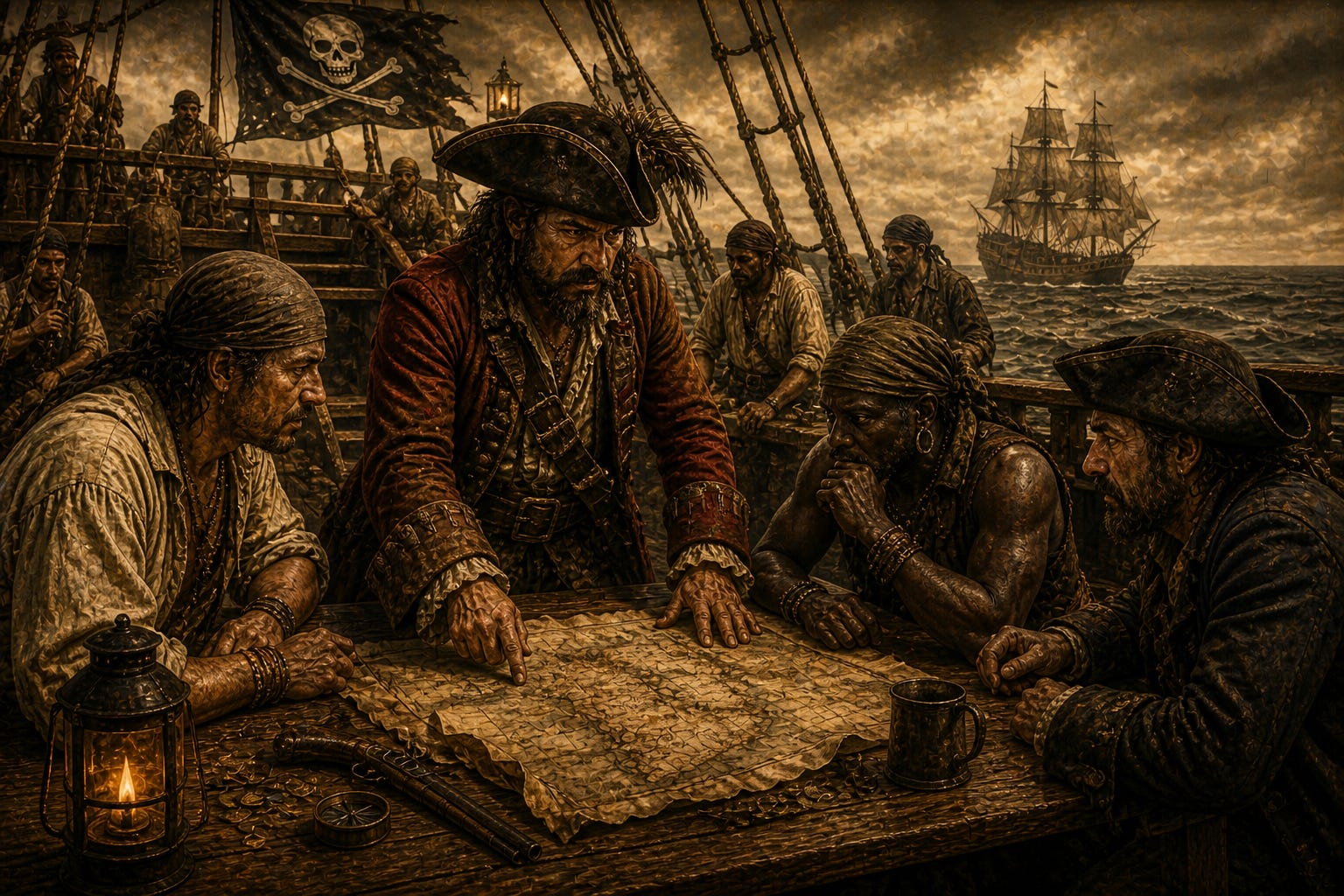
In reality, pirate crews developed their own systems of organisation.
Many ships operated with a degree of internal democracy. Captains could be elected. Decisions were sometimes made collectively. Shares of plunder were distributed according to agreed rules.
This structure has often been presented as evidence of a more equal, even progressive, society at sea.
It was not quite that simple.
These systems existed because they were practical. Discipline and cooperation were necessary for survival. A ship at sea could not function without order. Rules were enforced, sometimes harshly. Punishments could be severe.
Pirate “freedom” operated within strict boundaries.
Violence at the core
The romantic image of piracy often softens or ignores its most central feature.
Violence.
Pirates attacked ships, seized cargo, and, when resisted, used force. The threat of brutality was part of their strategy. Fear made targets more likely to surrender without a fight.
Executions, torture, and intimidation were not uncommon. Life could be short, not only for those they attacked, but for pirates themselves. Battles at sea were unpredictable. Injuries were frequent. Disease was a constant risk.
This was not a world of carefree adventure. It was a dangerous and often desperate existence.
Not outside the system
Another appealing idea is that pirates stood apart from the systems of empire and trade that dominated the early modern world.
In truth, they were closely connected to it.
Pirates relied on the very trade routes they attacked. They sold stolen goods through networks that linked them back to legitimate markets. Some ports tolerated or even quietly supported piracy when it proved profitable.
They were not rebels operating in isolation. They were part of a broader economic system, exploiting its weaknesses while also depending on it.
Their existence was shaped by the same forces that drove empire and commerce.
A short lived phenomenon
The so called golden age of piracy was brief.
Spanning only a few decades in the late seventeenth and early eighteenth centuries, it ended as quickly as it began. Governments increased their efforts to suppress piracy. Naval patrols intensified. Legal consequences became more severe.
Many pirates were captured and executed. Others disappeared into obscurity. The conditions that had allowed piracy to flourish changed, and the phenomenon faded.
The enduring image of the pirate far outlasts the reality.
Why the myth survives
So why does the rebel hero persist?
Because it is a compelling story.
The idea of living outside the rules, rejecting authority, and pursuing freedom has a strong appeal. It speaks to a desire for independence, for escape from constraint.
Pirates, reimagined through literature and film, become symbols of that desire. Their violence is softened. Their hardship is overlooked. Their lives are reshaped into something more palatable.
The myth reflects what we want to see, not what was.
Ending where we began
If a group today lived by attacking others for profit, enforcing discipline through fear, and surviving within a narrow and dangerous world, we would not call them heroes.
We would recognise the reality of their situation.
Pirates lived in such a reality.
They were shaped by the systems around them, by the limits of their choices, and by the demands of survival. Their lives were structured, constrained, and often brutal.
The myth of the pirate as a rebel hero persists because it offers adventure and escape.
History offers something else.
A reminder that even the most colourful figures of the past were bound by the same forces of necessity, power, and consequence that shape human lives in any age.