

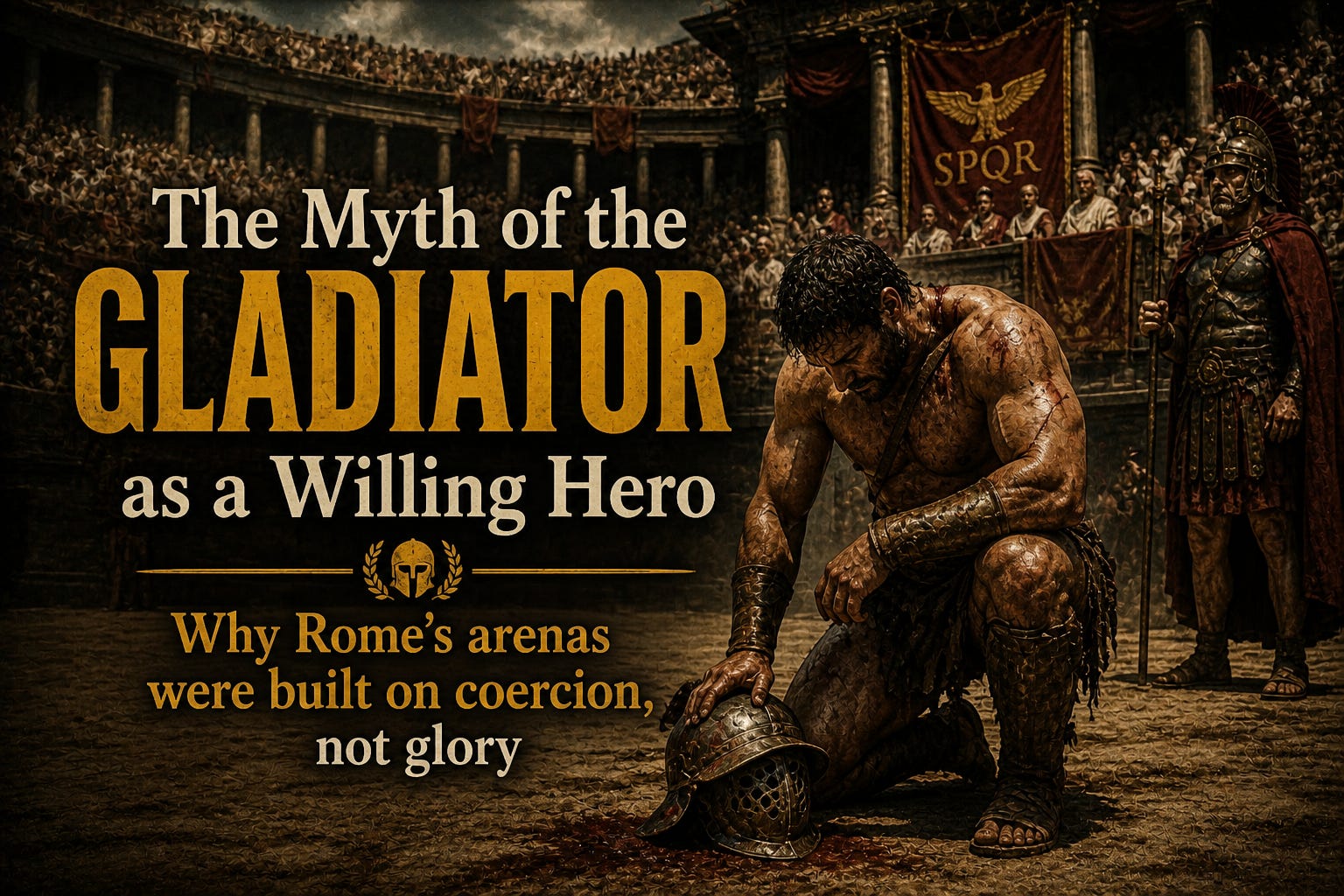
If a modern audience fills a stadium to watch elite fighters compete, the narrative is familiar. Skill, bravery, sacrifice. Athletes who choose their path, train for excellence, and perform for glory.
Now picture that same arena, but remove the choice.
That is where the story of the Roman gladiator truly begins.
Popular culture has turned gladiators into heroic figures. Warriors who embraced combat, fought for honour, and earned fame through courage. The image is powerful, reinforced by film and legend.
The reality was far more uncomfortable.
Fighters without freedom
Most gladiators did not choose the arena.
They were enslaved people, prisoners of war, criminals, or those condemned by the state. Their presence in the arena was not a career decision. It was a condition imposed upon them.
There were exceptions. Some free men did volunteer, drawn by the promise of money or notoriety. But they were a minority, and even they entered a system that stripped them of control.
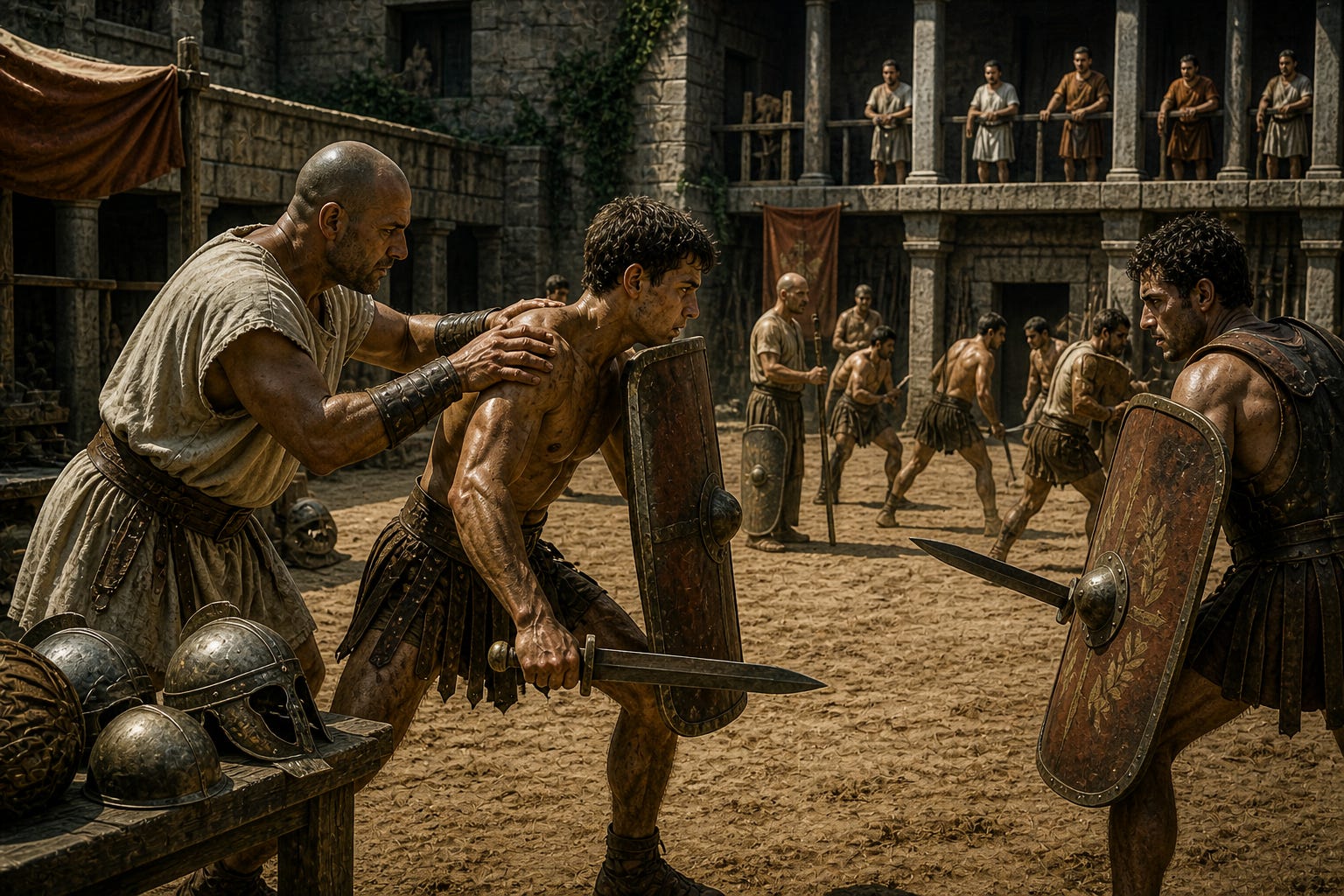
Once inside a gladiator school, a ludus, individuals were owned, trained, and managed. Their lives were dictated by others. Their bodies became assets to be prepared and used.
This was not a path to freedom. It was a form of captivity.
Training for spectacle
Gladiators were highly trained. This is often cited as evidence of their status, as if skill implies privilege.
In reality, training served a purpose.
Gladiators represented investment. Owners wanted them to fight well, to entertain the crowd, and to survive long enough to fight again. Training increased the value of that investment.
Different fighting styles were developed, matching opponents in ways that created drama and tension. The arena was not random violence. It was structured performance, designed to captivate an audience.
But performance does not equal consent.
The skill of the gladiator was real. The freedom to use it was not.
Violence as entertainment
The Roman arena was built on spectacle, and at its centre was violence.
Fights could end in death. Even when they did not, the risk of serious injury was constant. The crowd played a role, reacting to the action, influencing outcomes, demanding excitement.
For those watching, it was entertainment.
For those fighting, it was survival.
The idea of honour, so often attached to gladiators, sits uneasily with this reality. Honour suggests agency, a choice to face danger for a cause or a code.
Gladiators faced danger because they had little alternative.
Fame with limits
Some gladiators did achieve a form of fame.
Successful fighters could become known figures, admired by crowds, even celebrated. Graffiti and inscriptions suggest that certain individuals were recognised and remembered.
This has helped to reinforce the image of the gladiator as a kind of ancient celebrity.
But this fame had limits.
It did not remove the underlying lack of freedom. It did not erase the risks. It did not guarantee a long life. Even the most successful gladiator remained within a system that could end their career, or their life, at any moment.
Recognition did not equal autonomy.
A system that reflected power
The arena was not separate from Roman society. It reflected it.
Rome was built on hierarchy, inequality, and control. The existence of gladiators, people forced to fight for the entertainment of others, was a visible expression of that structure.
Spectacle reinforced power. It demonstrated who held authority and who did not. It turned human lives into performance.
The myth of the willing hero softens this reality. It transforms coercion into choice, and suffering into spectacle.
Why the myth endures
The image of the gladiator as a heroic fighter persists because it is easier to admire than to confront.
Stories prefer protagonists who choose their path. Audiences respond to courage and defiance. The idea of a warrior embracing the arena fits neatly into that narrative.
It also aligns with modern ideas about competition and achievement. We see skill, discipline, and resilience, and we recognise qualities we value.
What we often overlook is the context in which those qualities were expressed.
The myth survives because it reshapes a difficult truth into a familiar story.
Ending where we began
If a modern sporting event removed the element of choice, if participants were forced to compete under threat, if the outcome carried the risk of death, we would not celebrate it.
We would question it.
The Roman arena was built on such a reality.
Gladiators were not simply heroes stepping forward into battle. They were individuals navigating a system that controlled their lives and demanded their performance.
Their skill was real. Their courage was undeniable.
But their story is not one of willing glory.
The myth endures because it offers something easier to admire.
History offers something harder to face.
A reminder that even the most iconic symbols of strength and spectacle can be rooted in coercion, and that understanding that difference matters.