

If you watch modern news coverage of protests, a familiar pattern emerges. A complex movement begins with grievances, demands, and ideas. Within hours, the narrative tightens. Cameras find flames, broken glass, confrontation. The story becomes disorder. The people become a mob.
We have seen this before.
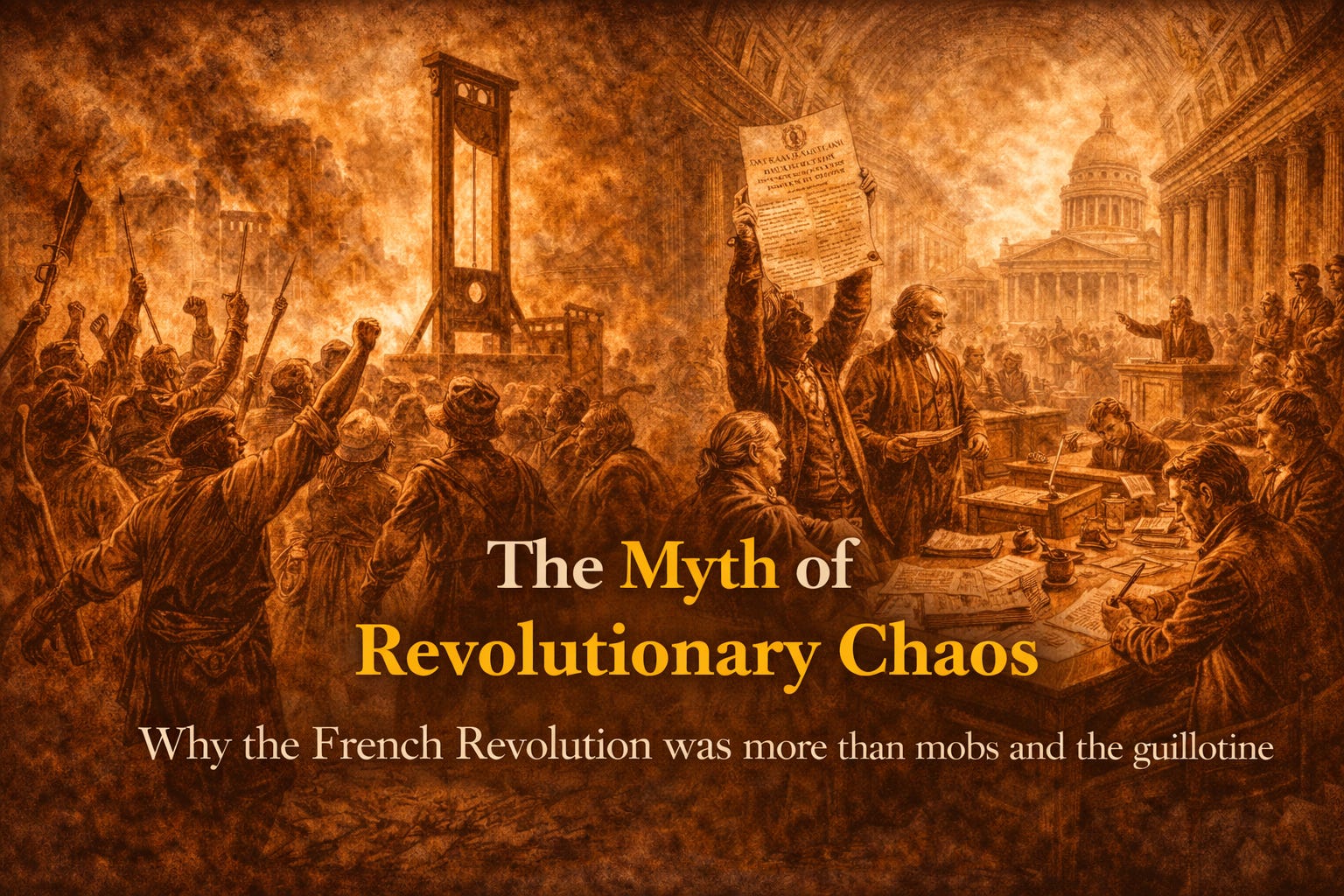
The French Revolution, perhaps the most famous political upheaval in history, is often remembered in exactly those terms. A violent explosion of anger. Crowds in the streets. Heads falling beneath the guillotine. A society descending into madness.
It is a powerful image.
It is also incomplete.
Origins in structure, not chaos
The Revolution did not begin with violence. It began with pressure.
By the late eighteenth century, France was a society under strain. The monarchy faced crippling debt, worsened by war and poor financial management. Taxation fell unevenly, with the burden resting heavily on those least able to bear it. Food shortages and rising prices created widespread hardship.
At the same time, new ideas were circulating. Enlightenment thinkers questioned authority, privilege, and the nature of political power. Concepts such as citizenship, rights, and representation began to take hold.
This was not chaos. It was a society confronting its own contradictions.
When the Estates General was called in 1789, it was meant to resolve a financial crisis. Instead, it exposed a political one. The Third Estate, representing the majority of the population, challenged the existing order and declared itself a national assembly.
The Revolution began not with mobs, but with a claim to legitimacy.
Moments that define memory
Violence did occur, and it matters.
The storming of the Bastille, the September Massacres, and the Reign of Terror have come to define how the Revolution is remembered. These were moments of fear, anger, and bloodshed. Thousands were executed. Suspicion became a political tool. Power shifted rapidly and often brutally.
But these moments, dramatic and disturbing, represent only part of the story.
They are remembered because they are vivid. They provide clear images, simple narratives, and emotional weight. They are easy to tell.
The quieter developments, debates in assemblies, legal reforms, the restructuring of society, receive far less attention.
History, once again, preserves the loudest moments most clearly.
Ideas that reshaped the world
Beneath the violence, the Revolution was also a laboratory of ideas.
It challenged the notion that power flowed from divine right. It asserted that sovereignty belonged to the people. It introduced concepts of equality before the law, citizenship, and the rights of individuals.
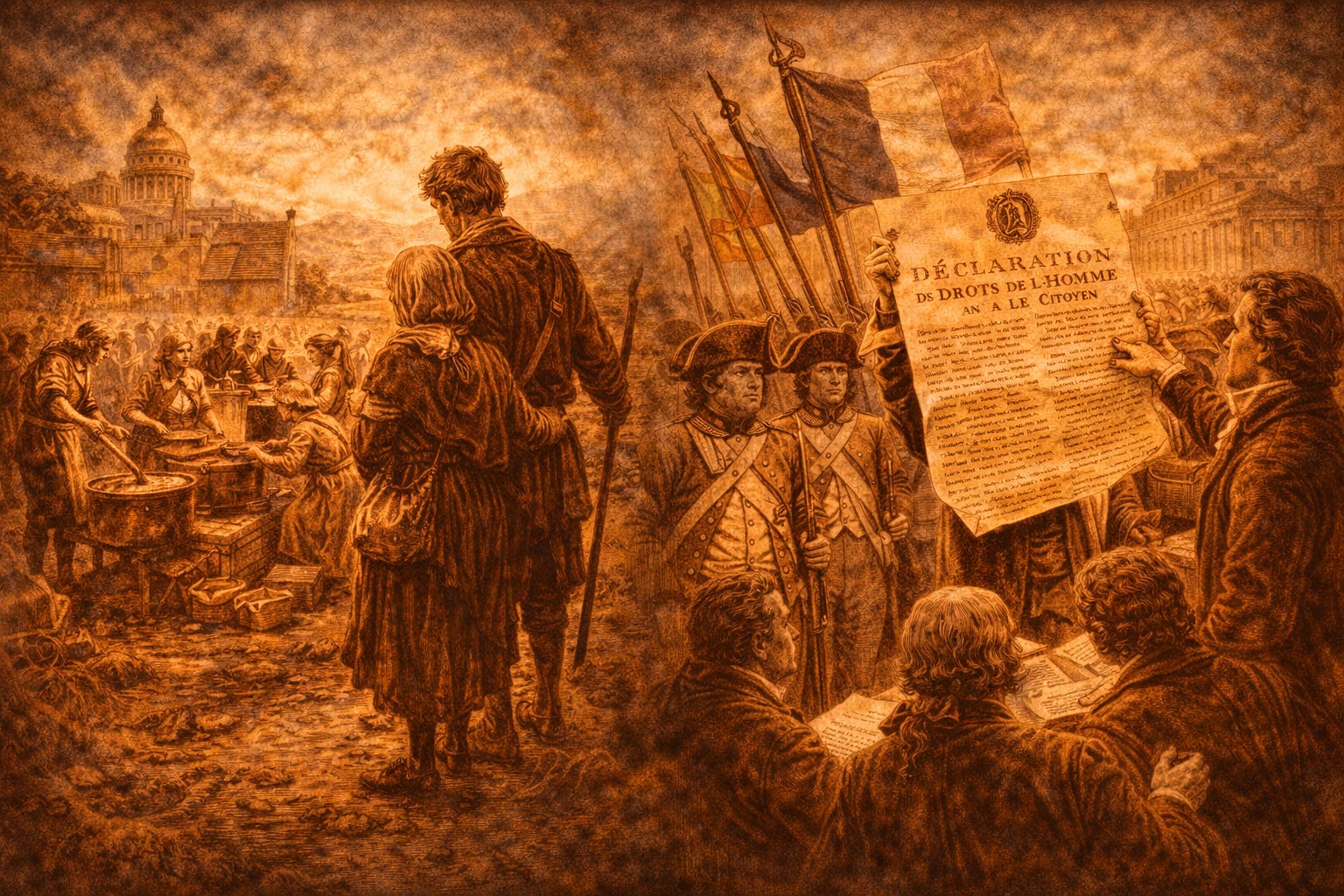
The Declaration of the Rights of Man and of the Citizen was not an afterthought. It was central. It articulated principles that would influence political thought far beyond France.
These ideas did not emerge cleanly or consistently. They were debated, contested, and sometimes contradicted by events on the ground. But they mattered.
They reshaped how societies understood authority and participation.
Revolution as process, not moment
One of the problems with how we remember the French Revolution is that we treat it as a single event, a sudden rupture marked by violence.
In reality, it was a process.
It unfolded over years, with phases of reform, reaction, and reorganisation. Different groups pursued different visions of what France should become. Power shifted between factions. Outcomes remained uncertain for much of the period.
The Terror, often seen as the defining feature, was one phase among many. It did not represent the entirety of the Revolution, just as a single battle does not define an entire war.
Understanding the Revolution requires stepping back from the moments of crisis and looking at the broader trajectory.
Chaos as a convenient label
Why, then, does the myth of chaos persist?
Because it simplifies.
Describing the Revolution as madness or mob rule reduces a complex political transformation to a cautionary tale. It suggests that attempts to change society inevitably lead to disorder and violence. It reinforces the idea that stability, even imperfect stability, is preferable to upheaval.
This interpretation is not neutral. It reflects particular political and cultural perspectives. It shapes how later generations view protest, reform, and revolution.
It turns history into a warning rather than a question.
Echoes in the present
When modern movements are quickly labelled as chaotic or irrational, the language echoes how the French Revolution has been remembered. Complexity is reduced to spectacle. Causes are overshadowed by consequences.
This does not mean that violence should be ignored or excused. The suffering during the Revolution was real, and its darker chapters deserve attention.
But focusing only on those chapters distorts the larger picture.
The Revolution was not simply an explosion of anger. It was an attempt, flawed and contested, to rethink how a society should be organised.
Ending where we began
If a modern protest is judged only by its most dramatic moments, we risk misunderstanding what it represents. We see the flames, not the grievances. The confrontation, not the ideas.
The French Revolution has been remembered in much the same way.
It was not just mobs and the guillotine. It was a struggle over power, rights, and the structure of society. It was messy, uncertain, and often contradictory, as all major political transformations are.
The myth of revolutionary chaos persists because it offers a simple story.
History offers something more demanding.
A reminder that behind every moment of upheaval lies a deeper set of causes, and that understanding those causes matters just as much as remembering the consequences.