

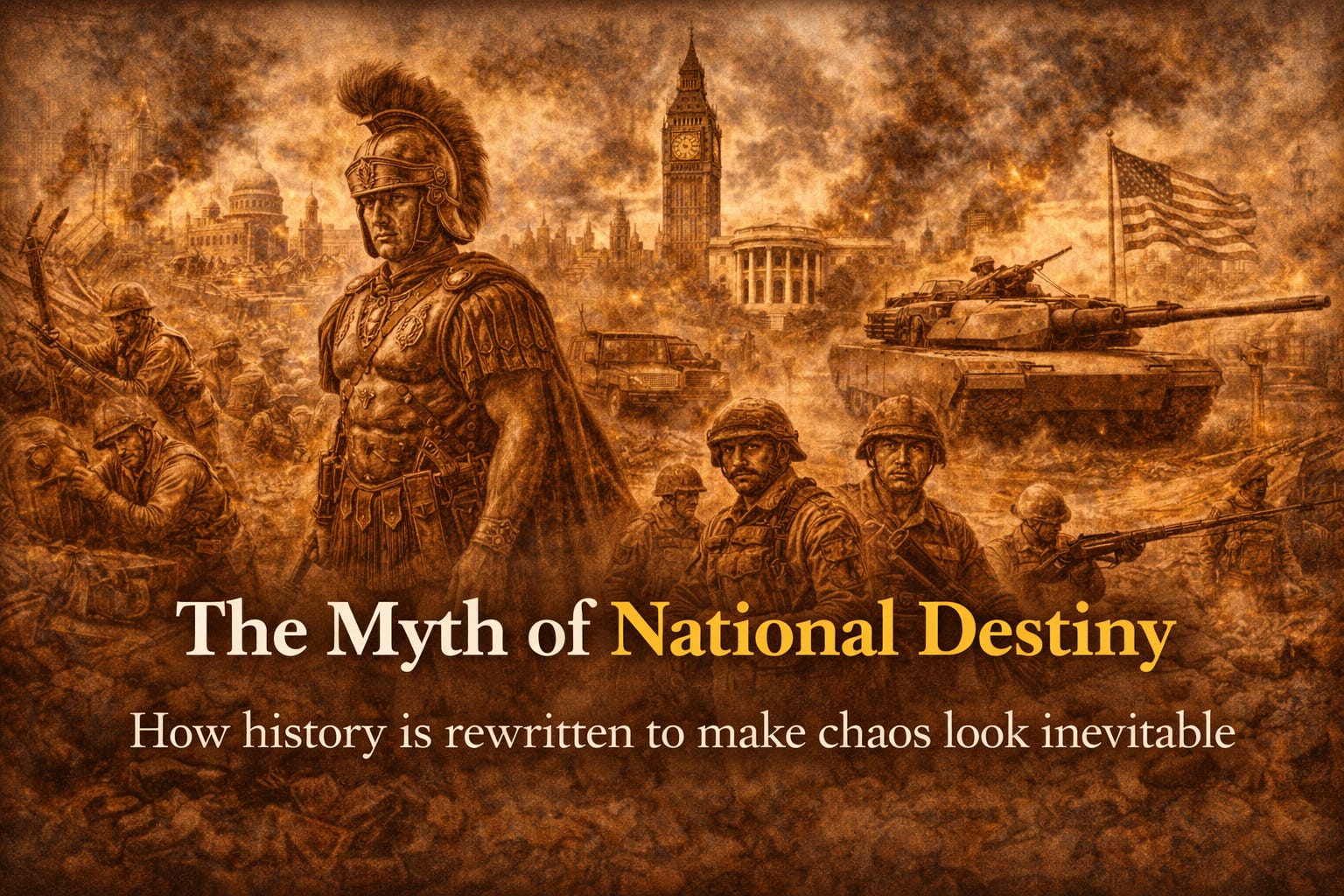
When Donald Trump justified military action against Iran, the language felt familiar. It spoke of necessity, of inevitability, of a moment that history itself had delivered. The suggestion was clear, events had reached a point where action could no longer be avoided.
We hear this often in times of crisis. Nations are said to be on a path. Leaders talk of destiny, of history calling, of choices that are no longer choices at all.
It is a seductive idea. It removes doubt. It gives conflict a sense of purpose. It tells us that what is happening now was always going to happen.
History, when examined closely, tells a very different story.
Illusion of inevitability
One of the greatest tricks history plays on us is hindsight. Once an event has happened, we begin to arrange the past in a way that makes it feel unavoidable. We connect decisions, motivations, and consequences into a neat chain, as though events moved with a quiet, unstoppable logic.
But the people living through those moments rarely felt that certainty.
Consider the outbreak of the First World War. It is often described as inevitable, the product of rival empires, rising nationalism, and a web of alliances waiting to ignite. Yet in the summer of 1914, leaders across Europe believed they were managing a crisis, not unleashing a catastrophe. Decisions were made quickly, often nervously, sometimes blindly. Diplomatic cables crossed wires. Assumptions replaced clarity. Within weeks, a continent had stumbled into war.
There was nothing inevitable about it. There was only a chain of human choices, each one uncertain, each one avoidable until it was not.
Empires built on chance
We like to believe that powerful nations rise because they are destined to. That Rome was always going to dominate the Mediterranean, that Britain was always going to build an empire, that the United States was always going to become a global superpower.
This is comforting. It suggests strength is earned, progress is linear, and success follows a natural order.
The truth is far less tidy.
Rome expanded through a series of opportunistic wars, fragile alliances, and moments of sheer luck. Defeats could easily have ended its rise. Britain’s empire grew not from a grand plan but from a patchwork of trade, conflict, and local decisions made thousands of miles from London. The American century was shaped as much by the collapse of rival powers as by its own strength.
At every stage, alternative outcomes were possible. Empires are not the result of destiny. They are the result of circumstance, ambition, and accident.
Stories nations tell themselves
If history is so uncertain, why do we continue to talk about destiny?
Because nations need stories.
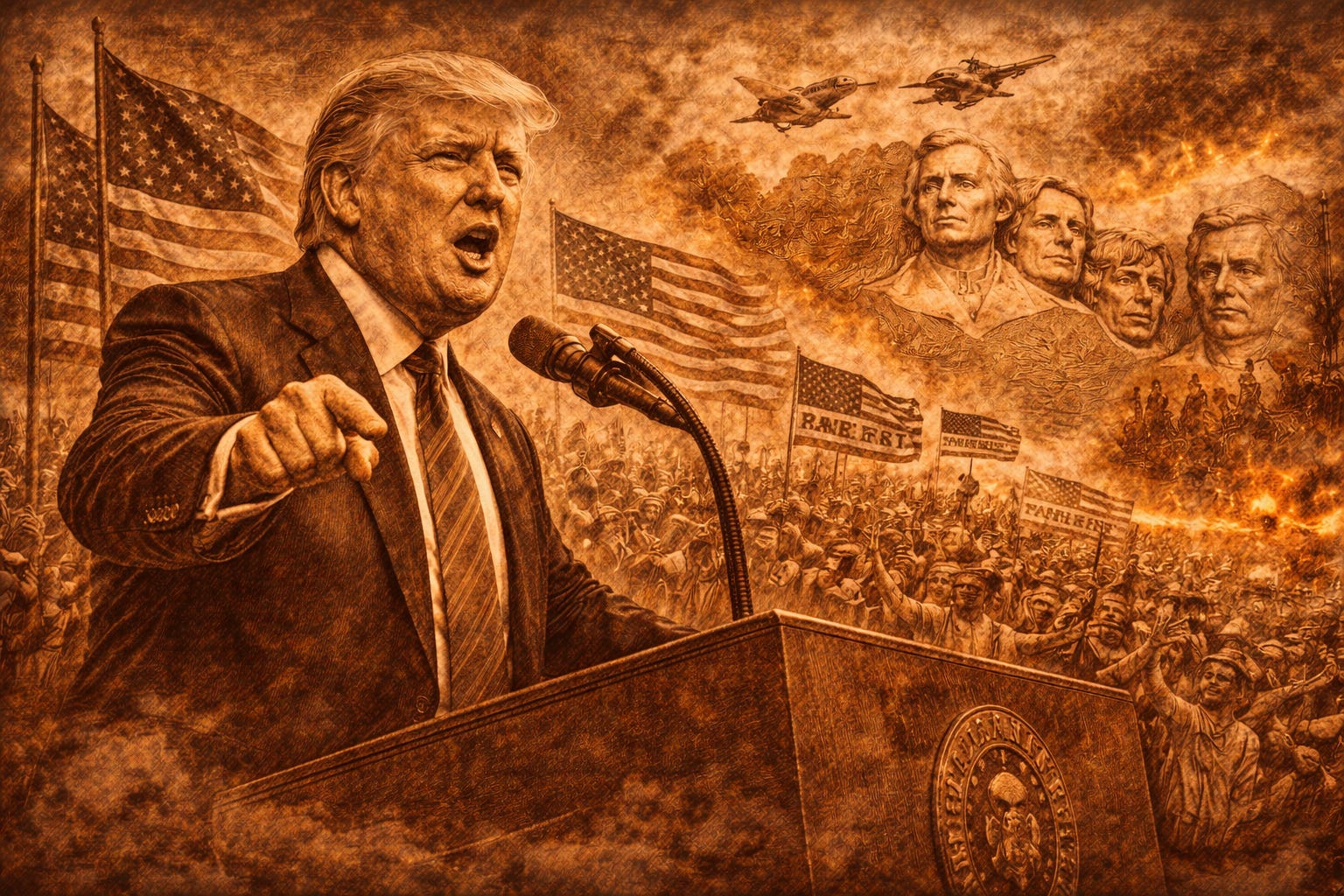
A sense of national destiny provides meaning. It binds people together. It transforms complex, often uncomfortable histories into narratives of purpose and progress. It tells citizens that their country’s actions are part of something larger, something inevitable, something justified.
These stories are powerful, but they are also selective.
They smooth over failure. They ignore contingency. They replace doubt with certainty. In doing so, they reshape the past into something far more orderly than it ever was.
The danger comes when these stories are used not just to explain history, but to justify the present.
Modern echoes of an old myth
When leaders claim that war is unavoidable, they are often drawing on this same idea of destiny. The language may be modern, but the structure is ancient. Events are framed as part of a larger historical arc. Action becomes necessity. Alternatives quietly disappear from view.
The recent escalation involving Iran fits this pattern. The argument was not simply that military action was chosen, but that it had to be chosen. That circumstances had narrowed the field of possibility to a single path.
History suggests otherwise.
There are always alternatives, even if they are difficult, unpopular, or uncertain. Diplomacy, restraint, delay, compromise, these are not signs of weakness, but acknowledgements that history is not fixed.
When we accept inevitability too easily, we stop asking the most important question, what if things had been different?
Power of contingency
The most honest way to understand history is to recognise how fragile it is.
Small decisions can have enormous consequences. A delayed message, a misunderstood intention, a single conversation can alter the course of events. The world we live in is not the only world that could have existed. It is simply the one that did.
This is not to say that large forces do not matter. Economics, geography, ideology, they all shape the possibilities available to nations. But they do not dictate outcomes with certainty. Within those constraints, human beings still make choices.
And those choices matter.
Ending the comfort of destiny
The myth of national destiny is appealing because it simplifies a complicated world. It offers clarity where there is confusion. It replaces uncertainty with purpose.
But it comes at a cost.
If we believe that history follows an inevitable path, we risk surrendering our sense of agency. We begin to see conflict as unavoidable, inequality as natural, and outcomes as predetermined. We stop questioning the decisions of those in power because we assume they are merely following the course history has set.
History itself offers a quiet correction.
Nothing was ever guaranteed. Not the rise of empires, not the outbreak of wars, not the outcomes we now take for granted. Every moment was shaped by choices, many of them imperfect, some of them reckless, all of them human.
When leaders today speak of inevitability, they are not describing history. They are shaping it.
And that means the future, like the past, remains unwritten.