

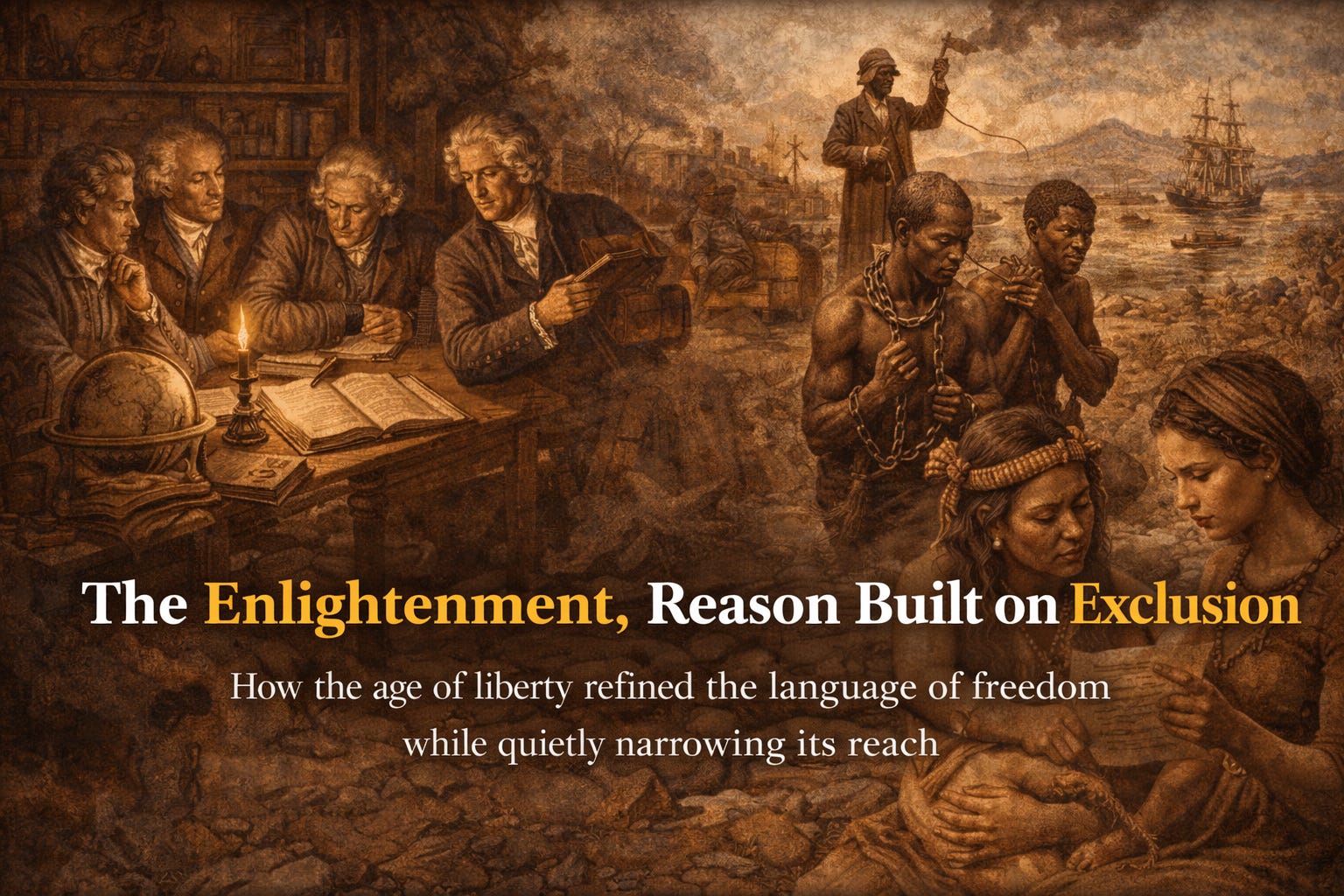
A modern office loves to talk about transparency. Open plans, glass walls, collaborative language. Yet everyone knows power still gathers quietly in certain rooms, behind certain doors, among people who already belong. The Enlightenment worked in much the same way. It announced itself as an age of reason, liberty, and progress, while carefully managing who was allowed inside those ideas.
This matters because we still tell the story as a triumph. A sudden intellectual sunrise. Darkness lifted, superstition banished, humanity stepping forward together. It is a comforting tale, and like most comforting tales, it hides the mess.
Reason as a gated community
The Enlightenment did not invent freedom. Nor did it distribute it evenly. What it did brilliantly was codify freedom, define it, and then fence it off. Reason became the passport, but not everyone was deemed capable of holding one.
Philosophers spoke of universal rights while arguing that women were governed by emotion rather than intellect. Liberty was praised in salons funded by colonial profits. Equality was debated in cities whose wealth flowed from enslaved labour across the Atlantic. None of this was accidental. It was structural.
Rationality became a sorting tool. Those who resembled the thinkers themselves, educated men, property holders, Europeans, were declared rational actors. Others were framed as dependent, childlike, or uncivilised. Exclusion was not a failure of Enlightenment thinking. It was baked into its operation.
Freedom funded by empire
The Enlightenment coincided neatly with the expansion of European empires. This was no awkward overlap. The same language that championed liberty at home justified domination abroad.
Colonised peoples were described as not yet ready for freedom. Slavery was defended as a temporary necessity for economic growth. Extraction was rationalised as progress. All of this sat comfortably beside essays on human rights.
This contradiction rarely troubled its architects. Freedom was imagined as a reward for reaching a certain stage of development, a stage conveniently defined by those already in power. Empire became a laboratory where Enlightenment ideas could be tested without being applied.
The result was a world where liberty expanded for some precisely because it was denied to others.
Silenced voices in an age of debate
We often picture the Enlightenment as a roaring conversation. Pamphlets, coffee houses, public lectures, arguments spilling into the streets. What we forget is how many voices were absent.
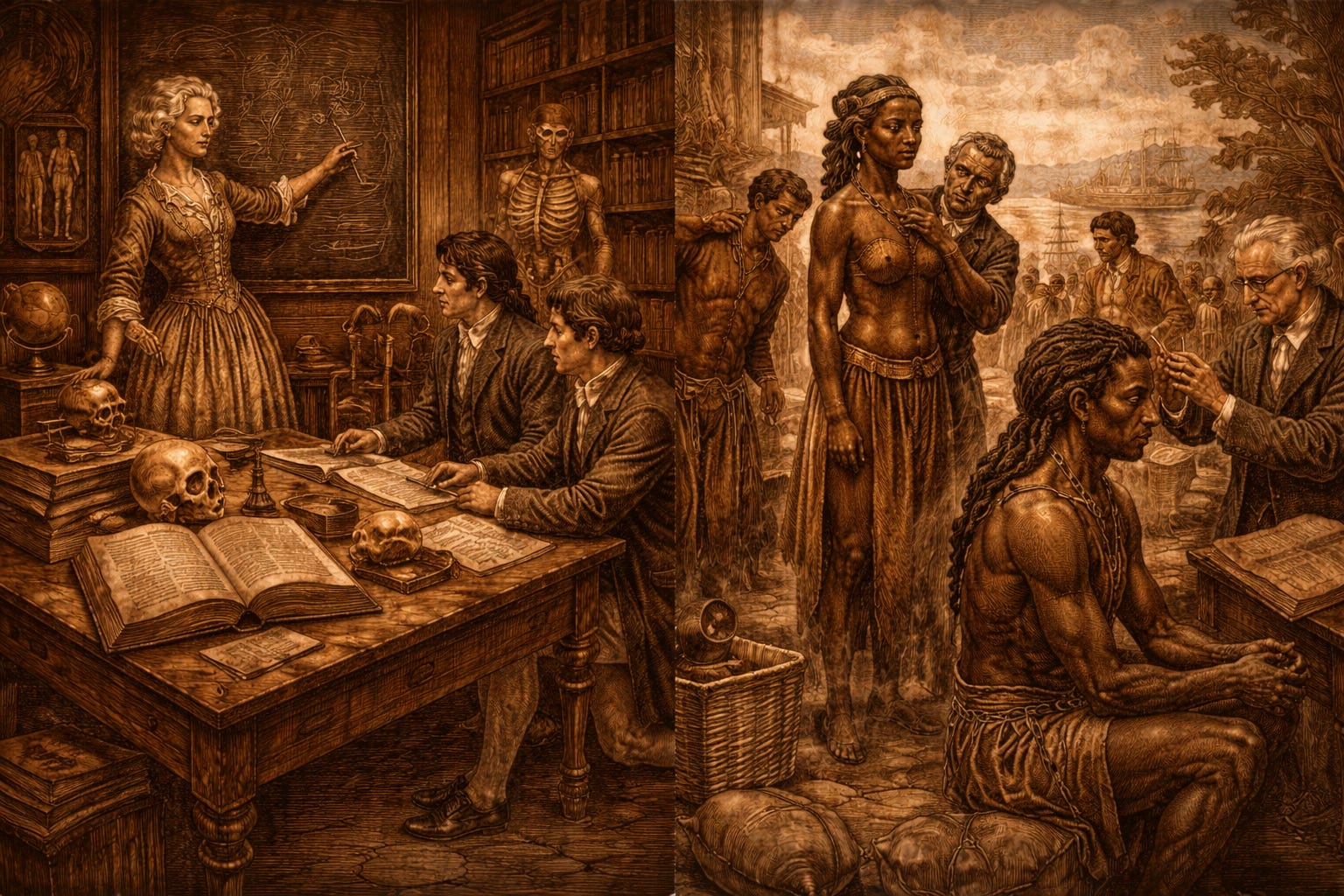
Women wrote, but were dismissed. Enslaved people spoke, but were ignored. Indigenous thinkers articulated complex political and philosophical systems, but were labelled primitive. The Enlightenment did not lack dissenting voices. It lacked the willingness to hear them.
Even when marginalised thinkers were acknowledged, they were framed as curiosities rather than contributors. Their ideas were filtered, reinterpreted, or stripped of authority. Reason was universal in theory, selective in practice.
This selective hearing shaped what became the canon. The ideas we still teach as foundational were chosen through power, not neutrality.
Order disguised as progress
At its heart, the Enlightenment was obsessed with order. Classification, measurement, systems. These impulses produced astonishing advances in science and philosophy. They also produced racial hierarchies, pseudo scientific justifications for inequality, and bureaucratic systems of control.
The same impulse that mapped the stars mapped human worth. Categories hardened into rankings. Difference became deficiency. Once again, reason did not challenge existing power structures as much as refine them.
Progress, in this sense, was not about liberation for all. It was about stability for those at the top, efficiency in administration, and moral comfort for systems that depended on exploitation.
Why this blind spot still matters
It is tempting to treat these contradictions as historical quirks. Products of their time. But the Enlightenment still shapes how modern societies talk about merit, rationality, and belonging.
When debates about freedom hinge on who is educated enough, civilised enough, or reasonable enough, we are echoing Enlightenment exclusions. When systems claim neutrality while producing unequal outcomes, we are living with its legacy.
The danger lies not in celebrating Enlightenment achievements, but in refusing to interrogate their foundations. Reason, untethered from humility and empathy, becomes another instrument of power.
Ending where we began
Think again of that modern office. The mission statements glow on the walls. Inclusion is promised. Opportunity is proclaimed. Yet the same people keep rising, the same voices keep deciding, the same assumptions go unchallenged.
The Enlightenment was not a lie. But it was not a clean break from injustice either. It was a rebranding. A sophisticated language for old hierarchies, dressed in the confidence of reason.
Understanding that does not diminish its ideas. It sharpens them. Because progress worth defending must be willing to question who it leaves behind.