

A Force of Power, Not Compromise
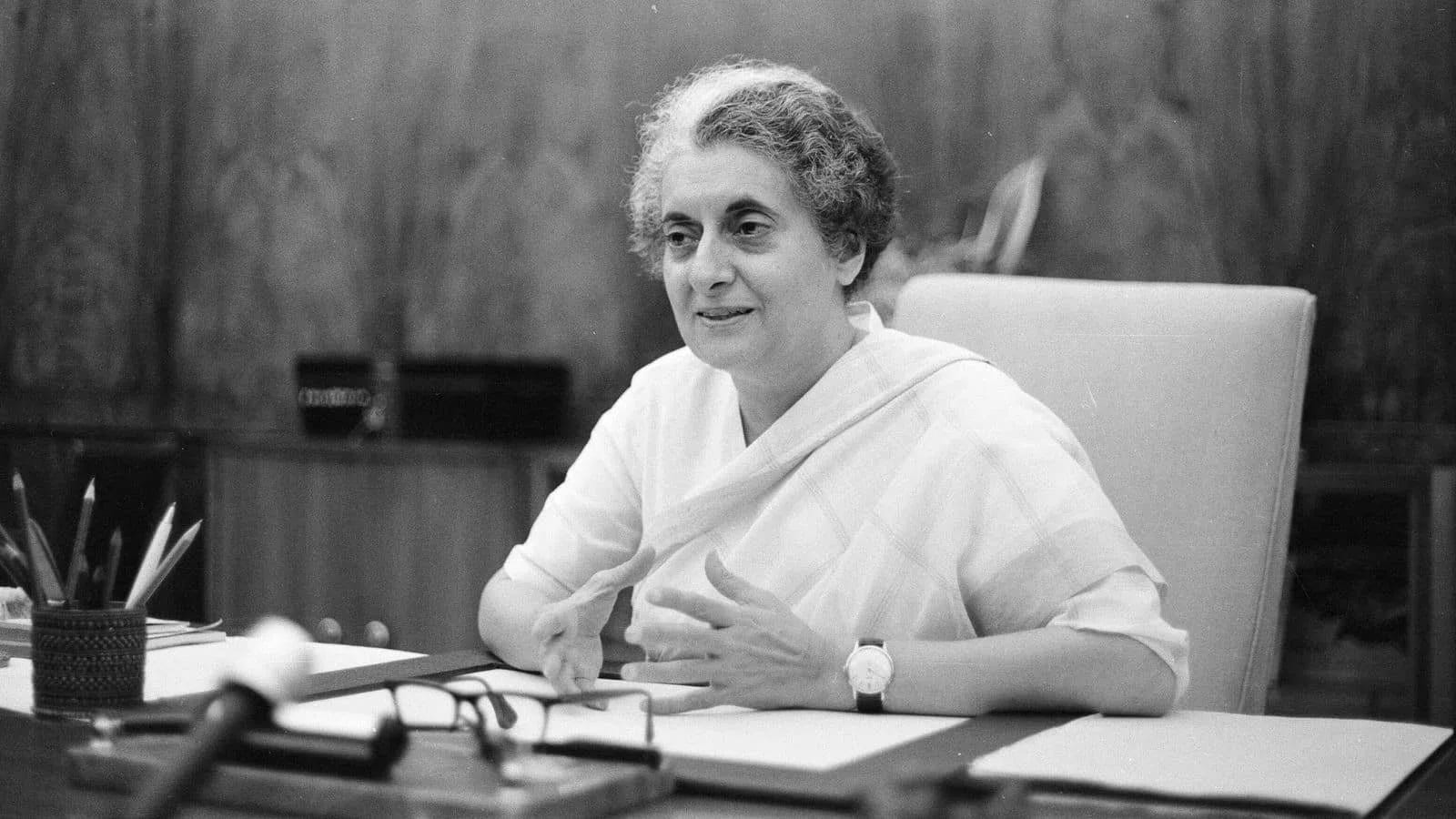
On 31 October 1984, Prime Minister Indira Gandhi was assassinated by two of her own bodyguards. It wasn’t just a killing, it was payback. The moment was the inevitable final chapter in a political career defined by ruthless control, constitutional manipulation, and religious provocation. Indira Gandhi did not die for her country, she died for the choices she made to dominate it.
Gandhi began her tenure underestimated by the very party elders who handed her the job. They believed her to be pliable. Instead, she bulldozed her way through, cutting ties with the Congress old guard and creating a new faction built entirely around her cult of personality. She promised to lift the poor and punish the elite, and the country listened. At least at first.
Her finest hour came on 16 December 1971. On that day, India declared victory in the Indo-Pakistani war. Gandhi’s decision to intervene in East Pakistan’s war of independence led to the creation of Bangladesh and humiliated her country’s greatest rival. Crowds flooded the streets of Delhi. For a moment, she stood as the symbol of Indian strength and progress. But pride soon gave way to paranoia.
Emergency Rule: Democracy Dismantled
In June 1975, Gandhi’s re-election was invalidated by a court ruling, exposing her to removal from office. Her response wasn’t legal defence, it was absolute suppression. Under the banner of a national emergency, she suspended civil liberties, imprisoned opposition leaders, muzzled the press, and rewrote the rules to stay in power.
Opposition voices were dragged from their homes in midnight arrests. Newspapers had their electricity cut. Anything not state-approved was censored. India became a democracy in name only. Sikh leaders, in particular, stood against this seizure of control. Among them was Prakash Singh Badal, who led defiant protests from Punjab’s Golden Temple, the holiest site in Sikhism. For his resistance, he was thrown in jail for 19 months.
Gandhi may have lifted the emergency in 1977, but she never forgave the Sikhs for challenging her rule. Her return to power in 1980 wasn’t a lesson in humility, it was a warning. And four years later, she made the most catastrophic decision of her life.

Operation Blue Star: Power vs Faith
In June 1984, Gandhi ordered the Indian Army to storm the Golden Temple in Amritsar. The target: Sikh militants led by Jarnail Singh Bhindranwale. But the operation was not a surgical strike. Tanks rolled in. Shells were fired into sacred buildings. Women and children were caught in the crossfire. The final image was not of victory, but desecration.
The temple was a battlefield. Corpses littered the complex. Innocents paid the price for Gandhi’s mission to eliminate her enemies. Officially, it was about national security. In reality, it was about sending a message: no one opposed her and survived.
What she failed to calculate was the cost of striking a religion at its core. Her Sikh bodyguards were temporarily reassigned after the raid, but she insisted they return. It wasn’t principle. It was pride. She refused to appear afraid, even if her actions had made her a marked woman.
Assassination and Aftermath
On the morning of 31 October 1984, Gandhi walked into her garden for a scheduled television interview. Two Sikh guards were stationed at the gate. As she approached, one fired three shots into her chest. The other emptied his machine gun into her crumpled body. She was declared dead five hours later.
The men offered no resistance. One simply said, “I have done what I had to do.” And with that, the cycle of vengeance was complete.
But Gandhi’s death did not end the violence. In the days that followed, mobs unleashed fury on Sikh communities across India. Thousands were beaten, raped, burned alive. The police did little to stop it. The state that once arrested critics for defying the prime minister now turned a blind eye as her supporters carried out collective punishment.
The shadow of 1984 still hangs heavy over India. Gandhi’s assassination was not just the fall of a leader. It was the bloody consequence of power wielded without restraint, of a government that turned against its people to preserve itself.
Indira’s Legacy: Progress, Ruin, or Both?
Indira Gandhi modernised India’s foreign policy and bolstered its influence on the world stage. She expanded science, boosted agriculture, and placed the country firmly in the Non-Aligned Movement during the Cold War. These are not small feats.
But no amount of international respect or domestic reform can whitewash the emergency, the censorship, or the tanks in Amritsar. Gandhi ruled with a clenched fist. Her achievements were real, but so were her crimes.
She did not fear controversy. She did not fear bloodshed. But she should have feared what happens when you push a nation too far. The cost was her life, and the lives of many others caught in the storm she helped create.
On this day, 31 October 1984, Indira Gandhi was assassinated. It wasn’t random, and it wasn’t meaningless. It was the end result of years of domination disguised as democracy. A story of power taken too far, and a warning that leaders are never invincible, no matter how strong their grip.