

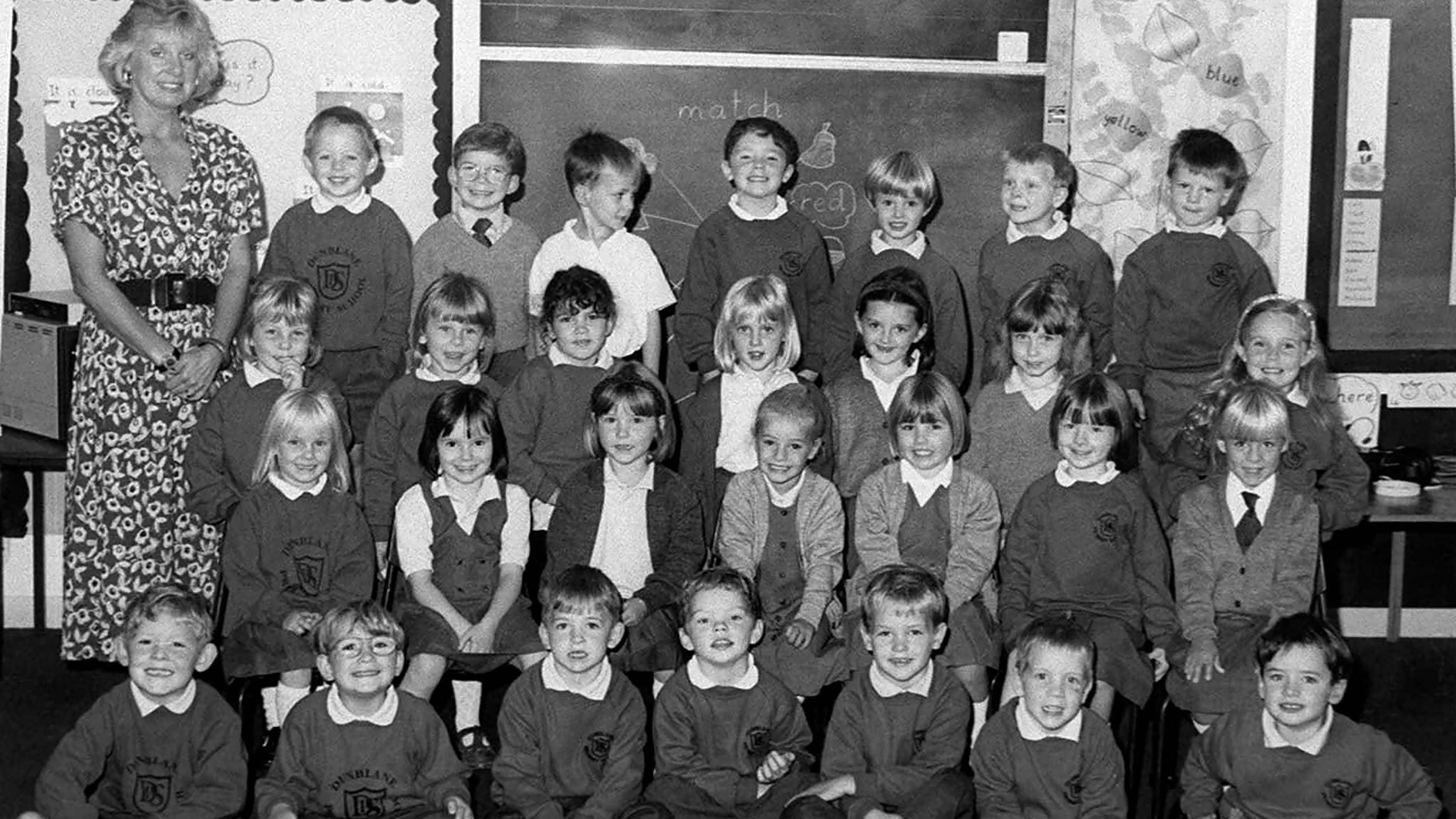
On This Day in 1996, the quiet cathedral town of Dunblane in central Scotland began like any other school day. Children arrived at Dunblane Primary School full of chatter and energy, teachers prepared their lessons, and parents carried on with the ordinary rhythm of the morning.
Within a short time that sense of normality was gone.
Shortly after 9.30am, a gunman entered the school carrying several legally owned handguns. Inside the gymnasium he opened fire on a class of very young pupils and their teacher. By the time the violence ended, sixteen children aged five and six had been killed along with their teacher, Gwen Mayor.
The gunman, Thomas Hamilton, took his own life before police arrived.
It remains the deadliest mass shooting in British history.
For many people across the United Kingdom, the horror was almost impossible to comprehend. Britain was a country where gun crime was comparatively rare and the idea of a school shooting felt distant and unthinkable.
Suddenly it had happened in a small Scottish town.
The shock was immediate and profound. News bulletins broke into regular programming. Newspapers rushed out special editions. In homes across the country, people sat stunned in front of television screens trying to understand how such a thing could occur.
Grief spread far beyond Dunblane itself.
Personal Memory From Nearby
For me, the day carries a memory that has never quite faded.
In March 1996 I was living less than an hour from Dunblane. I was a student on a college work placement with Fife Trading Standards. The placement was meant to be a routine introduction to office work, learning procedures, reading reports and helping with small administrative tasks.
That Wednesday began like any other.
Then the news started to filter through.
At first it arrived as fragments. A report on the radio. A comment from someone passing through the office. Gradually the full scale of the tragedy became clear. Sixteen children and a teacher killed inside a primary school gymnasium.
Work stopped meaning much that day.
I remember sitting at my desk with papers in front of me and realising I had been staring at the same page for several minutes without reading a word. At one point I found myself checking the office radio again, as though the story might somehow change with the next update.
It never did.
Like many people across Scotland, I struggled to concentrate on anything practical. The usual concerns of the working day felt small and irrelevant against the scale of what had happened only a short distance away.
When tragedy occurs close to home it strips away any comfortable sense that such things only happen somewhere else.
Dunblane was not an abstract headline for those of us living nearby. It was a real place, a town we recognised on the map and could reach within the hour.
That closeness made the shock even sharper.
Public Response and Changing Laws
As the days passed, grief began to turn into determination.
Families of the victims and people across the country began asking an urgent question. How had one man been able to walk into a school with multiple handguns in the first place?
At the time, thousands of firearms were legally owned across Britain. Shooting clubs operated openly and handgun ownership, while regulated, was still permitted.
The events in Dunblane forced the country to reconsider that reality.
Within weeks a nationwide campaign began calling for stricter gun control. Petitions gathered hundreds of thousands of signatures. Community groups organised meetings and demonstrations. The movement took its name from the snowdrop, the flower that happened to be in bloom when the tragedy occurred.
The message was simple and direct. Britain had to make sure nothing like Dunblane could ever happen again.
Political debate followed, as it always does when legislation touches on personal freedoms and established traditions. Shooting clubs, retailers and sporting groups raised concerns about sweeping bans.
But public opinion was unmistakable.
The pressure led to a series of laws that fundamentally changed firearm ownership in the United Kingdom. Within two years almost all private handgun ownership had been banned. More than 150,000 weapons were removed from circulation.
It was one of the most sweeping gun control reforms in modern British history.
For many people, the legislation became part of Dunblane’s legacy. The victims could not be brought back, but their loss reshaped the law of the land.
Dunblane’s Long Road to Healing
Communities never fully recover from tragedies like Dunblane. They learn, instead, how to carry the memory.
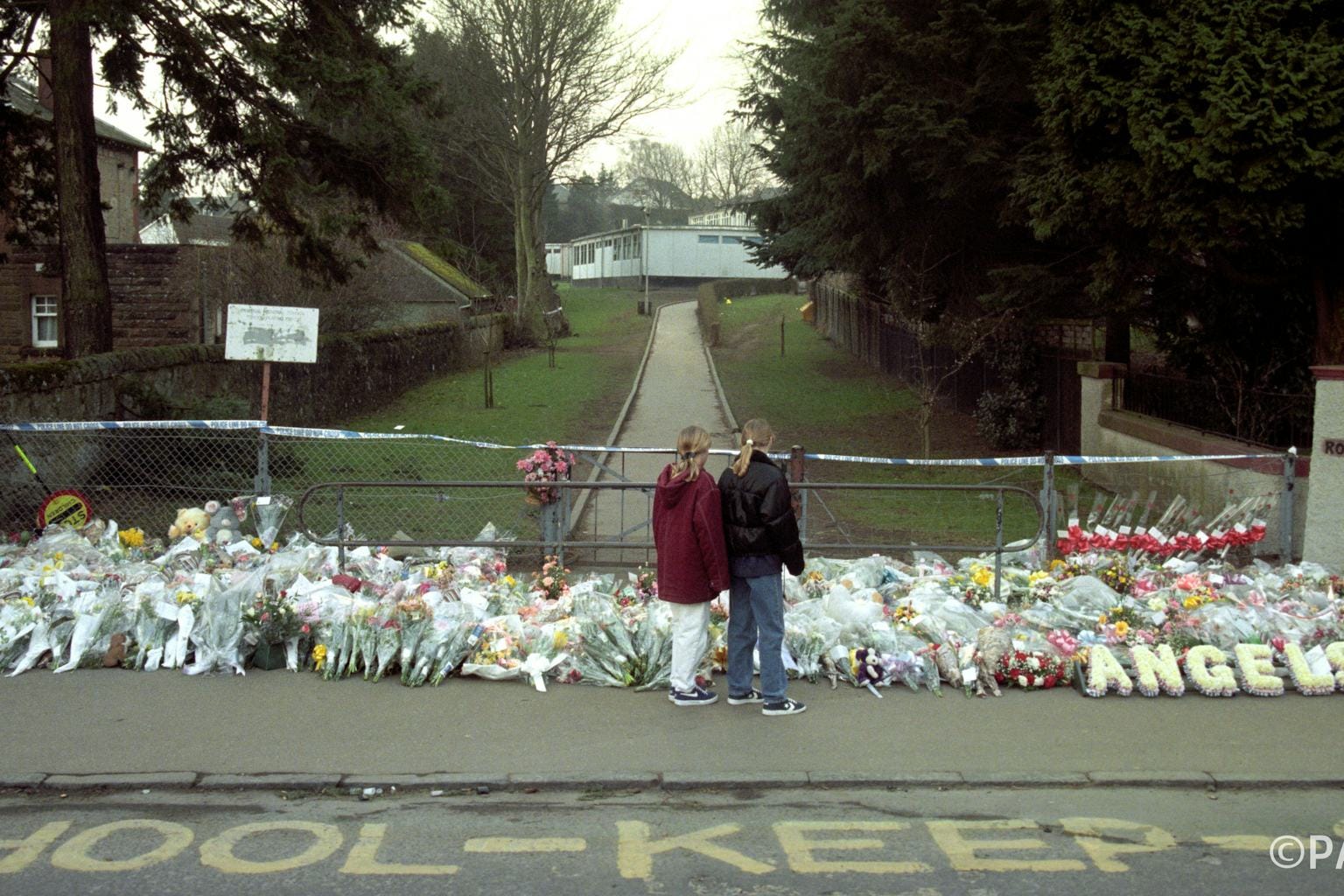
In the years that followed, the town sought ways to honour those who had been lost while also rebuilding a sense of normal life. Donations arrived from across Britain and around the world, offering support to families and residents.
Part of that generosity helped create the Dunblane Centre, a community space designed for young people and local groups. It became a place where the town could gather again, where children could play and where memories could be preserved with dignity.
Inside the building are quiet reminders of the lives that were taken. Images chosen by families stand as permanent tributes to the children and their teacher.
They are simple, personal memorials that speak more powerfully than any grand monument.
Over time the town continued forward, as communities must. Yet the events of March 1996 remain woven into its identity.
For those who remember the day as it unfolded, the memory is vivid even decades later.
Memory, Loss and Enduring Impact
History is often discussed in terms of battles, elections or famous speeches. Yet some of the most powerful moments in a nation’s story come from tragedy.
On This Day in 1996, Dunblane became one of those moments.
It forced Britain to confront questions about safety, responsibility and the protection of children. It brought strangers together in shared grief. It led to laws that still shape the country today.
Some days in history settle quietly into the past.
Others leave a mark that never fully fades.
March 13th 1996 is one of them.