

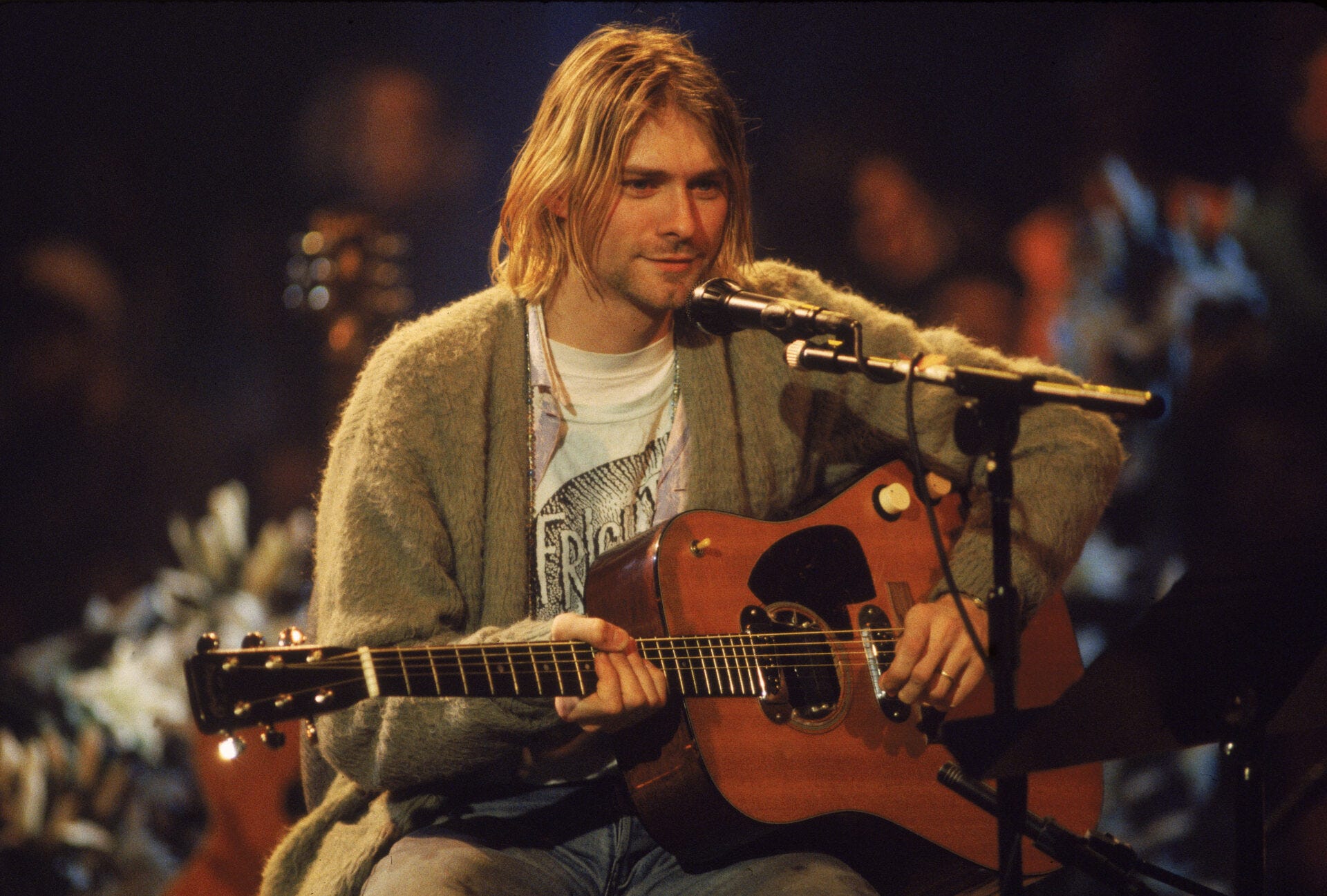
On This Day in 1994, the world learned that Kurt Cobain had been found dead in his Seattle home. He was 27. It is a line that has been written countless times, yet it has never lost its weight. The passing of Cobain did not feel like the end of a career alone, it felt like the dimming of a cultural signal that had burned fiercely and briefly.
Rise of a reluctant icon
Cobain stood at the centre of Nirvana during a moment when music shifted beneath the feet of a generation. With the release of Nevermind and the raw surge of “Smells Like Teen Spirit”, the polished excess of late 1980s rock gave way to something rougher, more honest, more unsettled.
He did not seem entirely comfortable with the role. Fame came quickly, almost carelessly, and it placed him under a glare that he neither trusted nor welcomed. His lyrics spoke in fragments, often bruised and searching, and listeners recognised something real in them. That recognition brought devotion, but also pressure.
Cobain became, whether he liked it or not, a spokesman for disaffection. It is a role that history often assigns without consent, and rarely forgives.
Fame, scrutiny and strain
Success sharpened the interest of the press, and with it came a steady erosion of privacy. His relationship with Courtney Love was pulled apart in public, analysed and speculated upon with an appetite that cared little for truth. Stories grew legs of their own. Some were exaggerated, others entirely unfounded, yet all contributed to a narrative that followed him relentlessly.
Alongside this, there were struggles that were not invented. Cobain battled addiction, and those closest to him saw a man increasingly adrift. Moments that should have marked triumph were often shadowed by personal difficulty. Even at the height of Nirvana’s success, there was a sense that something fragile sat beneath the surface.
There is a temptation, when looking back, to treat these signs as inevitable steps towards tragedy. That is too simple, and too neat. Lives are rarely so orderly. What can be said is that those around him grew concerned, and efforts were made to help him find steadiness.
Final days and uneasy signals
In the weeks before his death, events gathered a troubling momentum. There was an overdose in Rome that raised serious questions about his state of mind. There was an intervention staged by friends and family, a collective attempt to pull him back from the edge. For a moment, it appeared to work. He agreed to seek treatment.
Yet even within that effort, there were signs of unease. He left the rehabilitation facility abruptly, slipping away without notice. It was an act that spoke of restlessness, perhaps of resistance, perhaps of something harder to define.
There were conversations that, in hindsight, carry a different tone. Words spoken that seemed ordinary at the time but later felt like farewells. These fragments have been revisited often, sifted for meaning, though meaning is rarely so easily recovered.
Shock, grief and unanswered questions
The news did not arrive with ceremony. It came first as rumour, then confirmation. In Seattle, it spread quickly, from airwaves to streets, from one stunned voice to another. Fans gathered, searching for explanation, for something that might make sense of it.
They did not find it.
Cobain’s death left behind a familiar silence, the kind that follows when someone who has said so much suddenly says nothing at all. For many, especially younger listeners, his music had articulated feelings they could not express themselves. When he was gone, those feelings remained, but the voice that carried them had vanished.
Public vigils were held. Private grief unfolded away from cameras. His body was cremated, his ashes scattered, an ending that felt both intimate and unreachable.
Legacy that refuses to fade
Cobain’s influence did not end with his life. If anything, it deepened. His work continued to resonate, not because it was polished or perfect, but because it was human. There is a directness in his writing that has outlived trends and outpaced imitation.
He helped bring grunge from a regional sound into a global force, but more than that, he gave shape to a mood. Discomfort, frustration, vulnerability, these were not hidden in his music, they were laid bare.
It is worth remembering that he achieved all this in a short span of time. There is always a sense, when reflecting on Cobain, of what might have been. Yet that line of thought can distract from what was. His contribution was not unfinished in the sense of being incomplete, it was simply brief.
Reflection on On This Day 1994
On This Day in 1994, the loss of Kurt Cobain marked more than the end of a life. It exposed the cost that can accompany sudden fame, relentless scrutiny, and unresolved personal struggle. It also revealed how deeply an artist can connect with an audience, even in a short time.
There remains no single explanation that satisfies. Perhaps there never will be. What endures instead is the music, the questions, and the uneasy understanding that brilliance and vulnerability can exist side by side.
Cobain did not set out to become a symbol, yet history placed him there. His story, like his songs, resists tidy conclusions. It lingers, it unsettles, and it continues to be heard.