

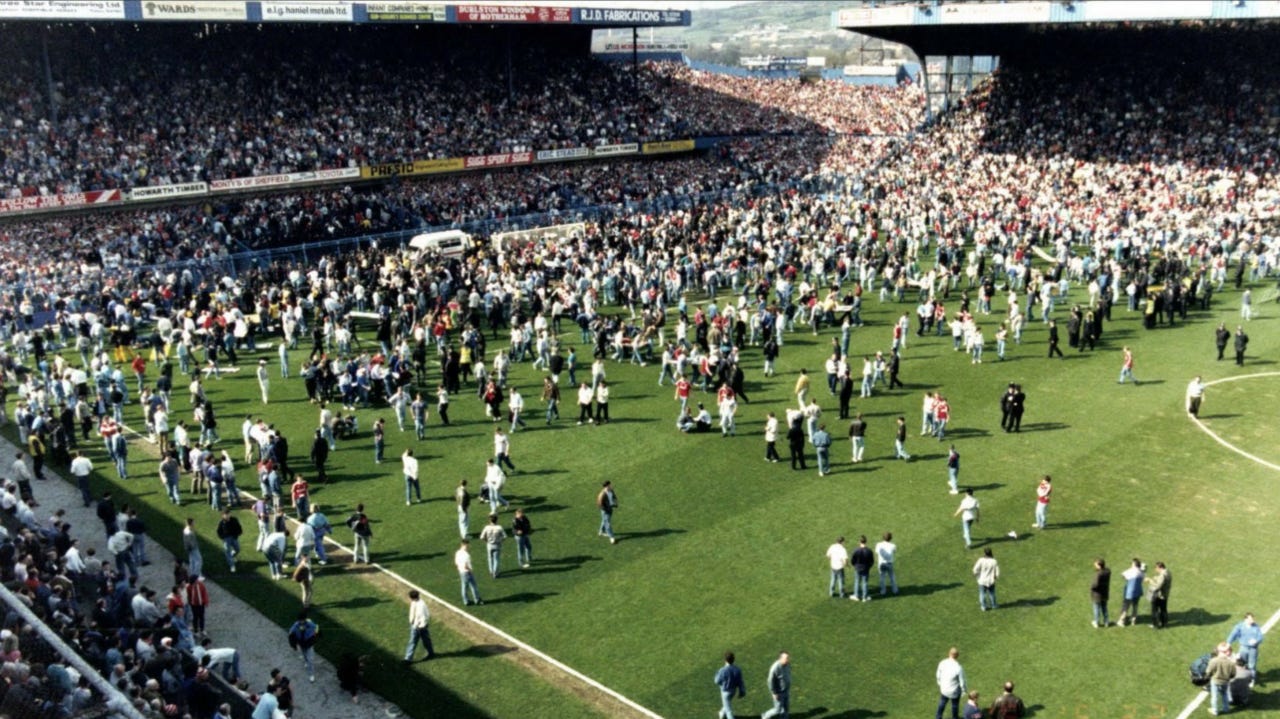
On This Day in 1989, what should have been a spring afternoon of football became one of the darkest chapters in British sporting history. The Hillsborough disaster did not simply take 97 lives; it altered the moral landscape of the nation, exposing failures that stretched far beyond a single stadium in Sheffield.
There are days in history that settle into the bones of a country. This is one of them. Not because of spectacle, but because of the slow, grinding struggle that followed.
Chaos at Leppings Lane
The story has been told many times, yet it still resists comfort. Thousands of Liverpool supporters arrived at Hillsborough for an FA Cup semi-final, expecting nothing more than the familiar rhythms of the game. Instead, they encountered confusion, poor planning and fatal misjudgement.
At the centre of that misjudgement stood David Duckenfield, the match commander whose decision to open Gate C set in motion a chain of events that would prove catastrophic. Supporters were funnelled into already overcrowded pens behind the goal. There was no control, no clarity, no escape.
What followed was not disorder, nor the recklessness that was wrongly claimed in the days after. It was a crush, relentless and suffocating. People were pressed together so tightly that breathing became impossible. In those moments, survival came down to inches, to whether your chest could expand, to whether you could keep your footing.
Eyewitness accounts from that day speak not in dramatic flourishes but in fragments, in the kind of detail that lingers because it is real. The sensation of being unable to move. The sound of voices fading. The terrible stillness when movement stopped altogether.
Human Cost Beyond Numbers
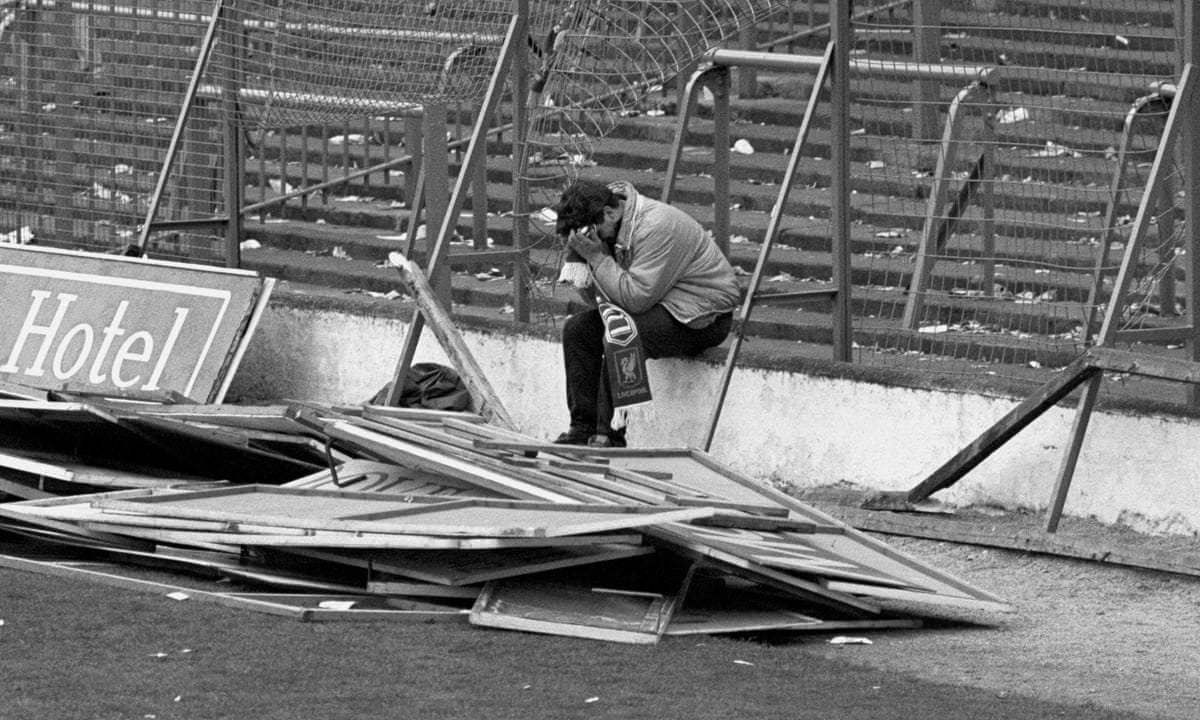
It is easy, with distance, to reduce Hillsborough to a number. Ninety seven lives lost. Hundreds injured. Thousands affected. Yet numbers do not carry the weight of what happened.
Each of those lives had a name, a family, a future that was abruptly erased. Among them was 15 year old Kevin Williams, whose mother Anne Williams became one of the most determined voices in the long fight for truth. Her insistence that her son’s final moments were misunderstood challenged official narratives and forced uncomfortable questions into the open.
Survivors carried a different burden. Many walked away physically intact, yet unable to leave the experience behind. Trauma does not always announce itself immediately. It settles quietly, emerging later in sleepless nights, in sudden memories, in the body itself.
There is a particular cruelty in surviving such an event. Relief is tangled with guilt. Memory becomes both a duty and a weight.
Years of Misdirection
In the immediate aftermath, the truth did not arrive. Instead, it was obscured. Supporters were blamed. False narratives were allowed to flourish. For years, the idea that the victims themselves were responsible took root in parts of the public consciousness.
It is here that Hillsborough moves from tragedy to injustice.
Investigations later revealed that police statements had been altered, that evidence had been shaped in ways that deflected blame. The scale of that manipulation was staggering, with hundreds of statements amended. The effect was profound. Families were forced not only to grieve, but to defend the memory of those they had lost.
The Hillsborough Independent Panel marked a turning point in 2012, exposing the depth of the failures and confirming that supporters bore no responsibility. Four years later, inquests concluded that the victims were unlawfully killed.
Yet even these findings did not bring full closure. Legal accountability remained limited. For many families, justice has felt partial, delayed, or absent altogether.
Fight for Accountability Today
Thirty seven years on, the echoes of Hillsborough continue to shape public debate. The proposed Hillsborough Law, centred on a duty of candour for public officials, represents an attempt to ensure that truth is not something families must fight for over decades.
Voices within football have expressed surprise that such legislation is still not in place. It is a sentiment that resonates beyond the sport. The principle at stake is simple, public authorities should tell the truth, fully and promptly, especially when lives are lost.
The delay speaks to a wider issue in British public life. Accountability often moves slowly, and sometimes only under sustained pressure. Hillsborough has become a reference point, invoked alongside other tragedies where transparency has been questioned.
And yet, the persistence of the families offers its own lesson. They have refused to let the story be buried, refused to accept convenient conclusions, refused to allow memory to fade into abstraction.
Memory That Refuses Silence
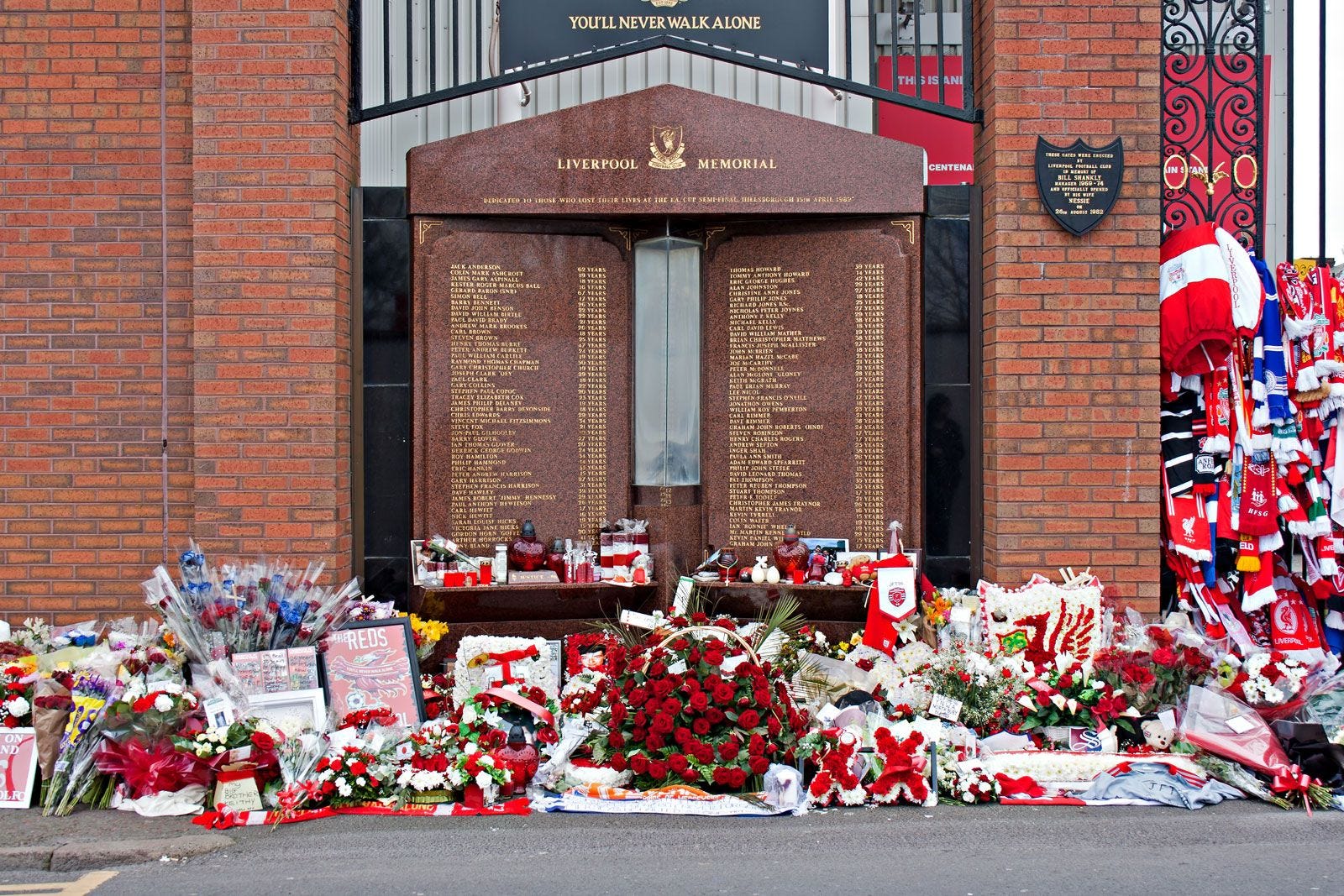
To visit Hillsborough today is to feel the weight of absence. The stadium has changed, safety measures have improved, and football itself has evolved. But the memory remains fixed.
Anniversaries like this are not simply acts of remembrance. They are acts of insistence. They remind us that what happened was not inevitable, that it resulted from decisions, from failures, from systems that did not protect those they were meant to serve.
History, when it is honest, does not soften with time. It sharpens. It demands clarity.
On This Day in 1989, ordinary people went to a football match and did not come home. That fact alone should be enough to ensure that Hillsborough is never reduced to a footnote.
But it is the years that followed, the struggle for truth, the resistance against distortion, that give the story its enduring force.
The dead are remembered. The survivors continue. And the question that lingers is not only how it happened, but why it took so long for the truth to be accepted.
Until that question feels fully answered, Hillsborough will remain unfinished business in the history of this country.