

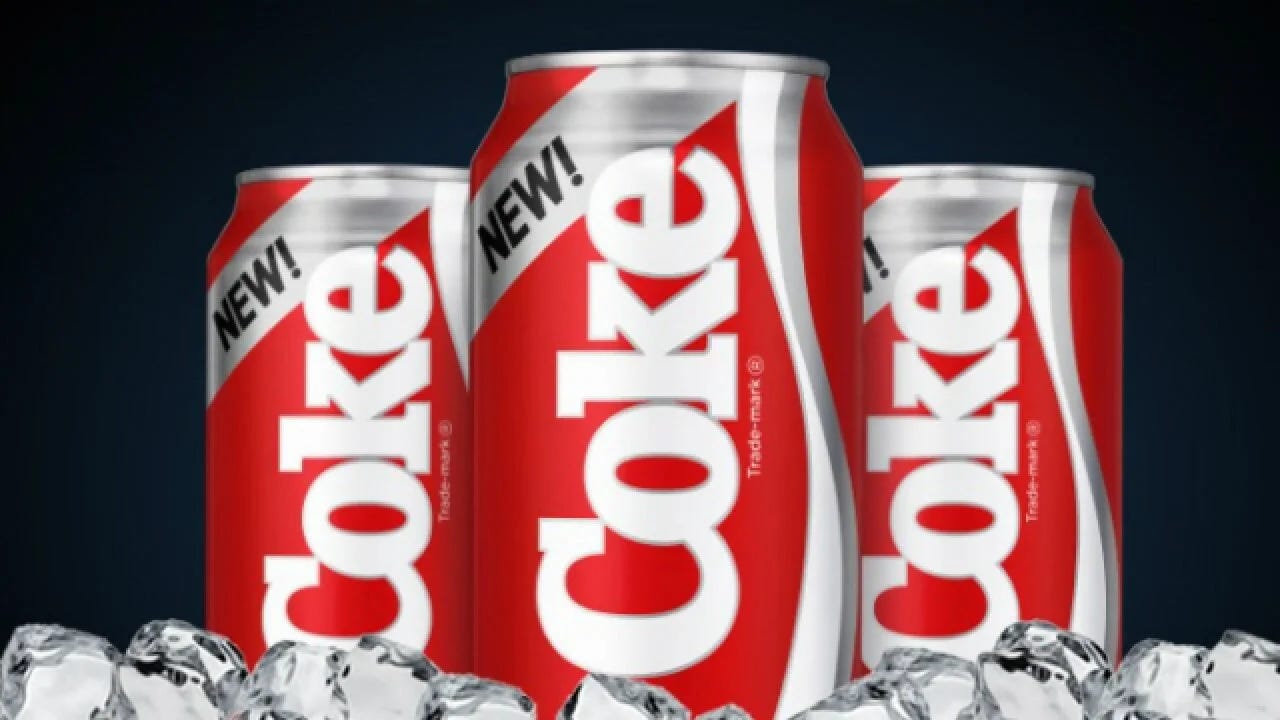
On this day in 1985, a decision made in a polished boardroom in Atlanta sent tremors through shop counters, dining tables, and the very idea of brand loyalty. The Coca-Cola Company chose to replace its century-old formula with something new, sweeter, and, in the eyes of its creators, better.
The logic seemed sound, at least on paper. Taste tests suggested consumers preferred a softer, sweeter cola. Rivalry with PepsiCo had intensified, and the pressure to respond had grown louder with each passing year. The answer, it appeared, was reinvention.
Yet history has a habit of exposing the distance between what people say they like and what they are prepared to lose.
The unveiling was staged with confidence. Bottlers sampled the new drink and applauded. Executives spoke of progress, of evolution, of staying ahead. There was an air of inevitability about it all, as though the future had already been decided.
But outside that room, something far less predictable was waiting.
Taste Tests and Misjudgement
Blind taste tests are tidy things. They strip away context, reduce experience to a sip, and produce clean, comforting data. In that controlled setting, the new formula performed well. It won approval in the moment.
What it could not measure was memory.
For millions, Coca-Cola was not simply a drink. It was habit, ritual, and a quiet constant in a changing world. It was tied to family gatherings, long summers, and the small, repeated comforts that build attachment over time. You cannot replicate that with a sweeter blend, however carefully engineered.
The company’s leadership leaned heavily on research, yet misunderstood the nature of their own success. They treated the product as if it existed in isolation, when in truth it lived inside people’s lives.
When the announcement reached the public, curiosity quickly gave way to suspicion. Questions surfaced, not just about taste, but about intent. Why tamper with something so familiar? Who had asked for this change?
The answers offered little reassurance.
Public Backlash Unleashed
Within weeks, the reaction had sharpened into something more forceful. Telephone lines filled with complaints. Letters arrived in volume, many of them angry, some bordering on disbelief. Customers spoke as though something personal had been taken from them.
Sales told the same story, only more bluntly.
In parts of the United States, particularly in the company’s traditional heartlands, the rejection was immediate. Shops removed the product. Restaurants chose alternatives. Some consumers turned, almost theatrically, to competitors, not because they preferred them, but because they felt pushed.
There were organised protests, petitions, even attempts to rally others into boycotts. The language used was striking. People did not merely dislike the new formula, they felt betrayed by it.
That is the danger when a brand becomes part of identity. Change it carelessly, and the response will not be mild.
Inside the company, the mood shifted from confidence to concern. Executives who had trusted the data now faced something far messier, raw human sentiment. Reports piled up, each one harder to ignore than the last.
The gamble had not paid off. It had exposed a fundamental misreading of the audience.
Retreat and Realisation
By early July, the decision could no longer be delayed. The original formula would return, reintroduced under the name “Coke Classic”. The announcement, when it came, was met not with ridicule, but relief.
Customers responded almost immediately. Calls flooded in again, though this time with gratitude rather than anger. Sales rebounded, and the familiar red label regained its place with surprising speed.
The reversal, though widely described as embarrassing, carried an unexpected benefit. It reminded the world, and perhaps more importantly the company itself, of the depth of feeling attached to the brand.
In trying to modernise, Coca-Cola had accidentally staged a demonstration of its own cultural weight.
The new formula lingered for years, quietly diminishing until it disappeared altogether. It had served its unintended purpose, a lesson rather than a legacy.
Legacy of a Misstep
Looking back, the episode stands as one of the clearest examples of how not to handle a beloved product. It was not a failure of effort or intelligence, but of understanding.
The company had listened, but only to the wrong signals. It had measured preference, but ignored attachment. It had pursued improvement, without asking whether improvement was needed.
Since then, its strategy has been more cautious. Variations have been introduced, flavours expanded, branding refined. Yet the original formula remains untouched, preserved not just as a recipe, but as a symbol.
There is a certain irony in it all. By attempting to change its identity, Coca-Cola reinforced it. By stepping away from tradition, it proved how powerful that tradition was.
For a historian, it is a familiar pattern. Progress often stumbles when it forgets what came before. The past is not simply a record, it is a foundation. Disturb it without care, and the structure above begins to shake.
On this day in 1985, a global giant learned that lesson in full view of the world. It was not the taste of the drink that mattered most, but the meaning people had poured into it over generations.
And that, once disturbed, demanded to be restored.