

Before we begin: This will be my last history piece for a little while. I head off on holiday tomorrow, and by the time I return, the football season will be over, which usually means the long, chaotic march into transfer speculation and rumour will already be in full swing.
I have genuinely enjoyed writing these On This Day articles because there is something satisfying about bringing forgotten moments back to life. The difficulty is that, for all the effort involved, very few people actually seem to read them. That may say more about modern attention spans than the stories themselves, but it probably means I need to rethink how this blog operates going forward.
History deserves an audience. Whether this series continues in its current form remains to be seen.
There are inventions that arrive with fireworks and fanfare, and there are others that creep into the world almost apologetically before conquering it entirely. On this day in 1974, in a cramped Budapest apartment thick with sawdust, tools and restless ambition, one man quietly assembled what would become the most famous puzzle on Earth.
The Rubik’s Cube was never meant to be a toy.
That remains the most remarkable part of its story.
Budapest Workshop Sparked a Global Obsession
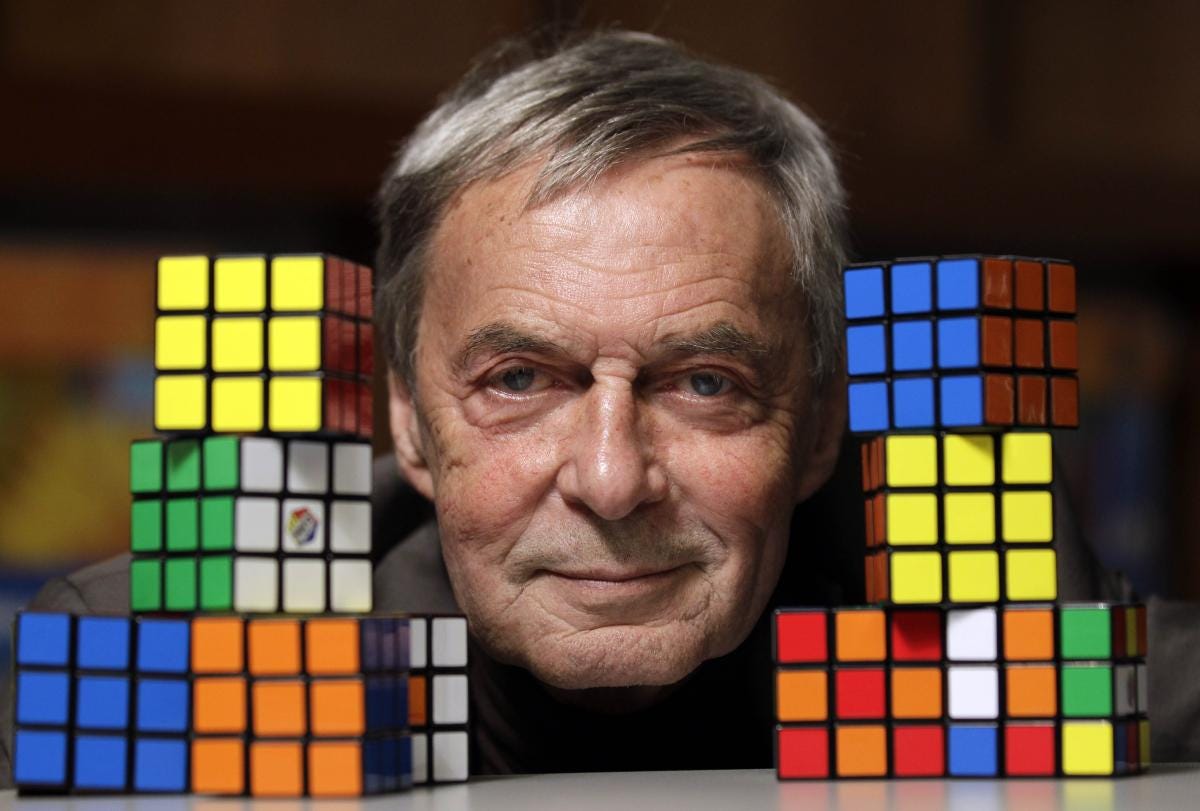
Ernő Rubik was 29 years old when he completed the first workable version of the cube on 19 May 1974. An architecture lecturer in communist Hungary, he was searching for a practical way to help students understand movement through three dimensional space. Words and diagrams could only go so far. He needed something physical, something his students could hold, twist and examine from every angle.
What emerged was not brilliance in the theatrical sense. There was no triumphant declaration, no sudden awareness that history had been made. Instead there was confusion.
Rubik rotated the coloured sections of the cube and realised, almost immediately, that he had created a problem even he could not solve.
That moment matters because it reveals the real genius behind the invention. The Rubik’s Cube succeeded not because it looked clever, but because it forced people into confrontation with disorder. Every movement promised progress while often creating deeper chaos. Solving one side destroyed another. Certainty dissolved into frustration.
And yet people could not put it down.
The cube reflected something profoundly human. We are creatures endlessly trying to impose order on confusion, whether in politics, science, art or ordinary life. Rubik accidentally distilled that struggle into a pocket sized object.
Family Influences Shaped Rubik’s Mind
The roots of the invention stretched far beyond that Budapest workshop.
Rubik inherited two sharply different worlds from his parents. His father was an aeronautical engineer, disciplined, methodical and technically gifted. His mother was a poet and pianist whose optimism survived the horrors of wartime Europe. Between them, Rubik developed an unusual blend of engineering precision and artistic imagination.
That combination explains why the cube became more than mathematics wrapped in coloured plastic.
Plenty of puzzles test logic. Very few become cultural symbols.
The Rubik’s Cube possessed elegance. Even scrambled, it looked hypnotic. In motion, it carried rhythm and symmetry. Solving it demanded cold calculation, but handling it felt strangely creative. It appealed equally to mathematicians, schoolchildren, artists and obsessives.
In truth, the cube arrived at exactly the right historical moment. The late 1970s and early 1980s were hungry for symbols of intellect and modernity. Technology was accelerating into homes. Computers still felt mysterious to most people. The cube captured that atmosphere perfectly. It looked futuristic without being intimidating.
And unlike many fashionable crazes, it rewarded persistence.
Puzzle Mania Took Hold Across the World
By the time the puzzle reached the West, renamed the Rubik’s Cube, its rise became unstoppable.
What had begun as a classroom aid in Hungary turned into an international phenomenon. Millions bought cubes convinced they could master them in an evening, only to discover the maddening brilliance hidden beneath its cheerful colours.
Offices fell silent as workers twisted cubes beneath desks. School playgrounds became competitions of speed and memory. Television presenters attempted solutions live on air and failed spectacularly. Entire books appeared explaining solving methods. Competitive cubing emerged long before modern internet culture made niche hobbies fashionable.
The appeal rested partly in humiliation.
The cube exposed arrogance mercilessly. Intelligent people often assumed they could solve it instinctively. Minutes later they sat defeated, staring at a plastic monument to their own overconfidence.
But the puzzle also taught discipline. Eventually, nearly everyone who solved it reached the same conclusion. Success depended less on raw intelligence and more on patience, repetition and structured thinking.
That lesson perhaps explains why the cube endured while countless other trends vanished into nostalgia.
Lasting Legacy Beyond the Toy Shelf
Today the Rubik’s Cube remains one of the best selling products in history, with hundreds of millions sold worldwide. Yet its true legacy reaches beyond commercial success.
It altered perceptions of what a toy could be.
Before the cube, puzzles often belonged to quiet corners of hobby shops or rainy afternoons at home. Rubik transformed the puzzle into a social phenomenon. He made intellectual challenge fashionable.
There is also something deeply fitting about the fact that this revolutionary invention emerged from behind the Iron Curtain. Communist Hungary in the 1970s was hardly viewed as the natural birthplace of a worldwide consumer craze. Yet creativity has always ignored borders and political systems. Rubik’s Cube travelled effortlessly across them all.
Its creator remained notably modest throughout the explosion of fame. Perhaps because he understood something many inventors do not. The cube no longer belonged to him once it entered people’s hands. It became personal. Every owner developed their own battle with it, their own rituals, frustrations and triumphs.
That universality explains why the cube still survives in modern culture despite endless digital distractions. In an age where entertainment increasingly disappears behind screens, the Rubik’s Cube remains stubbornly tactile. You feel every mistake in your fingertips. You physically wrestle chaos into order.
And perhaps that is why it still resonates.
The cube offers no shortcuts. No hidden algorithm magically appears unless learned through persistence. Every solved face feels earned.
On this day in 1974, Ernő Rubik completed a wooden prototype intended merely to help architecture students think differently. Instead he created one of the defining objects of the modern age, a puzzle that crossed generations, languages and ideologies with astonishing ease.
Half a century later, millions still sit turning those coloured squares, chasing the same satisfaction first discovered in a dusty Budapest bedroom.
Few inventions can claim to have challenged the world quite so quietly, or quite so brilliantly.