

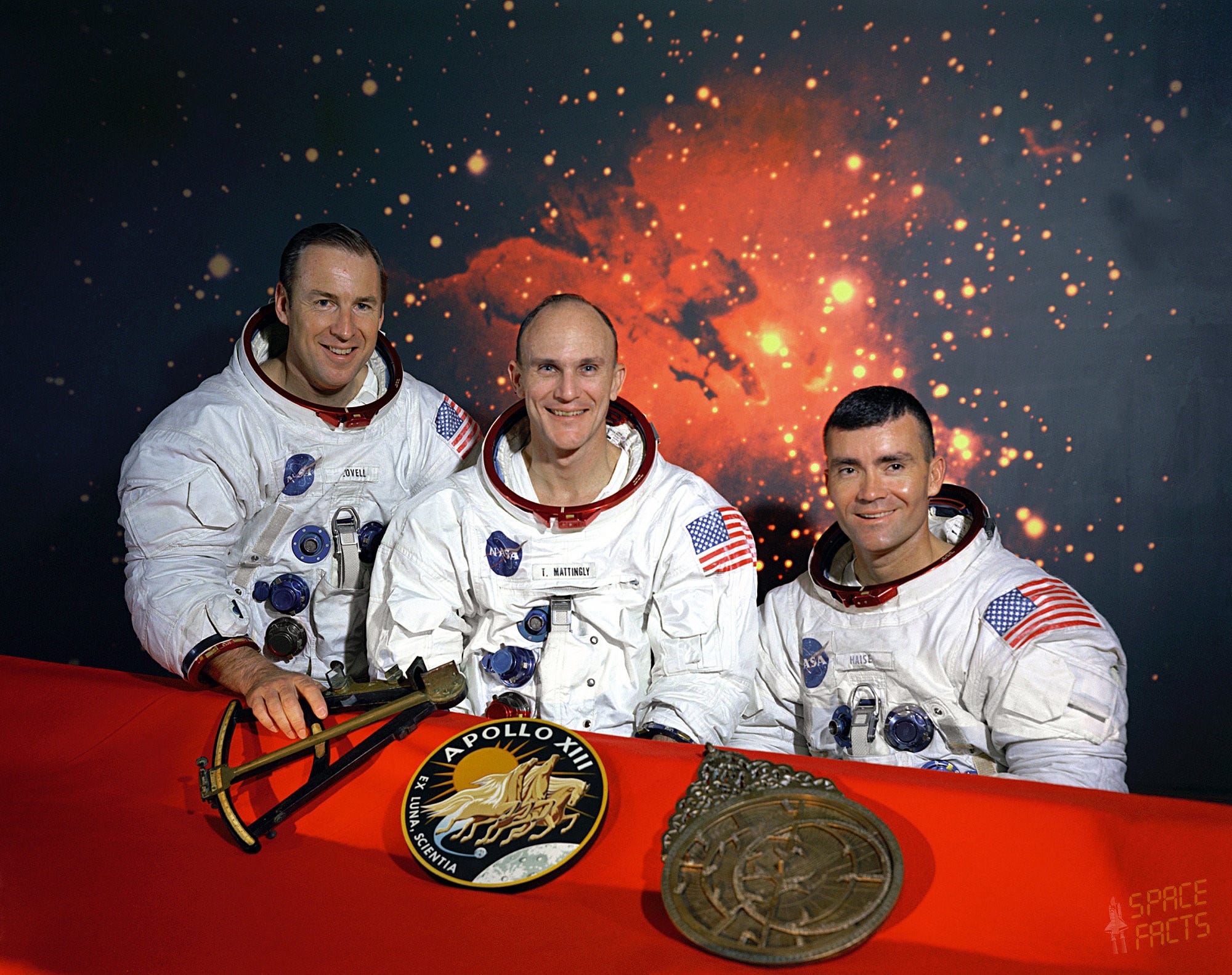
The safe return of the Artemis II mission last week has once again reminded us that space travel, for all its technological polish, remains an unforgiving pursuit. As four astronauts splashed down in the Pacific after a flawless journey around the Moon, the world celebrated precision, teamwork, and progress. Yet, on this day in 1970, another mission revealed a harsher truth, that even the smallest failure in space can spiral into catastrophe.
On This Day in 1970, the Apollo 13 mission veered from routine into crisis. What was expected to be a straightforward lunar landing became one of the most gripping survival stories ever told, not because of where it went, but because of how it came back.
Crisis Unfolds in Silence
Two days into the journey, more than 200,000 miles from Earth, a routine procedure triggered disaster. A simple stirring of oxygen tanks caused a violent explosion that crippled the spacecraft. In an instant, the mission’s purpose changed. Exploration was abandoned, survival became everything.
Inside the cabin, Jim Lovell, Fred Haise, and Jack Swigert confronted the unthinkable with remarkable composure. Oxygen leaked into space, power systems failed, and the spacecraft began to drift off course.
There is a stark contrast between the controlled success of modern missions and the raw uncertainty faced here. Where Artemis II demonstrated flawless execution, Apollo 13 exposed the fragility beneath even the most advanced engineering. Yet it also revealed something more enduring than perfection, the human capacity to adapt under pressure.
Improvisation Becomes Lifeline
With the command module failing, the crew turned to the lunar module as an improvised lifeboat. It was never designed to sustain three men for such a journey, yet it became their only hope.
Every decision carried weight. Power had to be rationed. Systems shut down. Navigation recalculated by hand. There was no margin for error, only the steady discipline of men trained to think clearly when clarity mattered most.
The most pressing threat was invisible. Carbon dioxide levels began to rise, turning the very air into a danger. The solution was not found in advanced machinery, but in ingenuity. Using basic materials, cardboard, tape, plastic, the crew fashioned a makeshift device to adapt incompatible filters. It was crude, yet effective, a reminder that survival often depends on creativity as much as technology.
Navigation Through the Void
As the spacecraft drifted, a critical manoeuvre was required to set it on a path home. With limited power, the onboard computer could not be used. The burn had to be executed manually, timed to the second.
In that moment, space offered no forgiveness. A miscalculation would have sent the spacecraft beyond Earth’s reach. The engine fired, the seconds were counted aloud, and then silence returned. Confirmation came later, the trajectory was corrected. The crew were heading home.
There is a quiet heroism in such moments. No spectacle, no drama, just precision under pressure. It is here that Apollo 13 finds its true significance, not in grand achievement, but in the mastery of small, vital actions.
Return Through Fire
The final stage of the journey brought its own peril. The crew had to abandon the lunar module and re-enter Earth’s atmosphere in the damaged command module. There was no certainty the heat shield had survived the explosion.
Re-entry is always a trial by fire. Flames engulf the capsule, communication is lost, and for several minutes, there is only waiting. Even today, as Artemis II demonstrated with its flawless descent and parachute deployment, this remains the most dangerous phase of any mission.
For Apollo 13, those minutes carried an added weight of doubt. Then, at last, the parachutes opened. The capsule splashed down safely in the Pacific. Against all expectations, the crew survived.
Legacy Beyond the Moon
Apollo 13 did not land on the Moon, yet its legacy reaches further than many missions that did. It redefined success, not as the fulfilment of a plan, but as the triumph over failure.
The recent return of Artemis II shows how far space exploration has come. Precision trajectories, refined heat shields, and coordinated global teams now make such missions appear almost routine. Yet the lessons of Apollo 13 remain embedded in every calculation and contingency.
Space still demands respect. It still punishes complacency. And it still rewards those who can think, adapt, and endure when the unexpected strikes.
On This Day in 1970, humanity did not conquer space. It survived it. And in that survival, it proved that progress is not always measured in steps forward, but in the courage to come back.