

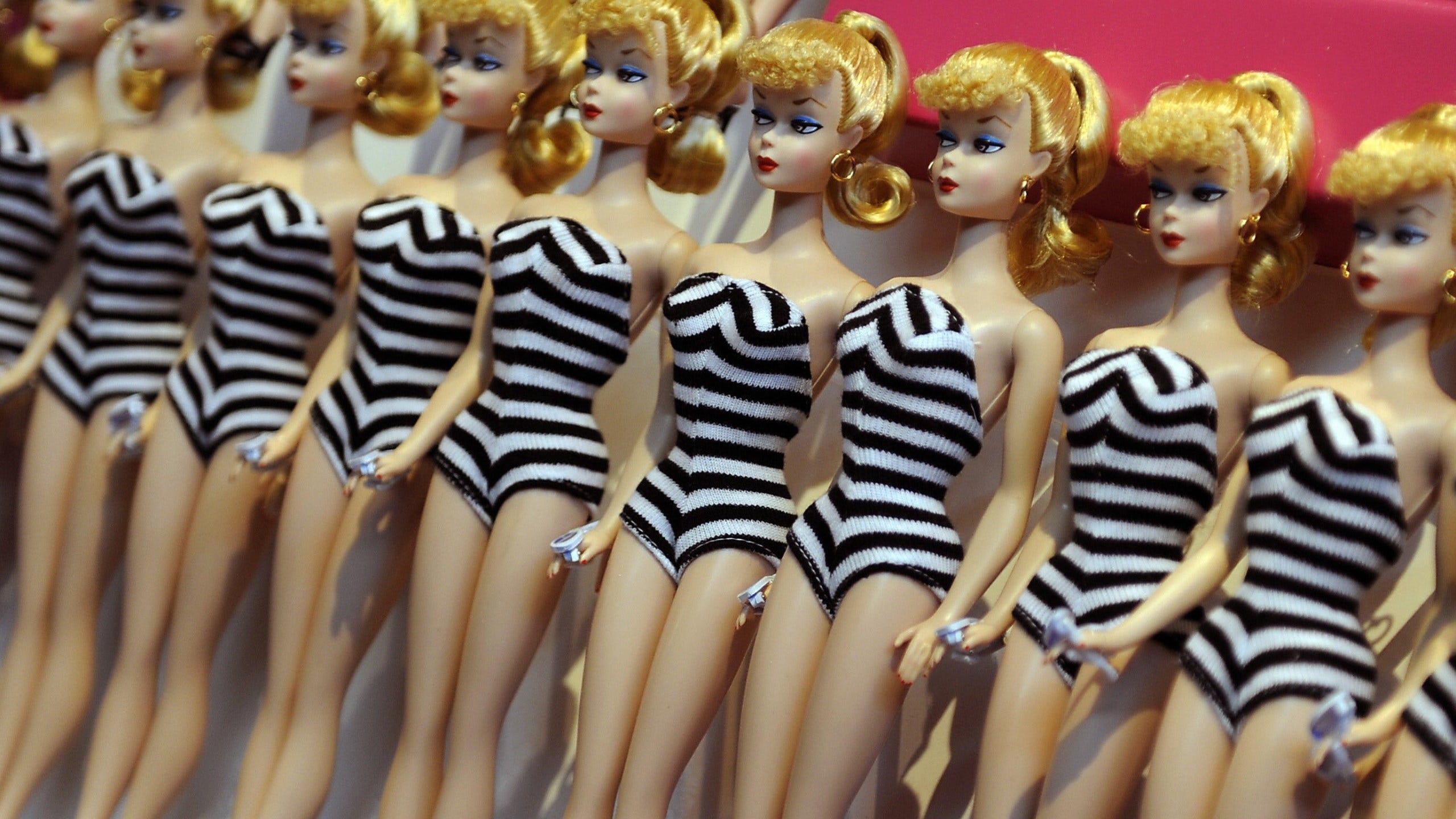
On this day in 1959, a slender plastic figure in a striped swimsuit stepped into history. The unveiling of Barbie at the American International Toy Fair in New York marked a turning point not only for the toy industry but for the way childhood imagination was understood.
The origin of that moment lay in an ordinary domestic scene years earlier. A mother watched her daughter playing with fragile paper dolls, those flat cut-outs that rarely survived the rough and tumble of childhood for long. What caught the mother’s attention was not the tearing paper or the discarded scraps. It was the nature of the play itself. The girl was not pretending to raise babies, as generations of children had done with traditional dolls. Instead she imagined adult lives for the figures. Careers, social events, parties, possibilities.
That observation was quietly revolutionary.
For decades the toy market had assumed that girls wanted dolls that mimicked motherhood. Baby dolls dominated shop shelves and the logic seemed settled. Yet here was evidence that many children wanted something different. They wanted to imagine who they might become.
The woman who recognised this was Ruth Handler, a formidable figure in the American toy business. Alongside her husband and a partner, she had built Mattel into a rising force during the post war boom. Her role was marketing and sales, a field where instinct mattered as much as spreadsheets. And her instinct told her there was a market waiting to be discovered.
The idea was simple in concept yet bold in implication. Create a three dimensional doll that represented an adult woman. Give children a figure they could dress, style and place into the many roles that adulthood might hold.
At the time, many in the industry dismissed the notion outright.
Resistance from a Skeptical Toy Industry
In the conservative world of mid twentieth century toys, Handler’s proposal sounded risky. Buyers and manufacturers argued that parents would reject a doll with adult features. They believed children would only embrace the familiar form of a baby doll.
Even within her own company the idea faced resistance. The prevailing wisdom was that girls played at being mothers, not professionals, not fashion icons, not independent women navigating adult life.
Handler refused to abandon the concept.
A trip to Europe in the mid 1950s strengthened her conviction. In a shop window she noticed a German fashion doll with adult proportions, proof that the idea could work. Back in the United States she and her design teams spent years refining a version suitable for the American market.
Where the European doll had offered only a single outfit, Handler recognised a deeper opportunity. Clothing, accessories and fashion could become a world of their own. A doll might be purchased once, but wardrobes could grow endlessly.
It was a shrewd blend of imagination and commercial insight. A miniature fashion industry attached to a toy.
By the time the new doll was ready for launch, everything depended on convincing retailers.
Toy Fair Gamble in New York
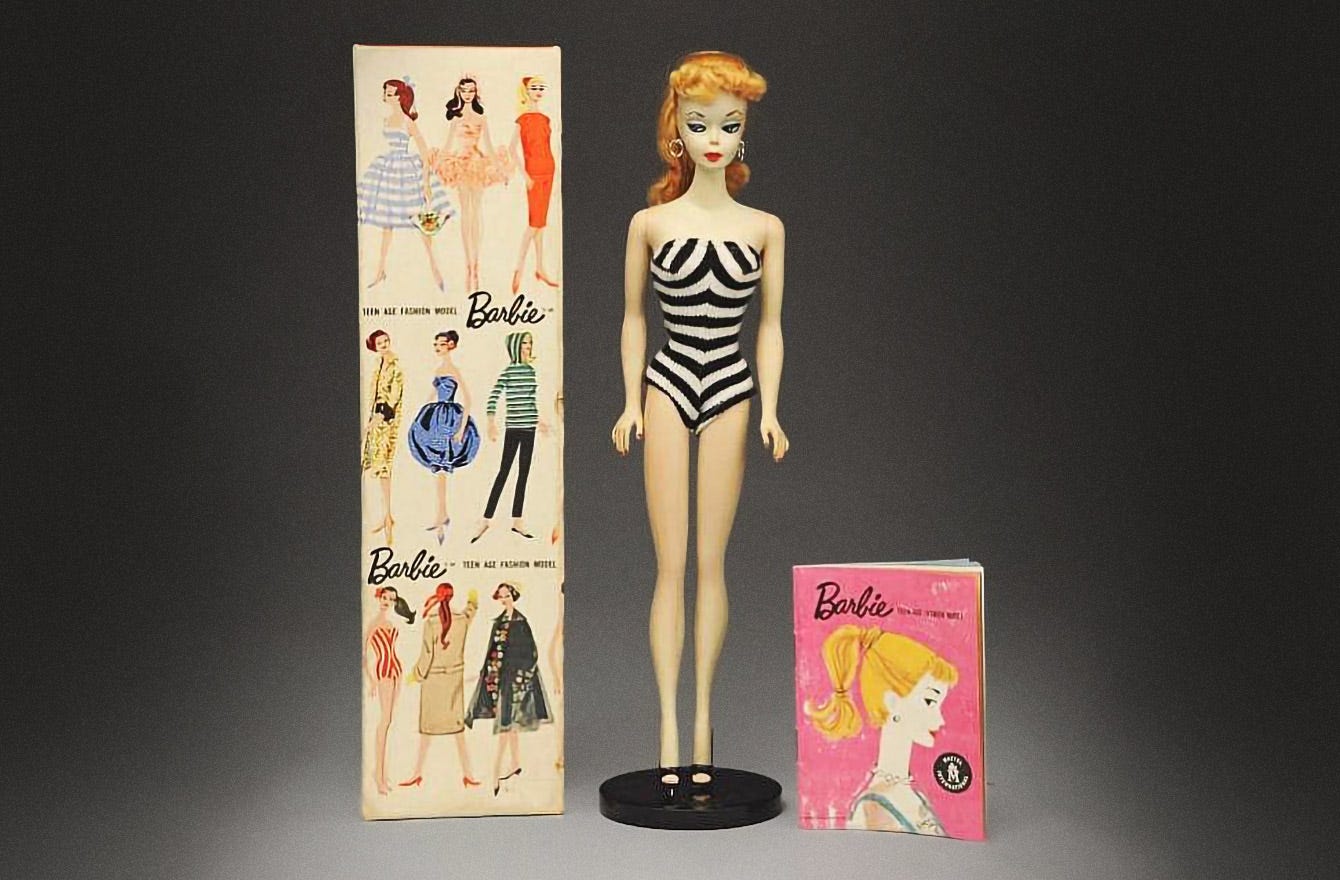
The decisive moment came on 9 March 1959 at the American International Toy Fair in New York.
Handler presented buyers with a display of dolls dressed in carefully designed outfits. Summer dresses, tennis whites, glamorous eveningwear and that now famous zebra striped swimsuit. Each doll suggested a different moment in an imagined adult life.
Many buyers were unimpressed.
Some looked at the doll’s adult shape and declared it unsuitable for children. Others insisted mothers would never buy such a toy for their daughters. Orders were refused and scepticism filled the room.
It might have been the end of the story.
Instead Handler took a different route. If retailers could not yet see the potential, perhaps children would.
Mattel invested heavily in television advertising aimed directly at young viewers. The campaign ran during the hugely popular Mickey Mouse Club programme, placing the doll before an audience that had never been asked what kind of toys they truly wanted.
The response was immediate. Children recognised the appeal instinctively. They saw a figure through which they could imagine future versions of themselves. Parties, careers, friendships, fashion and independence.
Soon parents arrived at toy shops asking for a doll many retailers had declined to stock.
Phones rang. Orders followed.
Within a year more than 350,000 Barbies had been sold, an extraordinary figure for a completely new toy concept. Production struggled to keep pace with demand.
A gamble had become a phenomenon.
Cultural Legacy Beyond a Toy
The success of Barbie transformed Mattel into one of the most powerful companies in the global toy industry. The doll gained friends, family members and eventually a boyfriend named Ken, expanding the miniature world around her.
By the end of the 1960s Barbie had become the best selling doll on the planet.
Yet the deeper significance lay in the shift of imagination she encouraged. Children could project ambitions onto the doll in ways earlier toys rarely allowed. Over time Barbie appeared in dozens of professions, from astronaut to surgeon, reflecting changing expectations about women’s roles in society.
Of course the doll has never escaped controversy. Critics have debated her body shape, cultural messaging and influence on beauty standards. These arguments have followed Barbie for decades and remain part of her history.
But to understand the moment in 1959 is to see something slightly different. The launch of Barbie revealed that children’s play could centre on aspiration rather than imitation of traditional roles.
It also revealed the instinct of a businesswoman who understood her audience better than many experts.
Handler herself would experience triumph and turbulence in later years. Her career included public success, corporate scandal and eventual departure from the company she helped build. Yet she continued to innovate, later founding a business that created improved breast prostheses for women recovering from surgery.
It was another example of her recurring instinct. She noticed problems that others had overlooked and shaped products around what people genuinely needed.
Moment That Still Echoes
Looking back from the present day, the unveiling of Barbie on 9 March 1959 appears almost inevitable. The doll is so embedded in global culture that it feels as though she must always have existed.
History rarely works that way.
The arrival of Barbie required one person willing to question accepted wisdom in the toy business. It required a belief that children’s imaginations were broader than the industry assumed. And it required the stubborn confidence to push forward when buyers and critics doubted the idea.
On this day in 1959, a plastic doll took her place under the bright lights of a New York showroom. Few in the room could have predicted the scale of what followed.
Yet from that moment onward, the small figure in the striped swimsuit carried something larger than a toy wardrobe.
She carried the idea that play could be a rehearsal for possibility.