

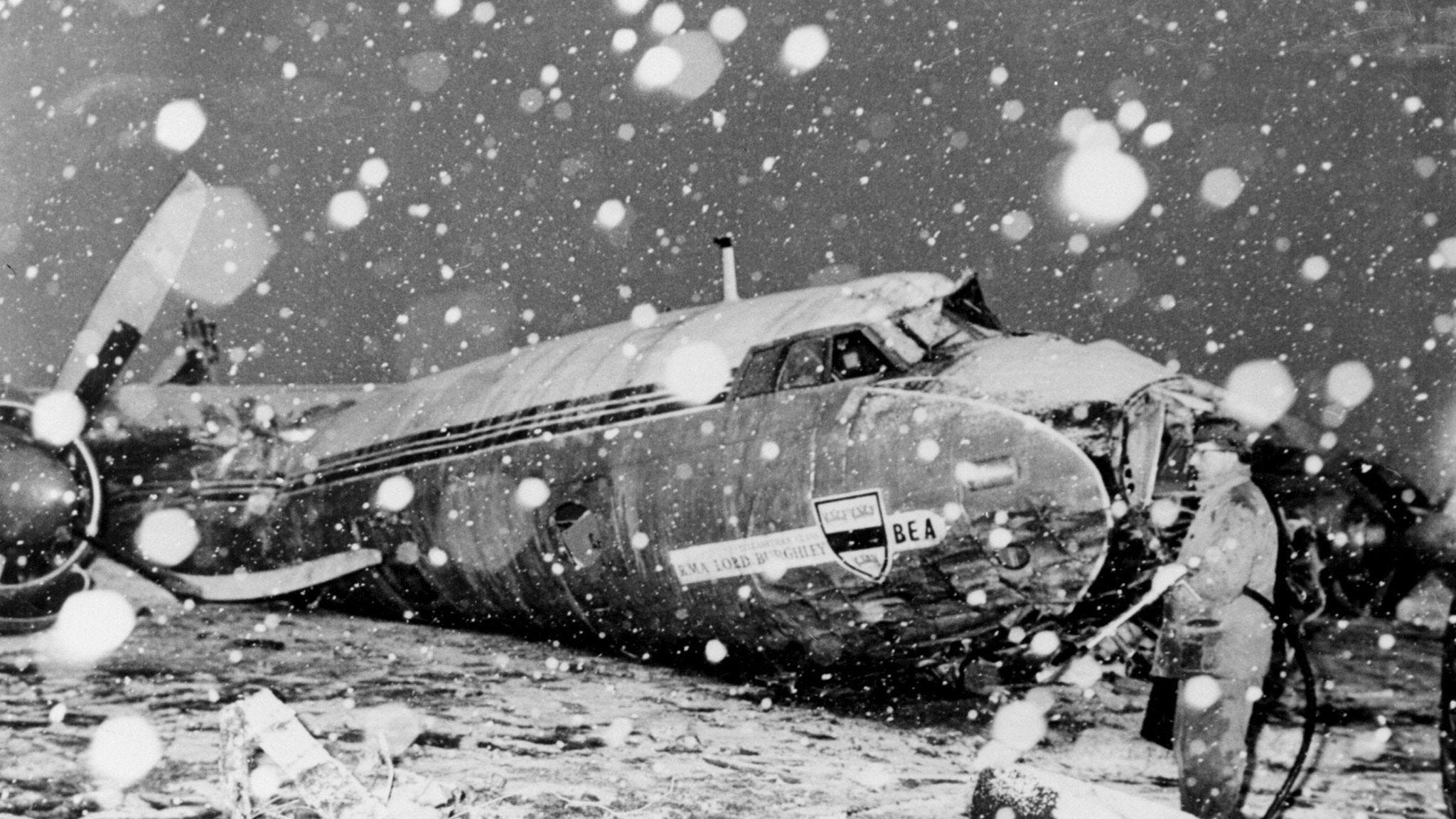
On This Day in 1958, football lost its innocence on a snowbound runway in Munich. What began as a routine journey home from a European tie ended as one of the darkest afternoons the game has ever known. The Munich Air Disaster was not simply a tragedy of broken metal and lost lives, it was a moment that cut deep into the soul of British sport and forced an entire club to confront grief in public.
For Manchester United, the day marked the abrupt end of a golden future that had seemed almost guaranteed. For football, it became a reference point, a reminder that greatness and fragility often travel together.
Promise of a generation
The team boarding that flight were young, confident and already admired across Europe. They had just come through a bruising tie in Belgrade, surviving a hostile atmosphere, a controversial referee and a relentless opponent to reach the semi finals of the European Cup. They played with courage and style, traits that had come to define them.
This side had been shaped patiently, deliberately, by a manager who believed youth deserved trust. Many were still in their early twenties, some barely beyond their teens, yet they carried themselves like seasoned professionals. There was talk, not idle talk either, that this team could dominate the game for a decade. The phrase “Busby Babes” was spoken with affection and pride, not sentimentality.
Football, at that moment, felt like a promise waiting to be fulfilled.
The journey home should have been uneventful. A refuelling stop in Munich, a final leg back to England, and then rest before the next fixture. Instead, snow, slush and hesitation crept into the margins. Two aborted take offs. A third attempt. And then violence, sudden and unforgiving.
Moment everything changed
Survivors later spoke of the eerie quiet inside the aircraft, the sense that something was not right, the sickening realisation that the plane was not lifting as it should. When it struck, the force tore the aircraft apart, scattering wreckage, luggage and bodies across the frozen ground.
In those first minutes after the crash, confusion ruled. Players stumbled through snow and smoke, some still strapped into seats that no longer belonged to a plane. Blood mixed with fuel. Familiar faces lay still. Others cried out, searching for teammates, for help, for meaning.
Twenty three people died as a result of the crash. Eight were Manchester United players. Others were journalists, crew members and staff. The numbers tell part of the story, but they cannot carry the weight of what was lost. These were sons, husbands, colleagues, friends. For supporters, they were heroes who would never return.
The manager, Matt Busby, gravely injured, drifted between life and death. Doctors prepared families for the worst. The future of the club itself was openly questioned. It was not melodrama to ask whether Manchester United could continue at all.
Picking up the pieces
In the days that followed, grief came in waves. Hospitals in Munich became places of whispered conversations and unbearable decisions. Duncan Edwards, already regarded as the finest talent of his generation, clung briefly to life before slipping away. His death felt particularly cruel, a reminder that survival was not guaranteed simply because the worst seemed over.
Back in England, the football world responded with a mixture of shock and solidarity. Rival clubs offered players. Supporters sent letters and flowers. There was sympathy, but also an expectation that football would find a way to carry on, because it always does.
The responsibility fell to those left standing. Jimmy Murphy, the assistant manager, was suddenly thrust into command, chose to keep the club alive by doing the one thing football understands best, playing on. Emergency signings were made. Youth players were promoted. Men played out of position. None of it mattered as much as the act itself, stepping onto a pitch again.
When the team returned to competitive action less than two weeks after the disaster, the result felt secondary. The applause for the survivors, the empty spaces in the programme, the shared silence, all of it spoke louder than the scoreline.
Legacy beyond the runway
What followed over the next decade was not a miracle, but a slow, often painful rebuilding. Busby survived against medical expectation and returned to work carrying scars that were both physical and emotional. He refused to let the club become a monument to tragedy. Instead, he rebuilt it into something worthy of those who had been lost.
New players arrived. Survivors like Bobby Charlton grew into leaders. The memory of Munich was never far away, but it no longer paralysed. It informed, it hardened resolve, it reminded everyone involved what football could cost and what it could give back.
Ten years after the crash, under the floodlights at Wembley, Manchester United finally lifted the European Cup. It was not redemption in any neat sense. Nothing could undo what happened in 1958. But it was a statement that the story had not ended on a runway in Germany.
For supporters, Munich became part of the club’s identity, not as a marketing device or a badge of victimhood, but as a solemn inheritance. The names are remembered. The date is marked. Silence still falls when it should.
On This Day, 1958, football learned that progress carries risk, that youth and hope can vanish without warning, and that resilience is not loud or theatrical. It is found in quiet decisions to continue, to rebuild, and to remember properly.
The Munich Air Disaster did not just change Manchester United. It changed how the game understands loss. It taught football that history is not only written in goals and trophies, but also in moments when the game must stop, look at itself, and decide what it stands for.