

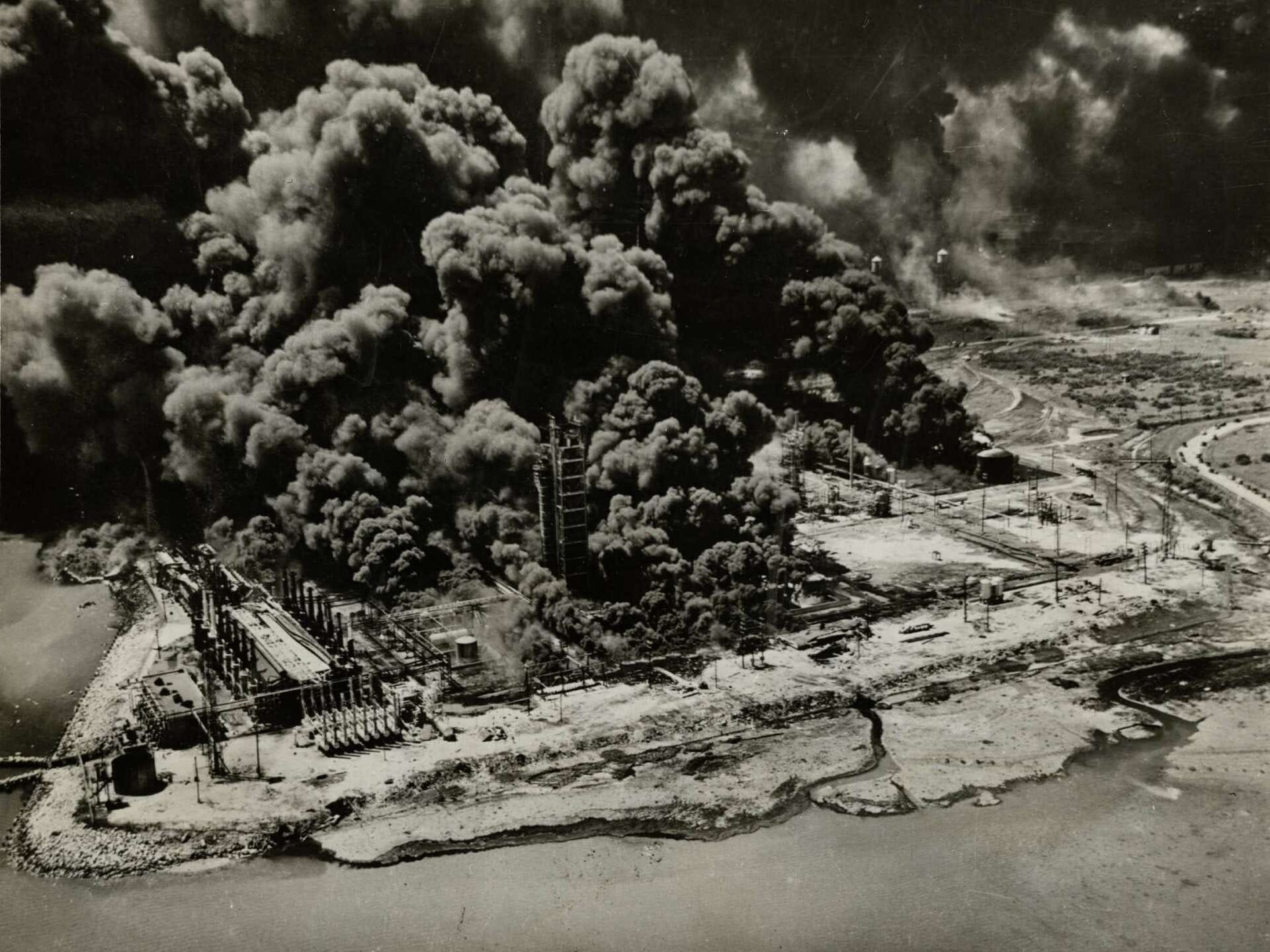
On this day in 1947, the port of Texas City woke to the ordinary rhythm of trade. Ships were berthed, cargo shifted, men at work with the steady assurance that comes from repetition. Yet beneath that surface lay a quiet danger, misunderstood and mishandled.
At the centre stood the French cargo vessel SS Grandcamp, loaded with ammonium nitrate. To the untrained eye, it was fertiliser, harmless enough. To those who knew better, or should have known, it carried the latent force of destruction.
By shortly after nine in the morning, smoke was already pushing from the ship’s hold. Police officer Bill Reeves arrived not to fight flames but to hold back a growing crowd. Curiosity, that most human instinct, had drawn onlookers close to danger. It always does.
What followed was not a gradual escalation but a violent rupture. The ship detonated with a force that defied comprehension. Reeves himself was hurled through the air, stripped of control, consciousness, and almost life. He awoke in a drainage ditch, paralysed, choking, inches from drowning in the aftermath of an explosion he could not yet understand.
He survived. Hundreds did not.
Decisions That Sealed Fate
In tracing the roots of the Texas City disaster, it is tempting to look for a single villain, a lone misstep. The truth is more unsettling. This was a chain of decisions, each one reasonable in isolation, catastrophic in combination.
Dock superintendent Pete Suderman recognised the seriousness of the fire and sought help. Yet aboard the Grandcamp, a crucial decision was made. Rather than flood the hold, which risked damaging valuable cargo, the plan was to seal it and pump in steam.
On paper, it reads as methodical. In practice, it turned the ship into a pressure vessel primed to explode.
Ammonium nitrate does not forgive misunderstanding. Heated and confined, it becomes volatile. Labels failed to warn. Knowledge failed to intervene. Procedure failed to adapt. The result was inevitable, though not recognised in time.
Even as the fire worsened, the port remained open, the crowd grew, and the sense of urgency lagged fatally behind the reality of the threat.
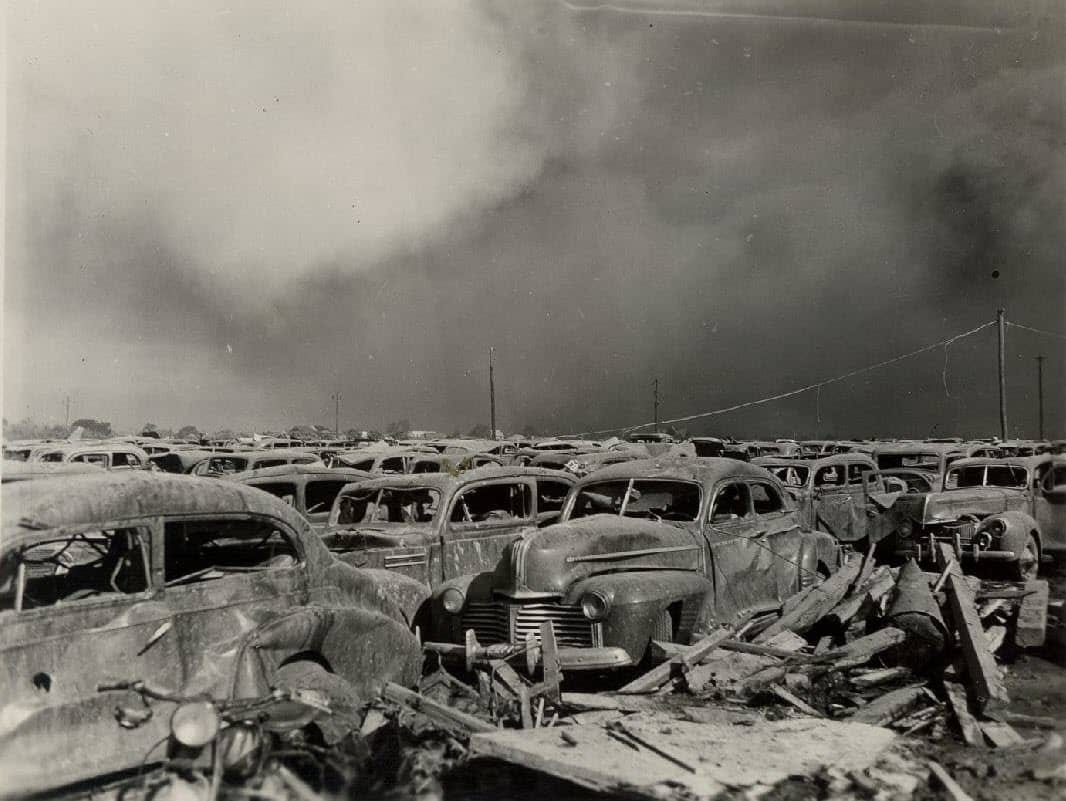
City Engulfed in Fire
The first explosion did more than destroy a ship. It tore through Texas City with indiscriminate force. Buildings collapsed, windows shattered miles away, and fires ignited across the landscape. Oil burned on water, turning the harbour into a scene that resembled open warfare.
The human toll was immediate and devastating. Hundreds were killed outright. Thousands more were injured. Entire families were altered in an instant.
Yet the day’s tragedy had not finished its work.
Another vessel, the SS High Flyer, had also been carrying ammonium nitrate. Damaged by the initial blast and set ablaze, it drifted into a perilous position. Efforts were made to tow it clear, a desperate attempt to prevent further destruction.
Among those drawn into the second crisis was seaman Nattie Morrow, one of many who faced the unfolding danger with little certainty and less protection. Tug crews strained against time and circumstance, working in heat, smoke, and uncertainty.
Their efforts bought hours, not safety.
Late that night, the High Flyer exploded with even greater force. By then, the docks had largely been evacuated, sparing many lives, but the city endured a second violent blow. Debris fell from the sky, fires reignited, and whatever sense of control remained was shattered again.
Cost Measured Beyond Numbers
The figures are stark. More than 450 dead, thousands injured, countless homes and livelihoods lost. Numbers, however, rarely capture the full weight of such a disaster.
Schools were damaged, children caught in the blast radius. Aircraft were knocked from the sky. Families searched for loved ones who would never be found. In the days that followed, the work shifted from rescue to recovery, and then to reckoning.
Years later, legal battles sought accountability. Claims were made that negligence in the handling and labelling of ammonium nitrate had set the stage for disaster. The courts, however, offered limited satisfaction. Responsibility proved difficult to assign in a system where oversight was fragmented and standards were insufficient.
Compensation eventually came, but it was measured in currency, not closure.
Lessons Written in Ash and Steel
What remains, nearly eight decades on, is not simply the memory of destruction but the lessons carved from it.
Industrial progress carries risk. That is understood. What is less often accepted is how easily that risk can be magnified by complacency, poor communication, and incomplete knowledge.
In Texas City, no single act caused the disaster. It was the accumulation of small failures. A label that did not warn. A decision made to preserve cargo rather than prioritise safety. A delay in response. A crowd allowed too close. Each element fed the next until the outcome became unavoidable.
There is a tendency, with time, to treat such events as relics, confined to a less informed past. That is a mistake. The materials have changed, the systems have evolved, but the underlying human factors remain constant.
We still weigh cost against caution. We still rely on procedures that can fail under pressure. We still underestimate the speed at which routine can turn to crisis.
Enduring Echo of April 16
On this day in 1947, Texas City paid the price for those realities. The port was rebuilt. Industry returned. Life resumed, as it must. Yet the memory of that morning, and the night that followed, endures as a warning.
Not a dramatic one, not dressed in grand language, but a simple truth.
Danger rarely announces itself clearly. It often arrives disguised as something manageable, something understood. And when it does, the margin for error is thinner than we care to admit.
The men who fought the fires, who tried to move the ships, who stood their ground in the face of confusion and fear, deserve to be remembered. So too do those who lost their lives without ever knowing the scale of what they faced.
History does not ask us to look back for spectacle. It asks us to pay attention.