

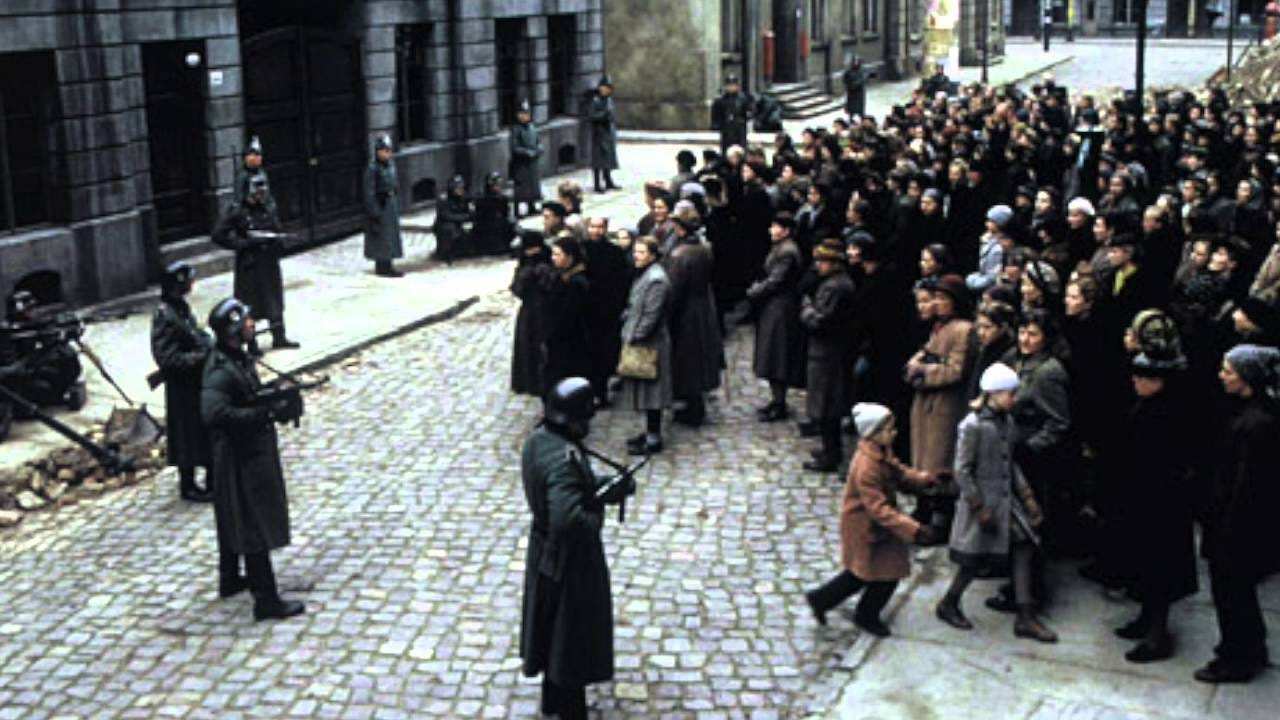
On this day, 27 February 1943, a quiet Berlin street became the stage for one of the most remarkable acts of civilian defiance in Nazi Germany. At Rosenstrasse, in the very heart of the capital, hundreds of German women gathered and demanded the return of their Jewish husbands. Against every expectation, they succeeded.
It is easy, with the benefit of hindsight, to see the Nazi regime as an unbroken wall of terror. Yet history is rarely so tidy. Even the most ruthless systems contain cracks. On Rosenstrasse, those cracks widened, not because of foreign armies or underground cells, but because wives refused to go home.
Arrests in Berlin
By early 1943 the war had turned against Germany. The surrender at Stalingrad had stunned the nation. Allied bombers were reaching Berlin. Morale was brittle. At the same time, the regime was accelerating what it called the Final Solution, the systematic deportation and murder of Europe’s Jews.
In late February, the Gestapo swept through Berlin’s factories and workplaces, arresting thousands of Jewish men. Among them were those in so called mixed marriages, Jewish husbands married to non Jewish German women. For years these marriages had offered a fragile shield. The regime feared alienating “Aryan” spouses and stirring unrest at home. But now that shield appeared to be collapsing.
The arrested men were taken to a former Jewish community building at Rosenstrasse 2. Inside, they waited in uncertainty. Outside, word spread with astonishing speed.
Wives, mothers, children and neighbours began to gather. At first they sought information. Then they demanded release. Their chant was blunt and personal: give us our husbands back.
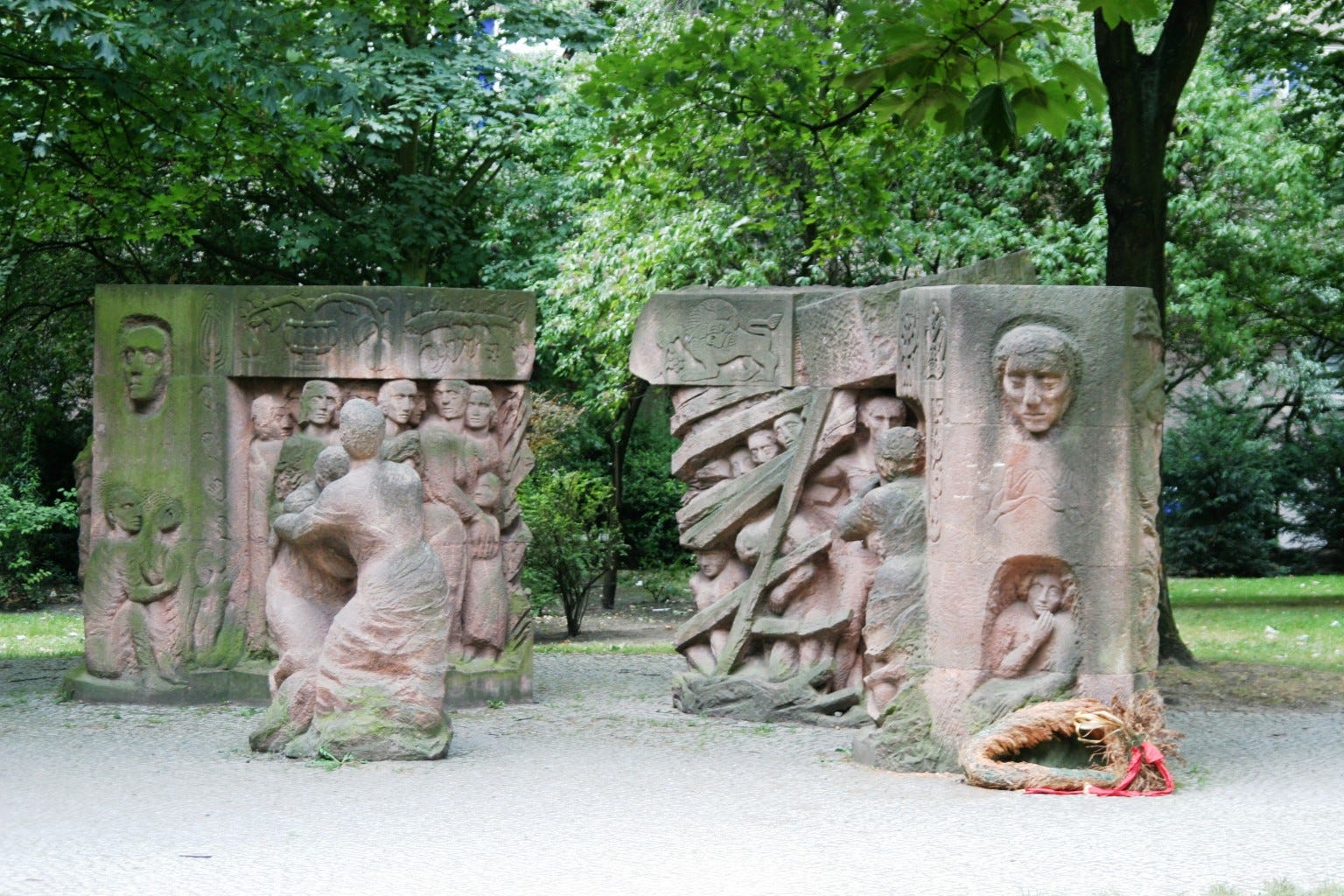
Courage on Rosenstrasse
The scene defied the accepted script of the Third Reich. There were no party banners, no organised leadership, no printed leaflets. Just women standing in the cold, day after day, refusing to disperse.
Armed guards ordered them home. The crowd thinned, then re formed. The pattern repeated. Each time the women returned.
What makes this moment so striking is not simply that they protested, but that they did so openly. Public dissent in Nazi Germany was rare for a reason. The regime had shown again and again that it would imprison, torture or kill those who challenged it. Yet here were German women, many with children at their side, raising their voices within earshot of the Gestapo.
At one point, soldiers mounted a machine gun in front of the crowd. It was an unmistakable threat. The women did not scatter in panic. They shouted back, calling the armed men murderers. That word carried weight. It pierced the regime’s careful language of duty and security. It named the truth.
The soldiers did not fire.
This was not because the regime had grown gentle. Elsewhere, deportations continued. Trains rolled east. The machinery of genocide ground on. But Rosenstrasse presented a different problem. Shooting hundreds of German women in central Berlin risked igniting precisely the unrest the leadership feared.
Goebbels and the Limits of Propaganda
The decision fell to Joseph Goebbels, Minister of Propaganda and Gauleiter of Berlin. He understood morale as keenly as any man in Hitler’s circle. Germany in 1943 was not Germany in 1939. Casualty lists were lengthening. Bomb damage was visible. Confidence in swift victory had evaporated.
Goebbels attempted to spin the protest, suggesting it was an expression of unity in the face of Allied bombing. Yet the fiction was thin. The women were not chanting about Churchill or Roosevelt. They were demanding their husbands.
Within the Nazi hierarchy there were harder voices. Some favoured deporting the men regardless of the protest. Others contemplated violent dispersal. But Goebbels recognised the danger. A massacre in Berlin would shatter the image of national solidarity he had laboured to construct. It might even encourage further dissent.
In the end, pragmatism trumped ideology. The order was given to release the men held at Rosenstrasse. Over the following weeks, around 1,800 were freed.
It was an extraordinary concession in a regime not known for yielding.
Meaning and Moral Weight
The Rosenstrasse protest stands as the only large scale, open protest in Nazi Germany that achieved its immediate aim. That fact alone demands attention.
What does it tell us?
First, that the regime was not omnipotent. It relied not only on terror but on a degree of public compliance. Where that compliance faltered, even briefly, calculations shifted.
Second, that personal bonds could cut through propaganda. Years of anti Jewish indoctrination had portrayed Jews as alien and dangerous. Yet for the women on Rosenstrasse, the issue was not racial theory. It was the man who shared their table, the father of their children. Abstract hatred struggled to compete with lived loyalty.
Third, that courage is often unadorned. These women did not see themselves as revolutionaries. They wanted their families intact. In pursuing that simple aim, they exposed a vulnerability at the heart of the regime.
This should not be romanticised. The release of the Rosenstrasse detainees did not halt the Holocaust. Millions were murdered in camps such as Auschwitz. The war raged on for two more years. Berlin itself would be reduced to ruins before the end.
Yet for those 1,800 men and their families, the protest meant survival. In a period defined by annihilation, that matters.
Lessons for Modern Readers
On This Day 1943 invites us to consider an uncomfortable question. How many injustices endure because those closest to them feel powerless? The women of Rosenstrasse had every reason to believe resistance was futile. The state was armed. The ideology was entrenched. The risks were real.
Still they stood.
Their example complicates the narrative that ordinary Germans were uniformly passive. Many were complicit. Many turned away. But here were citizens who did not. Their protest was rooted not in grand politics but in domestic loyalty. It reminds us that moral action often begins at the level of the personal.
There is also a warning. The regime released these men not from compassion but from calculation. Had circumstances been different, had morale been stronger or the war going better, the outcome might have changed. Tyranny adjusts when necessary. It yields tactically to preserve itself strategically.
History writers are often drawn to generals and statesmen. Yet sometimes the decisive pressure comes from those without titles. A street filled with determined wives forced one of the most ruthless governments in modern history to blink.
That does not redeem the regime. It does not balance the scales of suffering. But it punctures the myth of total control.
On this day in 1943, on a winter street in Berlin, the chant of ordinary women carried further than the barked orders of armed men. For a brief moment, humanity asserted itself in a city darkened by fear.
We remember Rosenstrasse not because it changed the course of the war, but because it proved that even within a dictatorship, conscience could find a voice. And when it did, it saved lives.