

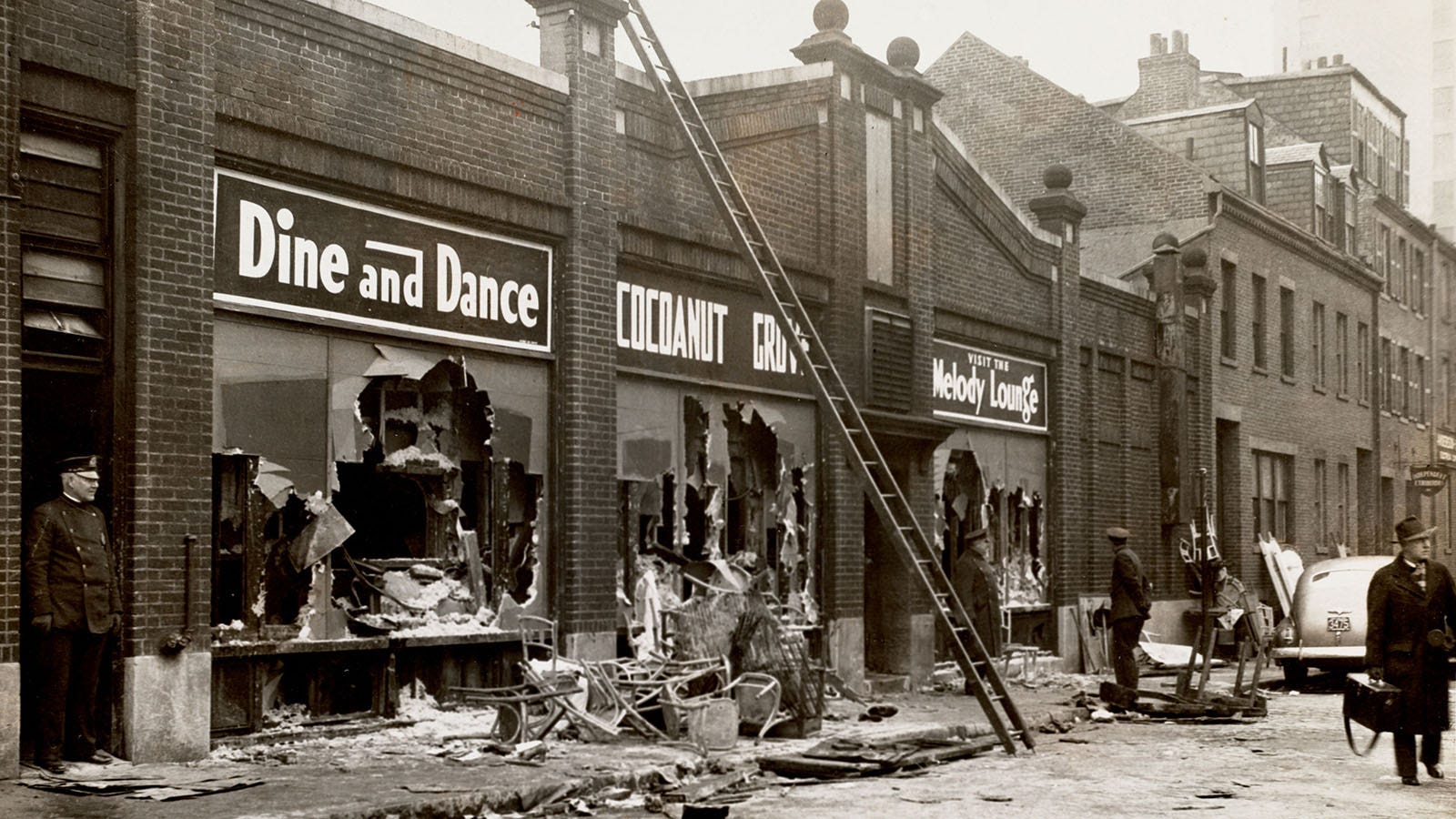
History often pivots on quiet moments. A match struck for a bit of light, a revolving door pushed by too many hands, a decision to lock an exit for the sake of convenience. On this day in 1942, these small human choices aligned inside Boston’s Cocoanut Grove and produced the deadliest nightclub fire in American history. Nearly five hundred lives were lost, and the story remains a sharp reminder of what happens when profit, vanity and negligence overrule common sense.
I write about the past because it acts like a mirror. Some events fade into trivia. Others stay hot to the touch no matter how many decades pass. The fire that tore through the Cocoanut Grove is one of the latter. It still speaks in a clear voice about responsibility, courage and the limits of hindsight.
Inside a City That Wanted a Night Off
Boston in 1942 lived in the long shadow of global war. Factories ran at full tilt, families rationed, and news from Europe and the Pacific arrived with grim regularity. People sought escape where they could find it. For many, the Cocoanut Grove offered exactly that. It promised music, spectacle and a brush with fame. Its palm fronds, faux coconuts and low lighting sold the fantasy of distance from the world’s troubles.
What guests did not see, or chose not to notice, was the fragility beneath the glamour. The club was patched together from previous owners and dubious extensions. It had been a mob hangout. It had changed hands through questionable deals. And it operated with a confidence that came from success rather than safety. By the time crowds pushed in on the night of 28 November, there were close to a thousand people in a space legally limited to less than half that number.
Anyone who studies history knows that disasters rarely appear out of thin air. They grow slowly, layer by layer. Cocoanut Grove was a textbook example. Flammable decorations, locked escape routes, faulty wiring and an owner who cut corners at every turn combined to create a trap waiting for a spark.
A Spark in the Wrong Room
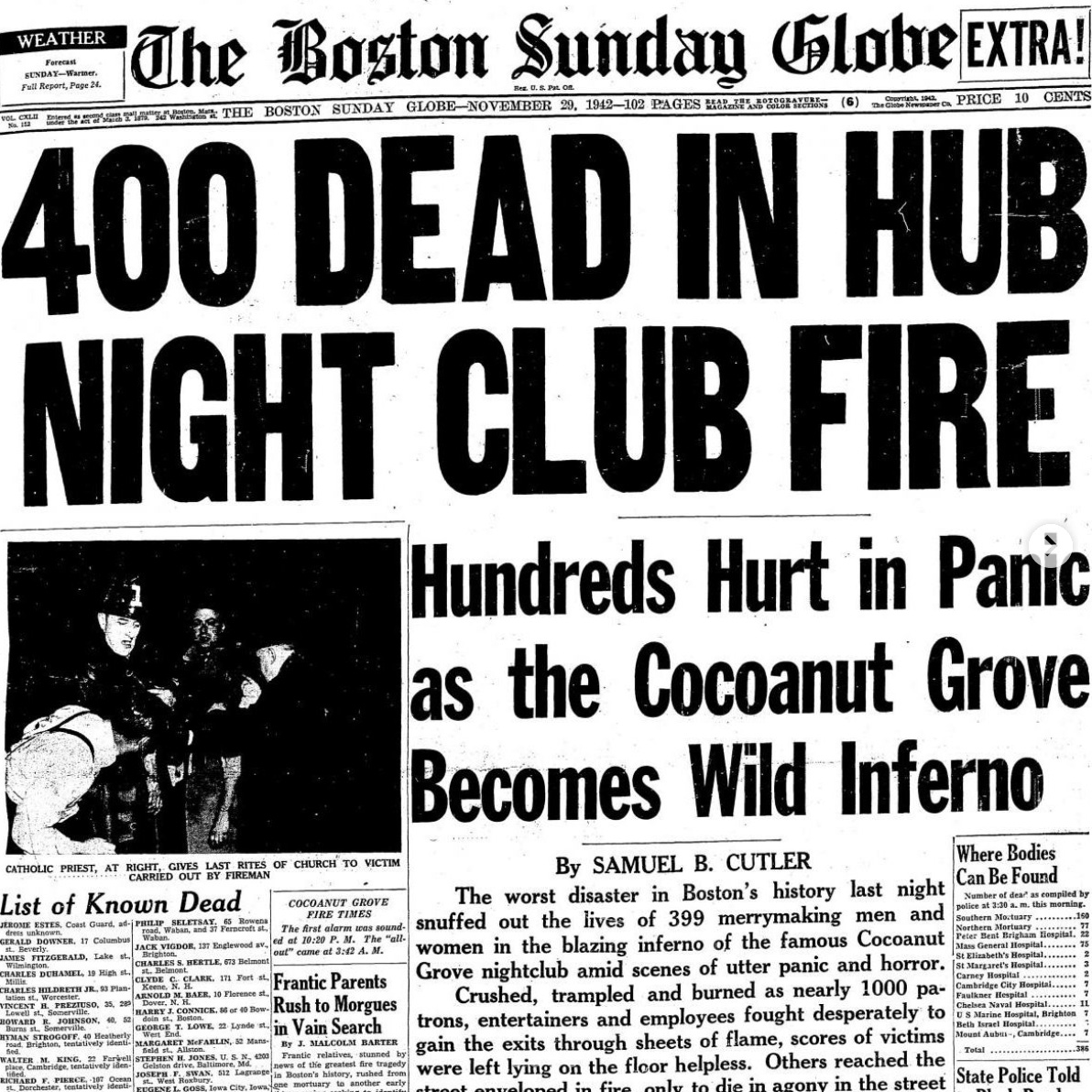
Down in the Melody Lounge, a young couple wanted a little privacy. A lightbulb overhead ruined the moment, so the man loosened it and let the shadows settle. It was a small act, easy to shrug off. A teenage busboy was told to fix it. The room was dark, so he struck a match to guide his fingers. That brief flame flickered against the fake palm leaves that hung low across the ceiling. What followed lasted only minutes.
Once the fire found strength, the room changed in an instant. Flames raced across the artificial canopy. Guests laughed at first, thinking the bartender’s attempts to snuff it out would settle the matter. They did not understand how quickly a small fire can turn fatal when helped by poor materials, trapped heat and flammable gas from the club’s budget air conditioning.
What the survivors later described was not a slow spread but a burst. Heat, smoke and flame surged up the narrow staircase that served as the only real exit from the basement. Those on the stairs were burned in seconds. Those behind them were trapped. Panic turned the crowd into a single heaving mass, and every movement worked against survival.
High above, on the street level, the club’s revolving door jammed as bodies pressed against it. Side exits had been locked to stop customers slipping out unpaid. Windows were barred. The building that had welcomed so many with easy charm gave no quarter on the way out.
Failure, Courage and the Legacy That Followed
What stands out to me is not simply the scale of the loss but the tone of the rescue. Firefighters and medical staff arrived with no expectation of the horrors waiting inside. The men of Boston’s fire crews were hardened professionals, but even they found themselves overwhelmed by the speed of the blaze, the cold that froze their hoses to the pavement and the stream of injured people stumbling into the night air.
Hospitals filled faster than any wartime drill had prepared for. Ambulances could not cope, so taxis and newspaper vans were pressed into service. Staff worked through the night, but even the best efforts could do little against burns and smoke inhalation on such a scale.
In the days that followed, investigators struggled to determine the exact spark, yet the root cause was clear. The club’s owner had locked escape doors, tolerated unsafe wiring, crammed in far too many patrons and prioritised spectacle over safety. He served a short sentence for manslaughter. No punishment could match the damage already done.
The legacy of the fire travelled far beyond Boston. Fire codes changed. Emergency exits were redesigned. Revolving doors were required to be paired with standard doors. Medical treatments for burns were rethought, leading to advances that saved many lives in later decades. The cost of these improvements was paid in the lives of those who did not walk out of the Cocoanut Grove that night.
Why This Story Still Matters
As someone who spends his time navigating the past, I am drawn to the moments that carry a universal warning. This is one of them. The Cocoanut Grove fire did not happen because one man lit a match. It happened because a culture accepted shortcuts. It happened because people trusted that someone else was keeping an eye on safety. It happened because the club looked successful on the outside and few questioned what lay beneath.
Every era has its Cocoanut Groves. Places, systems or habits that seem solid until they are tested. We like to think our modern world is too advanced, too regulated, too alert for such a disaster. History urges us not to be so confident.
On this day in 1942, Boston learned that danger hides in places built for pleasure. It learned that crowds can become victims in seconds. It learned that heroism, while noble, cannot undo negligence.
As a history writer, I try to bring old stories into the modern era, not for entertainment alone but to sharpen our instincts. The Cocoanut Grove fire is more than a relic of a different time. It is a standing reminder that safety is not an inconvenience, that oversight matters and that the smallest spark can reveal the truth about any structure, whether wooden, political or cultural.
Remembering the tragedy does not change what happened. It does, however, honour the people who died by insisting that we recognise the lessons bought with their lives. On this day, their story still speaks, and we would be foolish to ignore it.