

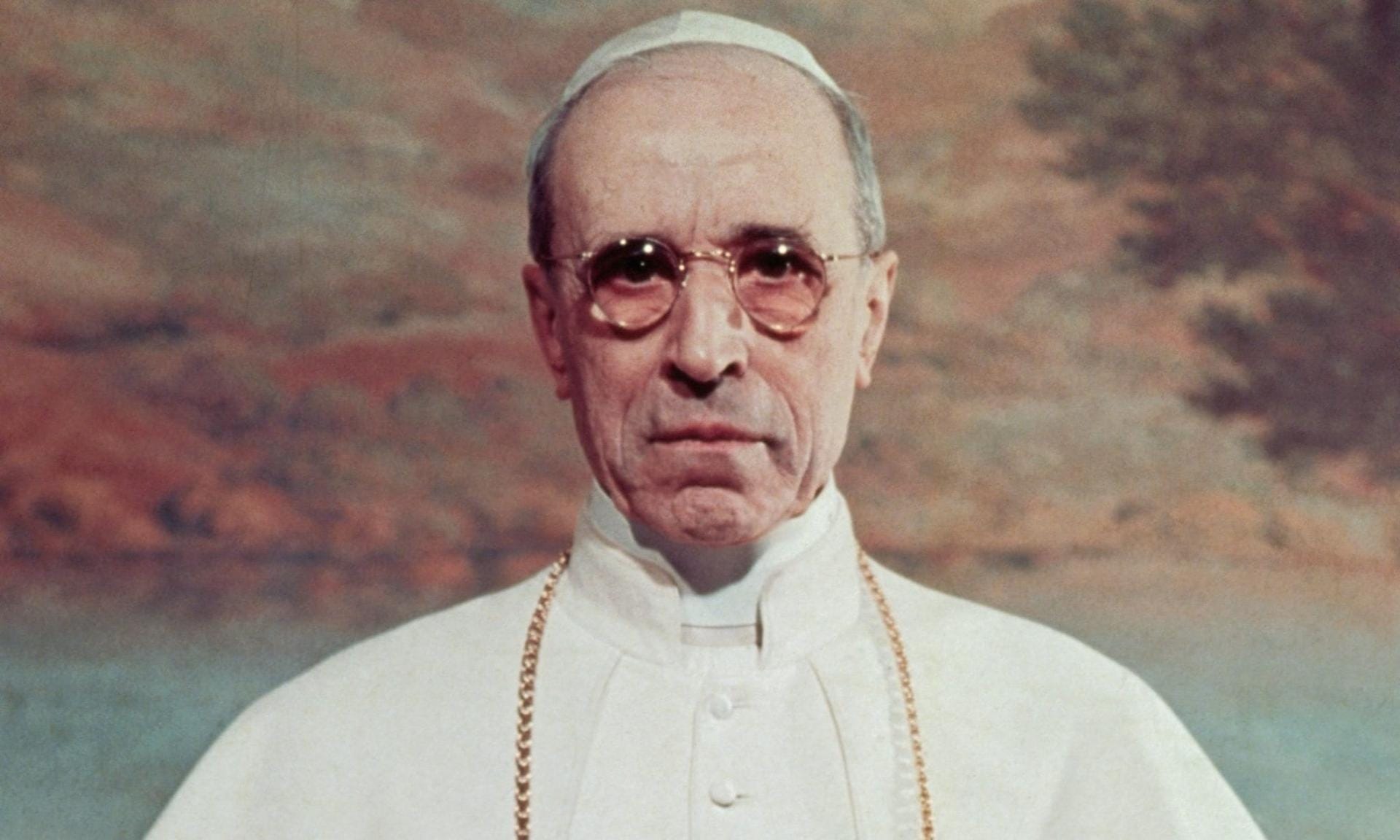
On this day, 2 March 1939, white smoke drifted into the Roman sky and signalled more than the choice of a new pontiff. It marked the beginning of one of the most scrutinised papacies in modern history. The man who stepped onto the balcony of St Peter’s Basilica as Pope Pius XII inherited a Church perched on the lip of an abyss.
The crowd in St Peter’s Square had waited through the ritual uncertainty of a conclave. Black smoke had disappointed them twice. Then came the pale plume that sent a tremor through the square. Eugenio Pacelli, tall, austere, precise in manner and dress, had been elected Bishop of Rome. He chose the name Pius XII. The sound that greeted him was not simply jubilation. It was expectation, heavy and almost fearful.
Europe in early 1939 was brittle. Treaties were fraying. Armies were preparing. Dictators spoke in the language of destiny. The Vatican, an enclave of stone and ceremony in the heart of Rome, had neither divisions nor defences. It had only its voice, its diplomacy and its moral authority.
Conclave at a Turning Point
he 1939 conclave was swift. Pacelli, at sixty three, was no outsider. He had served as Cardinal Secretary of State and had spent years navigating the delicate channels between Church and state. His election suggested continuity, not upheaval.
That continuity mattered. Italy was under the rule of Benito Mussolini. In Germany, Adolf Hitler had tightened his grip, and the persecution of clergy was no abstraction. Priests had been arrested, Catholic organisations restricted, Church influence curbed wherever it challenged the total state.
Pacelli understood these regimes intimately. He had served as nuncio in Germany after the First World War. He had watched political instability ferment into extremism. He had negotiated concordats, believing that carefully drafted agreements could shield Catholic institutions from arbitrary power.
To some, that background made him the ideal man for an age of gathering storm. To others, it foreshadowed caution at a moment that demanded thunder.
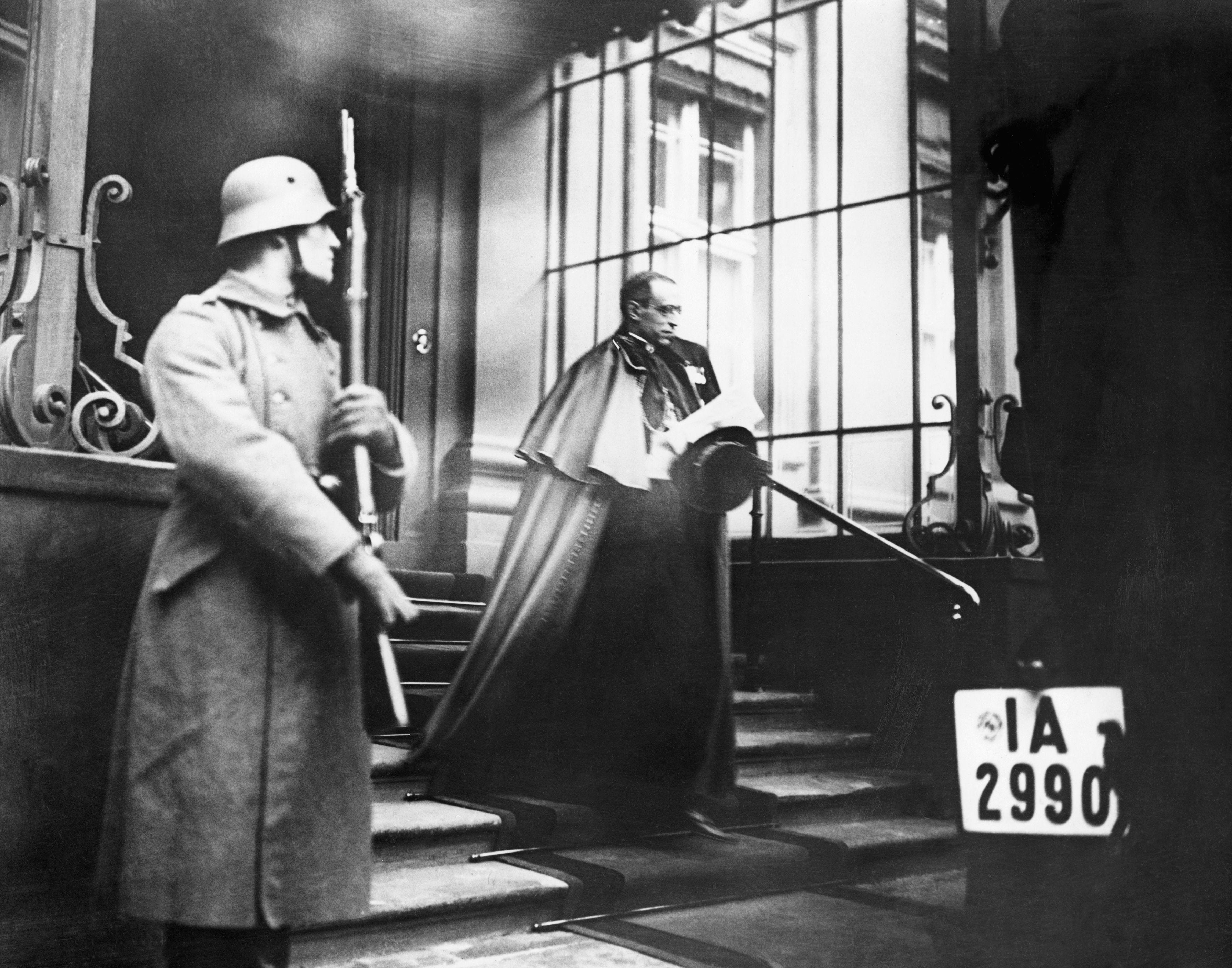
Diplomacy as Defence
When Pius XII took office, annexations and ultimatums were already redrawing the map of Europe. Within months, German forces would invade Poland, and Britain and France would declare war. The Second World War would begin scarcely half a year into his pontificate.
Pius believed neutrality was not cowardice but strategy. The Vatican had adopted that posture during the First World War, offering itself as mediator while avoiding alignment with any combatant. He had seen how even measured criticism could provoke retaliation. Catholic schools closed, clergy detained, property seized. Words had consequences.
As pope, he chose to speak in broad moral terms. He appealed for peace, for respect of treaties, for the dignity of human life. He avoided naming aggressors directly. His defenders argue that this reserve preserved channels of communication. It enabled quiet intervention, discreet lobbying, and the possibility of influencing events behind closed doors.
His critics contend that moral clarity diluted by abstraction can lose its force. In a Europe where brutality was not theoretical but daily, they believe the world needed a voice willing to identify the authors of that brutality without equivocation.
War at the Vatican Gates
The debate sharpened in October 1943. German forces occupied Rome after Italy sought an armistice with the Allies. One dawn, Nazi units sealed off the Jewish quarter near the Tiber. Families were dragged from their homes and deported.
This time, atrocity was not distant. It unfolded within earshot of the Vatican walls.
Pius XII responded by ordering religious houses across Rome to shelter those seeking refuge. Convents, monasteries, seminaries and even buildings within Vatican territory opened their doors. Thousands of Jews found hiding places in Church properties. No registers were kept. No questions asked.
Supporters see this as proof that his caution in public was matched by decisive action in private. They argue that a formal denunciation, naming Hitler and condemning the round up, might have triggered reprisals. German troops could have stormed those very convents and monasteries. Clergy might have been arrested en masse. The fragile network of sanctuary could have collapsed overnight.
Critics counter that silence at such a moment risked appearing as acquiescence. They believe that the unique moral authority of the papacy carried an obligation to speak plainly, even at grave risk. In their view, history judges not only intentions but words left unsaid.
The truth is that Pius faced an agonising calculation. Protect the institutional Church, preserve its capacity to act discreetly, or issue a public condemnation that might satisfy conscience yet endanger lives in the immediate term. He chose the former.
Legacy of a Contested Papacy
When the war ended in 1945 and the full horror of the Holocaust emerged, scrutiny intensified. Millions of European Jews had been murdered. Questions followed. What did the Pope know, and when did he know it. Could a stronger, clearer denunciation have altered events, even symbolically.
Only Pius himself knew the full extent of the information that crossed his desk. Reports from bishops in occupied territories spoke of deportations and mass killings. His Christmas messages referred to people persecuted because of race or nationality. To some listeners, the implication was unmistakable. To others, it was evasive.
He remained pope until 1958. During those years he guided the Church through post war reconstruction and the early Cold War. Yet for many, his legacy rests squarely on the choices made between 1939 and 1945.
As a writer, I resist the comfort of easy verdicts. It is tempting to divide the past into heroes and failures. The reality is often more uncomfortable. Pius XII was neither indifferent to suffering nor reckless in defence of principle. He was a diplomat shaped by an era in which the Church survived by negotiation as much as proclamation.
On This Day 1939, when he stepped onto the balcony and offered his first blessing, he could not have known the scale of the inferno that would follow. He believed neutrality could act as a shield. Whether that shield protected enough, or cost too much in moral witness, remains one of the enduring arguments of twentieth century history.
What cannot be denied is that his election came at a hinge moment. The white smoke over Rome rose into a sky already darkening. The man beneath it would spend the next nineteen years walking a tightrope between conscience and caution, faith and fear, diplomacy and denunciation.
History has not finished its conversation with Pius XII. Nor should it. In revisiting 2 March 1939, we are reminded that leadership in times of crisis rarely offers clean choices. It offers burdens. And sometimes, silence speaks as loudly as any sermon.