

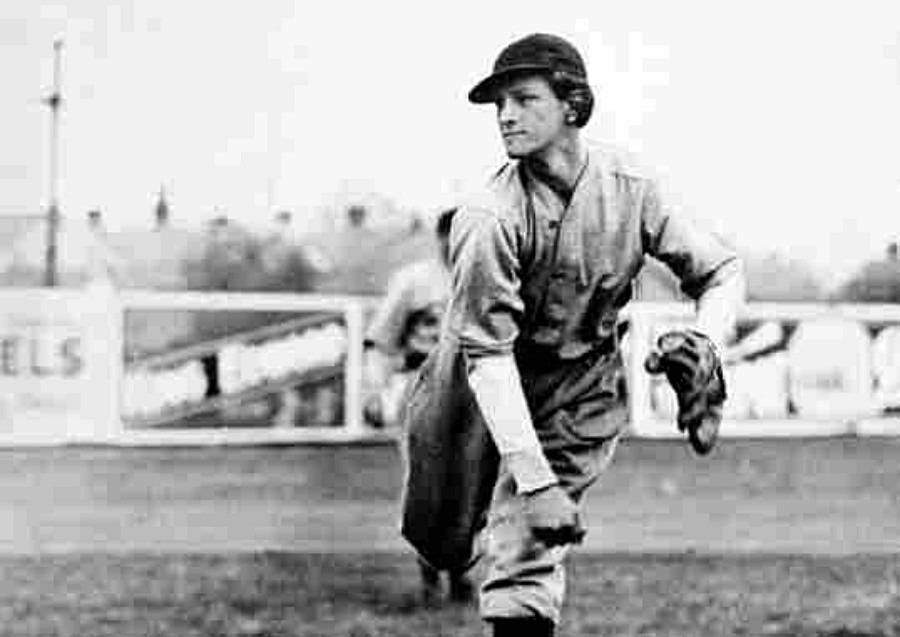
On this day in 1934, under the Florida sun in Fort Myers, a woman stepped onto a baseball mound and unsettled a room full of men who thought they had seen everything. Mildred “Babe” Didrikson, already an Olympic champion, took the ball not for ceremony but for competition. What followed was brief, sharp, and unforgettable.
She was met with laughter at first. That detail matters. It tells you more about the era than any stat sheet ever could. Women in elite sport were tolerated in certain lanes, applauded even, but rarely welcomed into spaces guarded by tradition and ego. Baseball, with its rituals and masculine mythology, was one such space.
Didrikson did not respond with words. She let the ball do the talking.
Her opening pitches were fast, controlled, and unflinching. The batter, so sure of himself moments earlier, swung and missed. Then again. Confidence drained quickly, replaced by something closer to disbelief. By the end of the inning, she had allowed no hits. The scoreboard told a simple truth, but the deeper meaning ran far wider.
Athlete Who Refused Limits
To understand why that inning matters, you have to see it as part of a larger pattern. Didrikson did not specialise in the way modern athletes are encouraged to. She attacked sport as a whole, as if the idea of limits was something to be tested rather than obeyed.
Before that day in 1934, she had already dominated track and field. At the 1932 Olympic Games, she won two gold medals and a silver, a haul that would define most careers. For her, it seemed more like a beginning than a peak.
She entered multiple disciplines not out of novelty but out of conviction. Throwing events, hurdles, jumps, she treated each as a problem to be solved. Even when injury struck during qualification events, she adapted and carried on, winning where she could and pushing through where others might have stepped back.
That mindset travelled with her. When opportunities in amateur athletics narrowed, she did not retreat. She moved forward, into professional sport, into public exhibitions, into any arena that would allow her to compete.
Baseball became one of those arenas. Not because it was expected, but because it was there.
Pressure of Performance and Perception
That single inning was not played in a vacuum. It came with an audience, with expectations, and with a weight that male players in the same moment did not carry. Didrikson was not judged only on performance. She was judged as a representative, whether she asked for that role or not.
Every pitch carried a second question beneath it. Could a woman truly compete here?
Her answer was clinical. No hits. No collapse. No concession to nerves or noise.
Even when she walked a batter, she maintained control. She adjusted, challenged the next opponent, and forced the play that ended the inning. The sequence mattered. It showed resilience as much as skill.
The triple play that closed her time on the mound felt almost theatrical, but it was rooted in execution. Fielders moved quickly, decisions were made without hesitation, and the inning ended with a sharpness that left no room for argument.
In that moment, perception shifted, even if only slightly. The laughter had stopped.
Sporting Pioneer in Every Sense
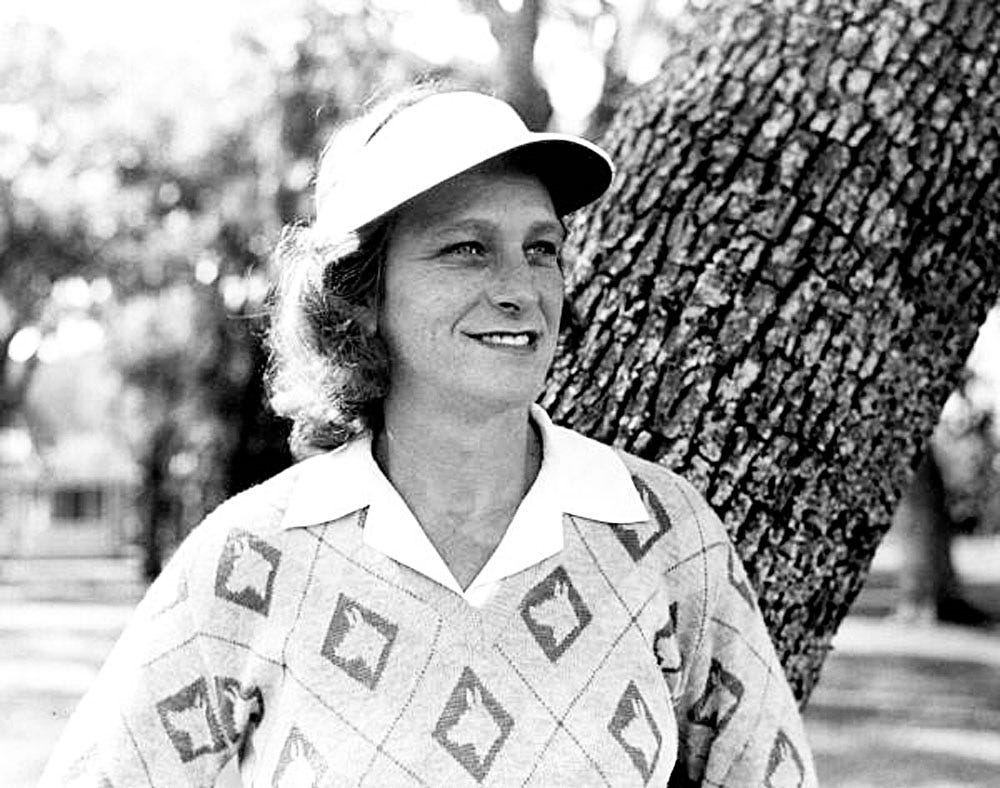
Didrikson’s career cannot be boxed into a single sport, and that is precisely why her legacy holds such weight. After baseball, she turned her focus to golf, where she would build yet another chapter of excellence.
She became one of the leading figures in women’s golf, winning major championships and helping to elevate the sport’s profile. Her competitive instinct never softened. It sharpened.
Even serious illness did not fully halt her. After surgery for cancer, she returned to competition far sooner than expected and won again, dominating a major tournament with a margin that spoke of both skill and stubborn will.
There is a tendency to romanticise such comebacks, but in her case, the reality is already stark enough. She competed because that was her nature. Not for narrative, not for applause, but because she refused to let circumstance dictate her end.
Legacy That Still Resonates
The hitless inning in 1934 stands as a symbol, but it is not an isolated miracle. It is part of a continuous thread that runs through Didrikson’s life. She challenged assumptions, not once, but repeatedly.
Her story also highlights a broader truth about sport. Talent alone is rarely the full story. Opportunity, perception, and courage all shape what we remember. Didrikson forced open doors that had been quietly closed, and she did so with performance rather than protest.
That distinction matters. She did not argue her place. She demonstrated it.
Today, multi-sport athletes are still rare at the elite level. The demands of specialisation are too great. Yet her career reminds us that boundaries in sport are often cultural before they are physical.
She did not fit the mould, so she changed it.
Why This Day Still Matters
On this day in 1934, the box score recorded a simple fact. One inning pitched, no hits allowed. It is easy to skim past that line without pause. But history asks us to look closer.
That inning carried defiance, skill, and a quiet form of revolution. It challenged a room, then a sport, and over time, an entire way of thinking.
Babe Didrikson did not need a full game to make her point. One inning was enough.
And nearly a century later, it still speaks.