

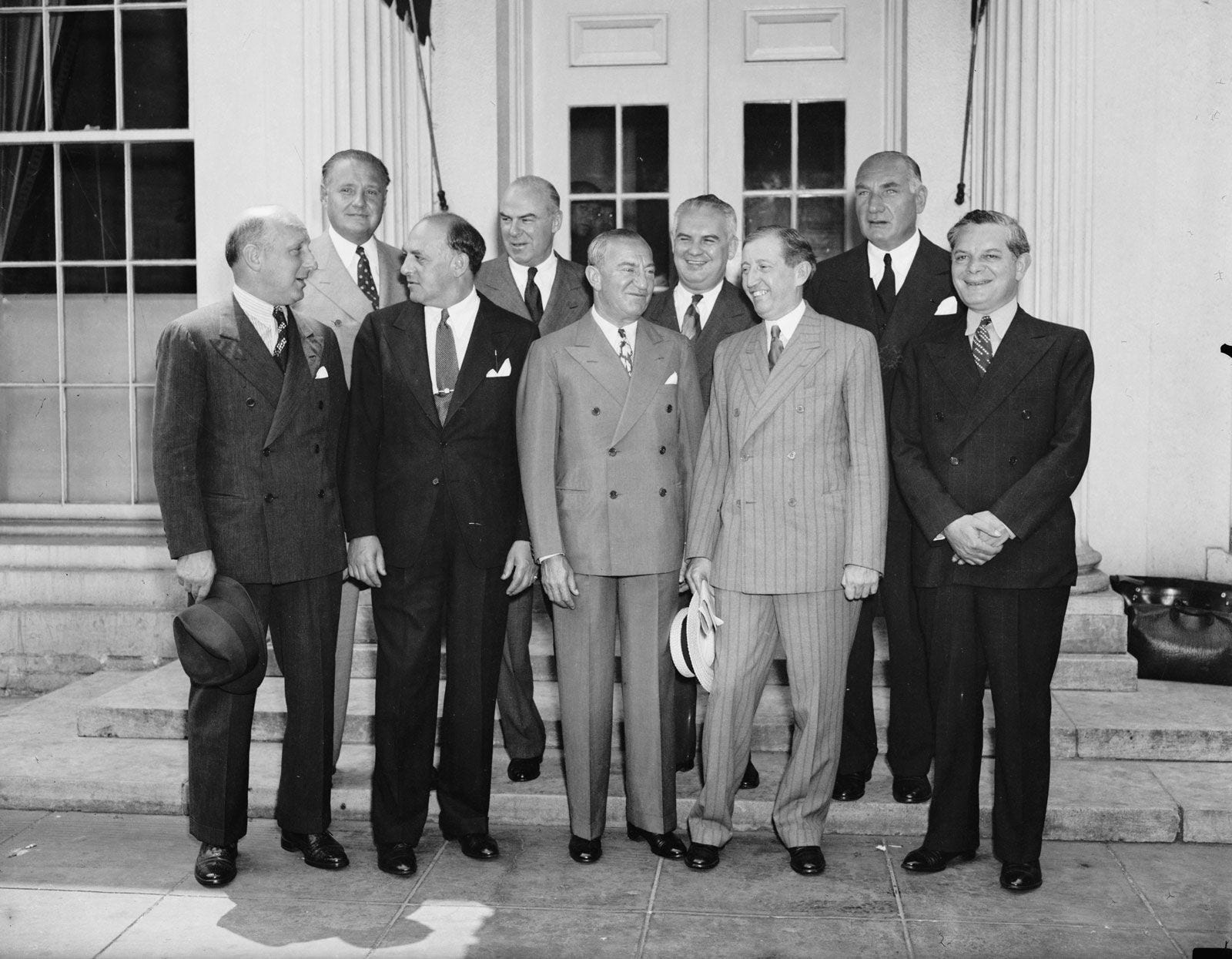
On this day in 1930, Hollywood made one of its most consequential bargains. Faced with scandal, public anger and the threat of outside censorship, the American film industry adopted the Motion Picture Production Code, soon known everywhere as the Hays Code, after Will H. Hays, the former Postmaster General brought in to clean up the business. It was presented as a moral safeguard, a pledge of responsibility from an industry that had grown rich and reckless in the public mind. In truth, it was an act of self preservation, drafted under pressure and shaped by fear.
My view is plain enough. The Hays Code did not rescue cinema, it diminished it. It was born from the old instinct that art must be kept on a short leash whenever the public grows nervous, and for decades that instinct left Hollywood more timid, more evasive and less honest than it might have been. The code did not merely tidy up films, it taught the industry to flinch.
Scandal, Panic, Reputation
The road to the code was paved with notoriety. In the early 1920s, Hollywood was battered by a series of lurid headlines that persuaded many Americans the film colony had become a carnival of vice. Among the most explosive was the death of actress Virginia Rappe after a party in San Francisco attended by Roscoe “Fatty” Arbuckle. Arbuckle was tried three times and ultimately acquitted, with the final jury going so far as to apologise, yet the damage to his reputation was catastrophic. Around the same period came the death of Olive Thomas and the still unsolved murder of director William Desmond Taylor. Each case fed a national mood in which film folk seemed to stand for excess, licence and moral decay.
That matters because the code did not appear in a vacuum. It emerged from a moment when Hollywood feared not only bad publicity, but loss of control. State and local censorship boards were already cutting films. Religious campaigners were mobilising. Politicians were watching. Studio bosses, with their usual instinct for survival, recognised that a self imposed code might spare them something harsher from Washington or from a patchwork of state authorities. So the code was sold as virtue, but negotiated as strategy.
Will H. Hays and Moral Bargain
Will H. Hays was the right man for such a compromise, which is another way of saying he was a political man in an artistic business. Brought to Hollywood in 1922 to head the Motion Picture Producers and Distributors of America, he offered respectability, connections and a reassuring face for nervous conservatives. His task was never simply to improve conduct. It was to restore confidence in an industry that had become synonymous, in some quarters, with corruption.
Yet even Hays’s early efforts were judged too soft by those who wanted sterner discipline. Martin Quigley, a Catholic publisher, and Father Daniel A. Lord, a Jesuit priest, pressed for a stronger code, one rooted in explicit moral principles rather than vague good behaviour. Lord drafted much of the 1930 code, and Quigley used his influence to push it forward. What emerged was a document that went far beyond ordinary caution. It forbade or tightly constrained profanity, nudity, sexual suggestion, homosexuality, drug use, excessive violence and what it termed “miscegenation”, meaning interracial relationships. Crime could be shown only within strict moral limits, and even wrongdoing had to carry the correct lesson.
Here is where my sympathy ends. No civilised culture grows stronger by requiring its storytellers to reduce life to approved examples. Human beings are contradictory creatures. Desire is not tidy, crime is not always accompanied by a sermon, and love rarely waits for official permission. The code demanded that films behave as though moral truth were always simple, always visible and always endorsed by authority. Cinema survived, of course, but often by learning to speak through clenched teeth.
Damage Done on Screen
There is an irony at the heart of the Hays Code. It was formally adopted in 1930, yet it did not become truly iron until 1934, when the Production Code Administration was established and films had to secure a seal of approval before release. That gap matters because it shows the first code was never enough for its own champions. They wanted enforcement, not aspiration. Once the PCA took charge, scripts were altered, scenes were trimmed, endings were reshaped and whole subjects were either softened into euphemism or shut out altogether.
Of course, gifted writers and directors still found ways to smuggle complexity on to the screen. Suggestion became an art form. Dialogue acquired a sidelong wit. Shadows did part of the work that words were not allowed to do. But we should not romanticise censorship merely because clever artists sometimes wriggled around it. A padlock can inspire ingenuity in the locksmith, yet it remains a padlock. The Hays Code narrowed what mainstream American cinema could say openly about sex, race, power and human motive. It also encouraged a public fiction, that difficult subjects had been dealt with simply because they had been hidden.
And there was something profoundly patronising in the whole enterprise. Adults were treated as though they might crumble at the sight of moral ambiguity. Filmmakers were treated as though they could not be trusted with seriousness. Audiences were offered protection that often looked more like supervision. That may have pleased campaigners who wanted “clean and wholesome” entertainment, but art is rarely wholesome at its best. It is searching, disobedient and occasionally unsettling. That is part of its value.
Legacy Beyond 1930
The code’s authority began to erode in the 1950s, weakened by foreign films, changing social attitudes and legal decisions. The decisive constitutional blow came in 1952, when the US Supreme Court ruled in Joseph Burstyn, Inc. v. Wilson that motion pictures were protected by the First Amendment. The code limped on for years afterwards, but its power was fading, and by 1968 it was replaced by the modern ratings system. That shift, for all its imperfections, at least placed more responsibility with viewers and less with institutional gatekeepers.
So when we mark March 31, 1930, we should not do so as though Hollywood discovered conscience. What it discovered was a method of appeasement. The Hays Code was the industry’s attempt to calm its critics, protect its profits and wrap censorship in the language of duty. It may have spared the studios from some external interference, but it did so by inviting the censor into the house and giving him a desk.
That is why this date still matters. It reminds us how easily public scandal can become cultural restraint, how quickly moral alarm can harden into rules, and how often institutions call surrender by a nobler name. On this day, Hollywood blinked, and cinema spent years paying for it.