

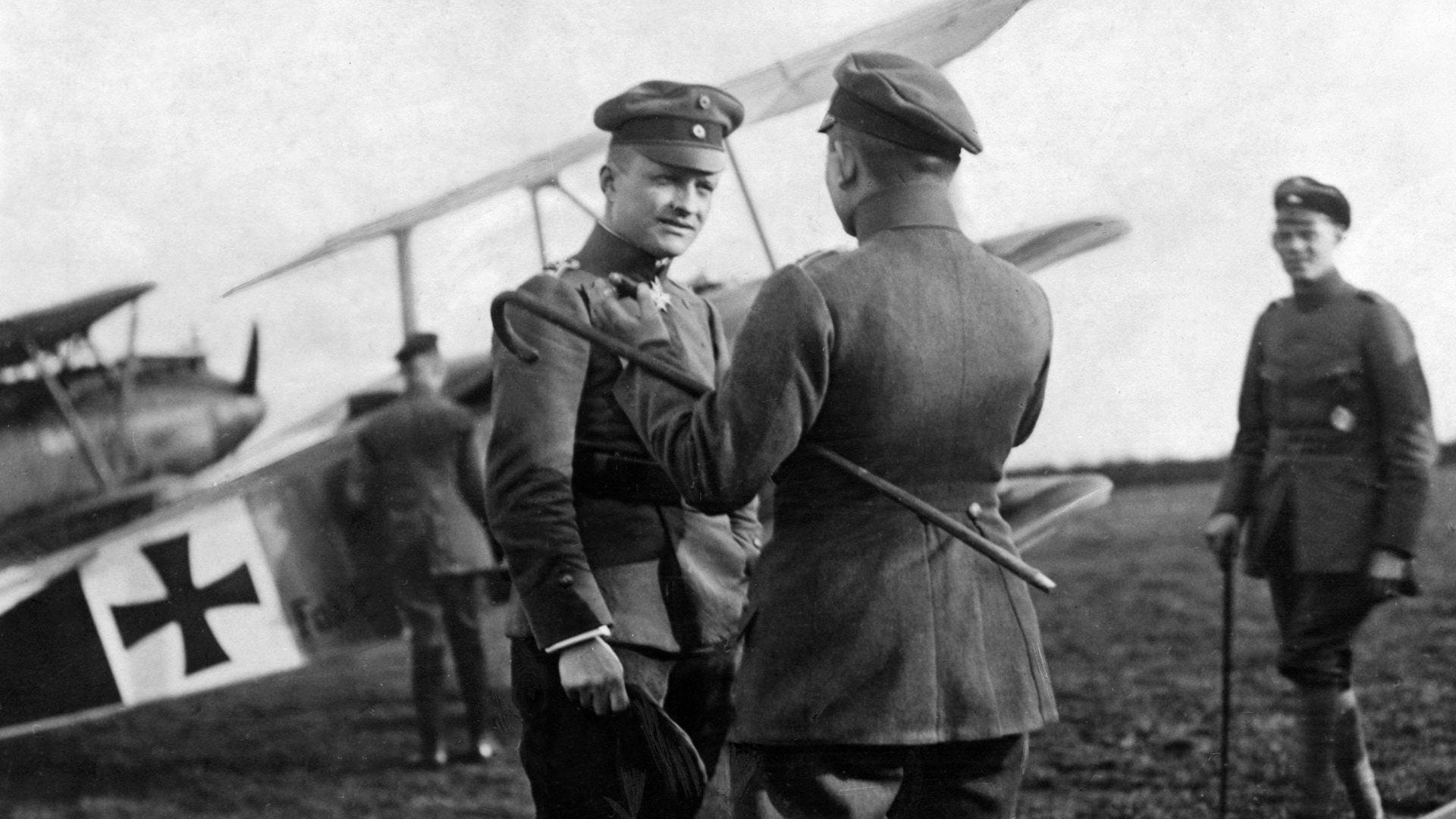
On this day in 1918, the war in the air claimed its most famous name. Manfred von Richthofen, known across Europe as the Red Baron, fell from the sky and into history. His death has been debated, romanticised and mythologised ever since, yet behind the legend lies something simpler and more telling. He was not a myth at all, but a disciplined, calculating professional whose rise and fall say much about the nature of modern warfare.
Early missteps and stubborn resolve
It is tempting to imagine Richthofen as a born master of the air, a natural who took to flight as though destined for it. The truth is more grounded. His early experience as a pilot began with failure, even embarrassment. A clumsy first solo flight ended in a crash landing, hardly the entrance of a future legend. Yet this moment matters. It reveals a trait more valuable than flair, persistence.
He was not alone in wrestling with the fragile machines of the time. Early aircraft were unforgiving, wood and canvas contraptions that demanded both nerve and patience. Richthofen possessed both. He learned quickly, absorbing the mechanics of flight and the tactics of aerial combat with an almost clinical focus.
That focus would soon find direction under the influence of Oswald Boelcke, one of Germany’s leading airmen. Boelcke taught discipline in the air, not reckless heroics. Position, timing, patience. These became Richthofen’s tools.
Rise of a calculated hunter
Richthofen’s first confirmed victory came not through daring improvisation but through adjustment. After failed attempts to bring down an enemy aircraft, he changed his approach, attacking from a blind spot beneath and behind. It was a lesson learned quickly and applied relentlessly.
From that point, his record grew with astonishing speed. Each victory was marked, even commemorated, with a personal trophy. It was not vanity alone, it was accounting. He kept score with the precision of a craftsman measuring his work.
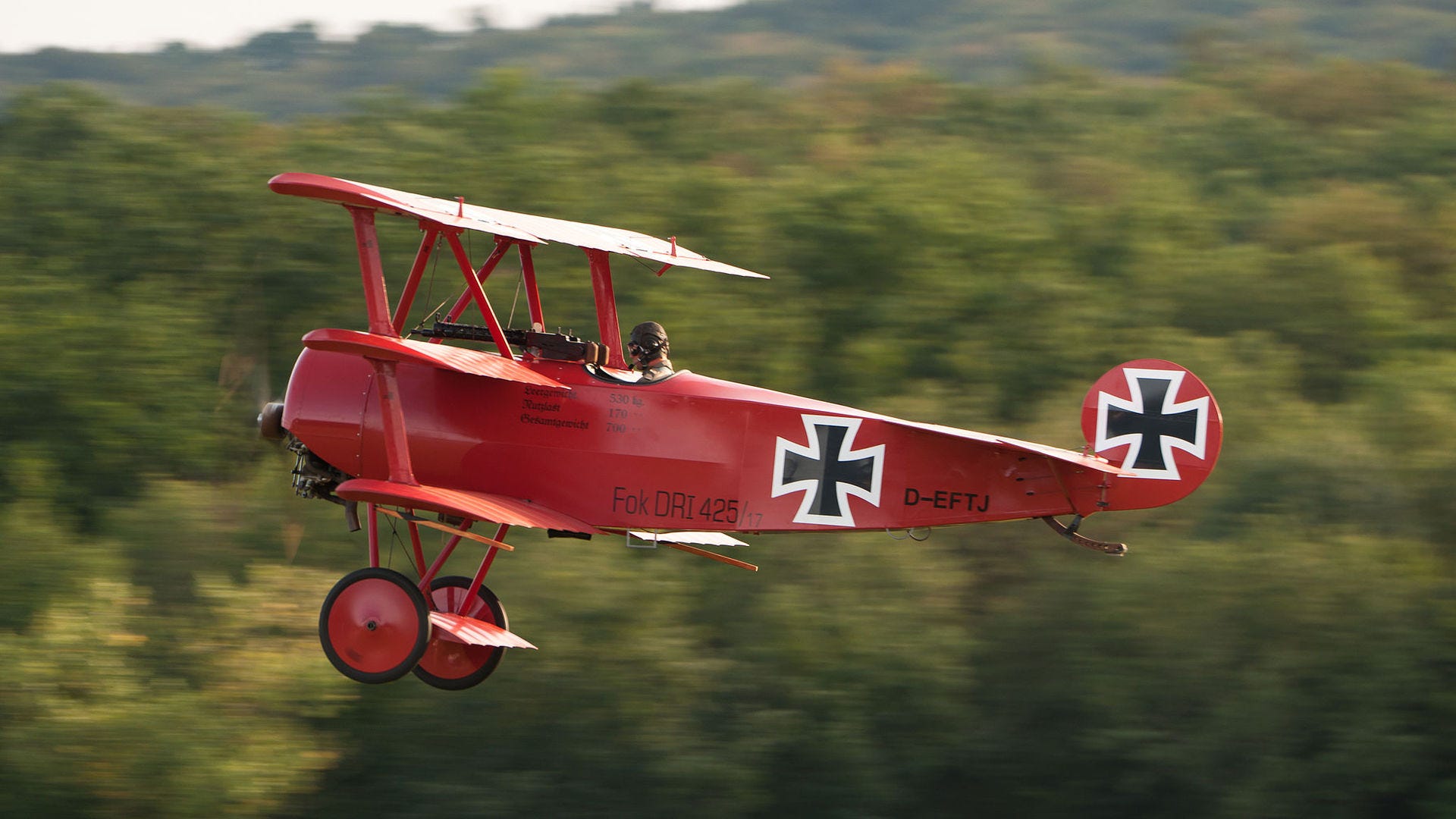
By 1917, during the brutal period known as Bloody April, Richthofen dominated the skies. His tally surged. His aircraft, painted in vivid red, became both a signature and a warning. It was a calculated choice. Visibility did not trouble him, he relied on control, formation flying, and tactical superiority.
His command style reflected this same clarity. He trained his pilots to think, not merely react. Engage only with advantage, attack from strength, withdraw when necessary. Under his leadership, German fighter units became efficient and feared.
The nickname Red Baron may carry a sense of aristocratic flourish, yet his success came from discipline rather than drama. He was not chasing glory in the romantic sense. He was executing a method.
Pressure of fame and weight of expectation
Success brought attention, and attention brought risk. Richthofen’s growing reputation made him a target, not just in the air but as a symbol. German command recognised his value beyond combat and sought to preserve him, even pulling him away from the front at times.
He resisted. Flying was not a stage for him, it was his profession. He returned repeatedly to combat, leading from the front. This decision reveals something essential. He understood the risks fully, yet chose to remain where those risks were greatest.
There is a tendency to view such decisions as heroic. It may be more accurate to see them as inevitable. For a man defined by performance, stepping away would have meant becoming something else entirely.
Final flight over the Somme
On April 21st, 1918, that tension between skill and fate reached its conclusion. During a fast moving aerial engagement, Richthofen pursued an enemy aircraft deep over hostile territory. It was an unusual break from his own principles, chasing too far, lingering too long.
In the chaos of the fight, multiple forces converged. Roy Brown, a Canadian pilot, dived into the fray in an attempt to protect a comrade. At the same time, ground fire from below reached into the sky.
Richthofen’s aircraft lost control and fell. Whether the decisive shot came from the air or the ground remains debated, but the outcome is clear. The most effective fighter pilot of the war was gone.
He had achieved 80 confirmed victories, a number unmatched during the conflict. Yet in the end, his fate mirrored that of countless others, a sudden descent, a life measured in seconds rather than years.
Legacy shaped by reality, not myth
Richthofen’s story endures because it sits at the meeting point of myth and reality. The red aircraft, the tally of victories, the duels in the sky, these elements invite romantic interpretation. Yet the deeper truth is less theatrical and more instructive.
He succeeded because he treated aerial combat as a discipline. He studied it, refined it, and applied it with consistency. He understood that survival depended not on boldness alone but on control, awareness and restraint.
His death reinforces that lesson. Even the most skilled practitioner cannot eliminate risk entirely. War, especially in its early mechanised forms, was unpredictable. The sky offered no guarantees.
There is also something telling in how both sides responded. Respect crossed enemy lines. Pilots who had sought to defeat him in combat acknowledged his ability in death. That rare moment of shared recognition hints at a professional code that existed even within the brutality of the First World War.
Why this story still matters
Looking back from a modern perspective, Richthofen’s career marks a turning point. Air combat was still in its infancy, yet already it had developed its own rules, its own figures of legend. He helped define both.
More importantly, his story strips away the illusion that greatness in war is purely instinctive. It shows the value of learning, adaptation and discipline under pressure. These are not glamorous qualities, but they endure.
On this day in 1918, the Red Baron fell, not as a myth brought low, but as a man who had pushed his craft as far as it would go. That is what gives his story its weight. Not the colour of his aircraft, nor the number of his victories, but the clarity of his method and the inevitability of his end.
Excellent read, thank you. For more details on Richthofen, go and see meettheredbaron.com, a multilingual site detailing his life and death on timelines and on a map. All information is based on original sources. The site contains 500+ pictures and video's. Enjoy!