

There are moments in history that feel almost too delicate to survive the weight of what follows. On this day in 1912, a small act took place in Washington, one that seemed ceremonial at the time, polite, diplomatic, fleeting. Yet it would come to carry far more meaning than those present could have imagined.
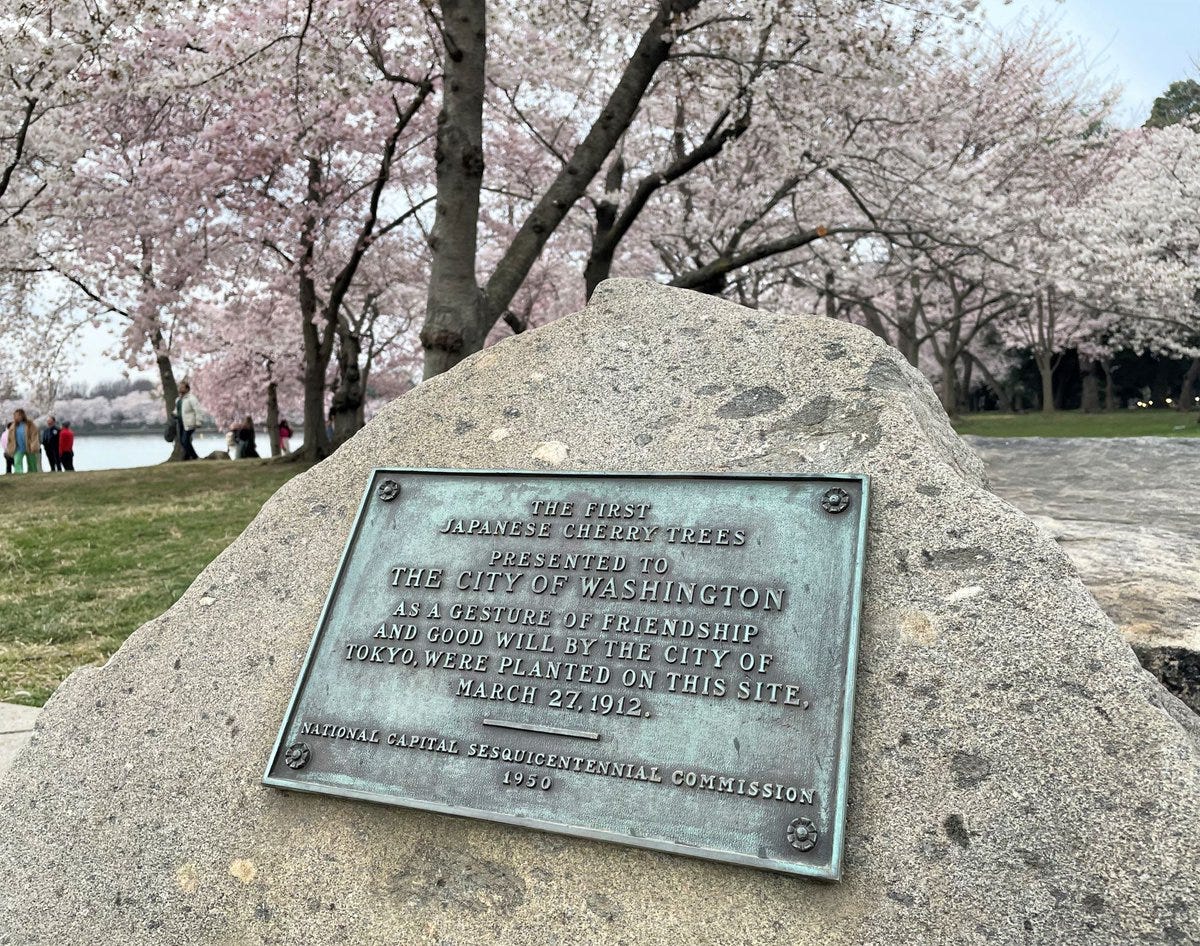
Two figures, Helen Taft and a representative of imperial Japan, knelt beside fresh soil and planted a cherry tree. It was not merely horticulture. It was diplomacy in its most human form, rooted in symbolism rather than treaties.
Cherry blossoms, in Japanese culture, speak of renewal and the brevity of life. Their beauty is intense and short lived, a reminder that all things pass. It is a fitting emblem for a relationship that would soon be tested by fear, resentment and war.
Symbolism of cherry blossoms in diplomacy
The gift of thousands of cherry trees was not spontaneous goodwill. It followed years of strain between Japan and the United States. Migration had stirred unease in America. Japanese workers, drawn by opportunity, found themselves resented and, at times, violently opposed.
In response, Theodore Roosevelt stepped in to steady a fragile peace. His quiet negotiations produced the Gentleman’s Agreement of 1907, an uneasy compromise that reduced tensions without resolving the deeper hostility.
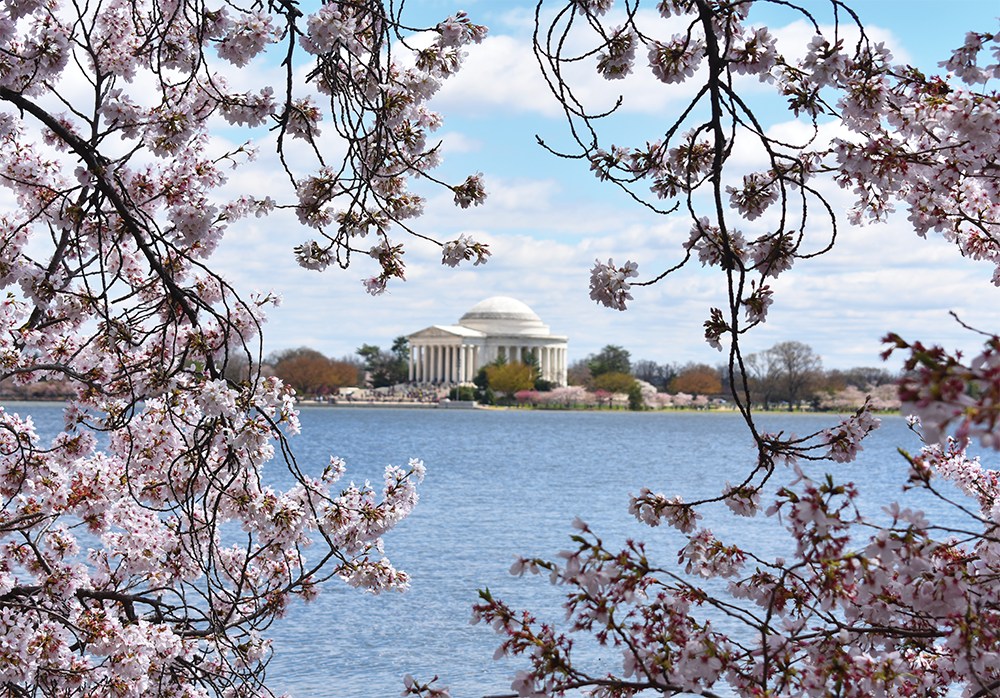
The cherry trees arrived soon after. They were, in effect, a softer language of diplomacy. Where politics drew lines, blossoms blurred them. Each spring, as petals drifted across the Tidal Basin, Americans encountered a living symbol of a distant culture. Not an abstract nation, but something tangible, seasonal, shared.
Yet symbols are only as strong as the society that receives them.
Fractures beneath apparent harmony
For all the elegance of that 1912 gesture, the decades that followed revealed how shallow understanding could be. Anti Japanese sentiment did not disappear. It hardened.
Legislation in the United States increasingly restricted Japanese lives. Land ownership became difficult. Social integration was resisted. By 1924, immigration from Japan was effectively halted altogether.
From the Japanese perspective, this was not policy. It was humiliation.
The blossoms still bloomed in Washington. Visitors admired them. Couples strolled beneath them. Photographs were taken. But beneath the petals lay a contradiction. Admiration for culture did not extend to acceptance of people.
This is a pattern history repeats. We celebrate symbols long before we confront ourselves.
War reshapes meaning of a gift
Everything changed in December 1941.
After the attack on Pearl Harbor, the cherry trees in Washington ceased to be gentle ambassadors. For some, they became reminders of an enemy. Acts of vandalism followed. Branches were cut. Bark was scarred with anger.
It is telling how quickly beauty can be recast as threat.
The reaction went far beyond trees. Under Franklin D. Roosevelt, Japanese Americans were forced into internment camps. Citizens and residents alike were treated as potential enemies purely by ancestry. No similar policy was applied to German or Italian Americans on the same scale.
The cherry blossoms endured, though even they were rebranded, stripped of their origin in language if not in fact.
Meanwhile, in Tokyo, the consequences of war were far more devastating. Air raids reduced vast areas of the city to ash. In March 1945 alone, tens of thousands perished in a single night. Among the destruction were the very cherry trees that had defined the city’s spring for generations.
The symbolism came full circle in the harshest way. A gift once meant to connect two nations survived in one, while being obliterated in the other.
Renewal after devastation
History, though, has a habit of circling back to its quieter truths.
After the war, as Japan rebuilt under American occupation, something remarkable happened. Cuttings from the cherry trees in Washington were sent back to Tokyo. The descendants of the original gift returned home to restore what had been lost.
It was a gesture that carried weight precisely because of what had come before. Not sentiment, not ceremony, but restoration.
By 1954, the relationship between the two nations had shifted again. A stone lantern, centuries old, was presented by Japan to the United States and placed beside the original planting site. Each year, it would be lit to mark the beginning of the cherry blossom festival.
This was no longer naive diplomacy. It was something more grounded, shaped by shared history, including its darkest chapters.
Enduring lessons in fragile beauty
Looking back, the story of those cherry trees is not simply about friendship. It is about the tension between symbolism and reality.
The blossoms did not prevent war. They did not soften prejudice when it mattered most. They could not stop destruction, nor shield the innocent.
Yet they endured.
That endurance is where their true meaning lies. Not as proof of harmony, but as a reminder that connections can survive even when everything around them collapses.
Each spring, the blossoms return. They do not erase the past. They do not pretend it did not happen. They exist alongside it, offering a different possibility.
In a world still shaped by division, that quiet persistence matters. It suggests that even the smallest gestures, planted in uncertain soil, can take root in ways no one fully anticipates.
On this day in 1912, a tree was planted. It was never just a tree. It was an idea, fragile, imperfect, but resilient enough to outlast the worst that history could throw at it.
And perhaps that is the lesson worth holding on to. Not that friendship is simple, but that it is possible, even after everything.