

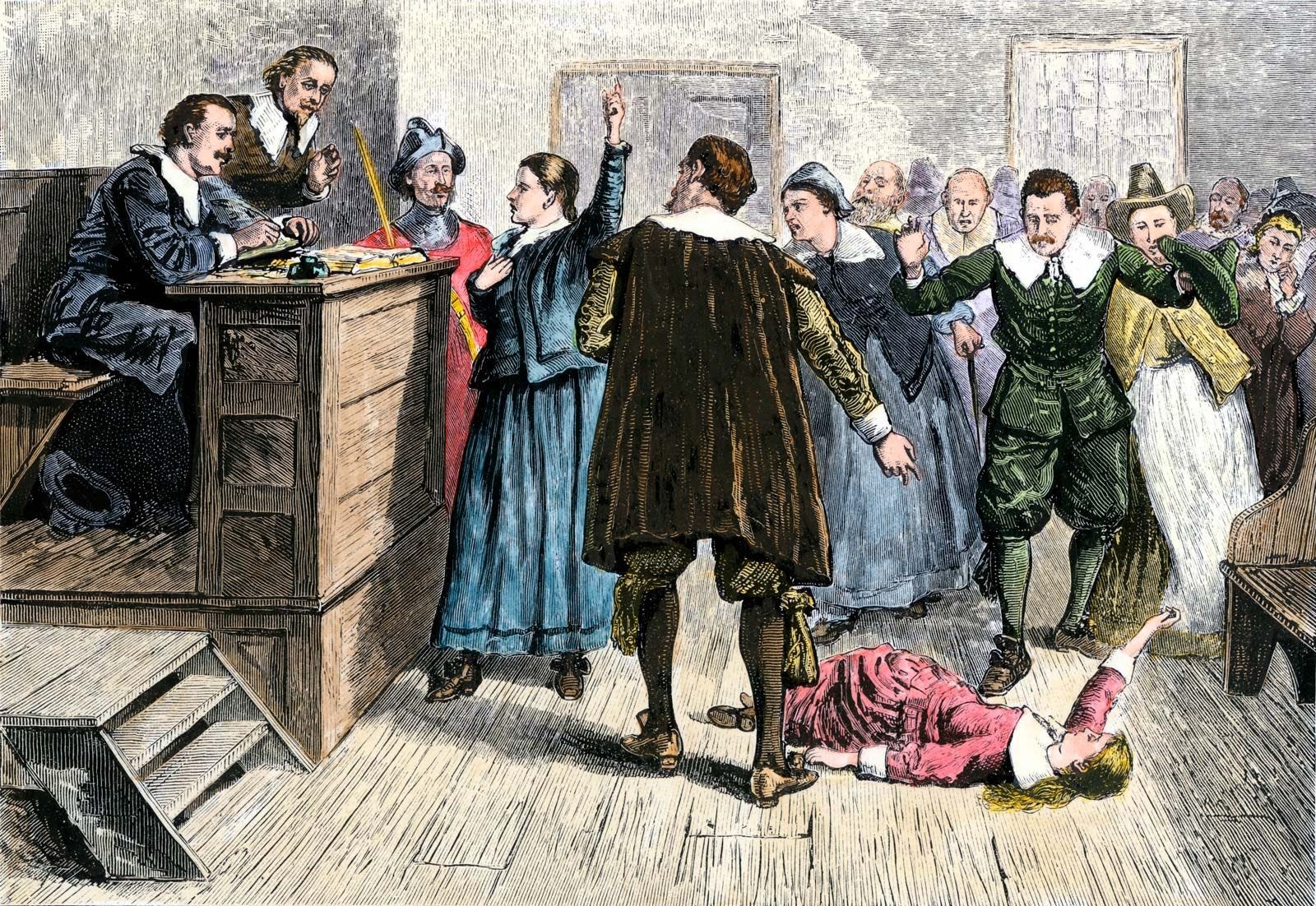
Salem had already carved its name into history through paranoia, accusation and ruin. Yet on May 14th, 1878, the Massachusetts town found itself dragged back towards the shadows of its past. Nearly two centuries after innocent people were condemned during the infamous witch trials, another extraordinary case unfolded inside the Essex County Courthouse, one that revealed how easily fear can dress itself in new clothes.
This time there were no cries about broomsticks or dealings with the devil. Instead, the language sounded modern, intellectual even. The accusation centred on something called “malicious animal magnetism”, the supposed ability to injure another person through concentrated thought alone. Beneath the strange terminology, however, the charge was painfully familiar. Salem was once again being asked to decide whether one human being could spiritually attack another through invisible forces.
The setting may have changed, but the instincts of the crowd had not.
Faith, Influence and Dangerous Certainty
At the centre of the storm stood Mary Baker Eddy, founder of the Christian Science movement, a woman of immense conviction and growing influence in post Civil War America. She preached that illness could be overcome through prayer, spiritual discipline and the power of belief. To many followers, she represented hope in an era when conventional medicine often failed more than it cured.
Her teachings attracted devoted believers, among them Daniel Spofford, a former shoemaker who became one of her most trusted students. Spofford embraced her methods so completely that he established his own healing practice and dedicated himself to spreading her ideas. For a time, the relationship between teacher and student flourished.
Then ambition, money and loyalty poisoned it.
Disputes over finances and authority fractured the partnership. Spofford fell from favour and was eventually expelled from the movement altogether. What followed exposed how quickly spiritual certainty can harden into personal vengeance.
When a woman named Lucretia Brown suffered renewed physical pain after receiving faith healing treatments, Eddy identified the cause with astonishing confidence. According to her, Spofford was attacking Brown mentally through malicious animal magnetism, directing destructive thoughts at her from afar.
In another century such claims might have led to the gallows. In 1878 they led to court.
Courtroom Spectacle in Salem
The case immediately captured public fascination because Salem carried a reputation no American town could escape. Newspapers eagerly branded the proceedings as a second witch trial, and spectators packed the courtroom hoping to witness something sensational.
What they found was less supernatural horror than human confusion.
Witnesses spoke seriously about invisible mental forces and spiritual attacks. Followers of Christian Science insisted such powers were real. Critics responded with laughter and disbelief. The atmosphere reportedly swung between tension and ridicule as the court attempted to apply rational law to irrational accusations.
Justice Horace Gray faced an impossible task. American courts could weigh evidence, motives and actions. They could not judge thoughts floating invisibly inside another person’s mind.
That distinction mattered enormously.
The plaintiff’s representatives argued that Spofford had caused genuine suffering through concentrated mental force. Yet even if the court accepted such claims as sincere, there remained no practical legal remedy. How could the state restrain a man from thinking harmful thoughts? What law could police imagination itself?
The judge dismissed the case, not because everyone agreed the accusations were absurd, but because the legal system recognised the danger of entering territory where belief alone becomes evidence.
That decision deserves more credit than it often receives.
Salem’s Real Lesson Was Never About Witchcraft
Too many retellings reduce Salem to eccentricity, as though the town merely attracts strange stories every few generations. The truth is more unsettling.
The 1878 case demonstrated that educated societies remain vulnerable to collective irrationality, especially when fear combines with moral certainty. The language changes with the age. In the seventeenth century people spoke of curses and Satan. In the nineteenth century they discussed mesmerism and magnetic forces. Today similar instincts survive beneath different vocabularies again.
Human beings remain deeply susceptible to invisible threats that cannot easily be disproven.
That was the true danger lurking beneath the Spofford trial. Once society accepts accusation without measurable evidence, hysteria gains legitimacy. The target merely changes according to the fashions of the period.
What makes the affair especially revealing is that many involved were intelligent, respectable people. This was not a mob of medieval villagers. These were educated Americans living during an age of industrial progress, scientific advancement and growing modernity. Yet they still found themselves drawn towards explanations resting entirely upon belief.
Reason advances unevenly. Fear keeps pace.
Murder Plot Turned Farce Into Something Darker
Had the story ended with the courtroom dismissal, it might merely stand as an odd historical curiosity. Instead, events took a darker turn.
Not long after the failed lawsuit, authorities uncovered an alleged conspiracy to murder Daniel Spofford. Two men connected to the dispute were accused of arranging his death. Spofford himself was briefly hidden away while investigators attempted to catch the plotters through deception and surveillance.
Although the prosecution ultimately collapsed, the episode transformed the affair from bizarre spectacle into something far more serious. What began as spiritual grievance had curdled into obsession.
That escalation matters because it exposes the emotional force beneath supposedly noble causes. Ideological certainty often persuades people they are justified in crossing moral boundaries. Once opponents are viewed not simply as rivals but as existential threats, restraint weakens rapidly.
Salem’s second witch trial therefore revealed something deeply familiar about human behaviour. Fanaticism rarely arrives announcing itself openly. It usually enters disguised as righteousness.
Echoes That Still Matter Today
The events of May 14th, 1878 endure because they speak to modern instincts as much as historical ones. Every age develops fashionable fears that claim invisible enemies are operating beneath the surface of society. Every generation produces voices insisting extraordinary accusations should bypass ordinary standards of proof.
Salem reminds us where that path can lead.
The great irony of the Spofford case lies in the fact that America had already learned this lesson once before in the same town. Nearly two hundred years after the original witch trials disgraced Salem, people still gathered eagerly to witness another battle over unseen forces and alleged spiritual attacks.
History seldom repeats itself exactly. What it repeats are patterns of behaviour.
That is why the second Salem witch trial deserves remembering. Not because malicious animal magnetism was real, but because the fear surrounding it was real enough to damage lives, divide communities and nearly provoke violence.
Civilised societies depend upon evidence, restraint and scepticism precisely because emotion alone is such an unreliable guide. Salem learned that lesson painfully in 1692. It stumbled into learning it again in 1878.
And perhaps we still are.