

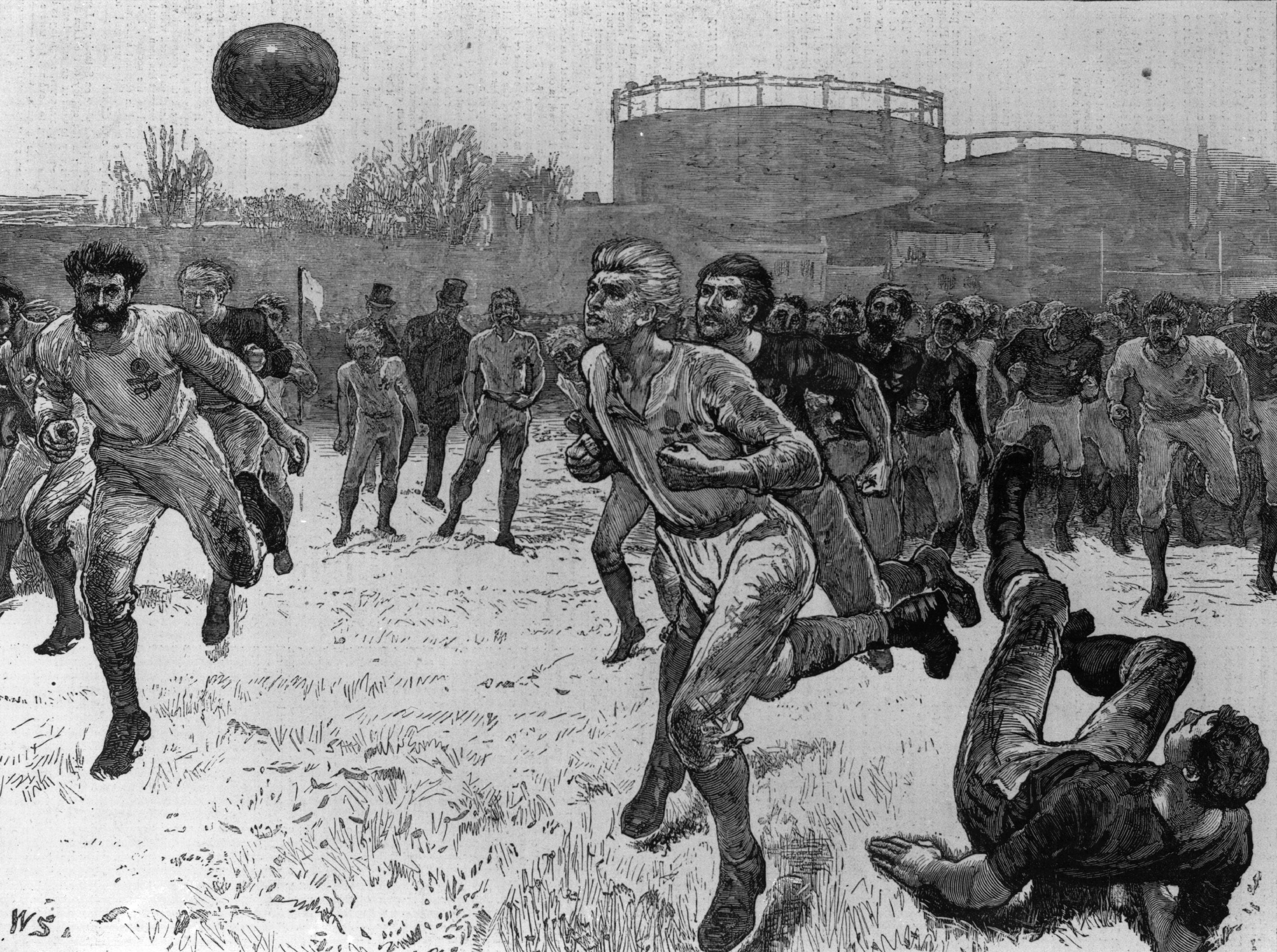
On this day in 1872, a modest crowd gathered on a cricket ground in South London to watch a football match that few could have imagined would echo through sporting history. Around two thousand spectators stood around the pitch at Kennington Oval, many of them well educated gentlemen who had paid a shilling for the privilege. They were there to witness the final of a new competition, the Football Association Challenge Cup.
What unfolded that afternoon was simple by modern standards. A single goal decided the contest. Yet the match marked the beginning of something profound. The FA Cup final of 1872 laid the foundations for the world’s oldest national football competition and helped transform association football from a scattered pastime into a unified national sport.
Football Before Rules and Order
By the middle of the nineteenth century football had existed in England for centuries, though calling it a single game would be generous. Each town, school and club played by its own set of rules. In some places handling the ball was allowed. In others it was forbidden. Tackling methods differed wildly. Even the way a goal was scored could vary.
Matches between teams from different backgrounds often required lengthy negotiations before the ball had even been kicked. Football was popular but chaotic, with little sense of shared identity.
The creation of the Football Association in 1863 attempted to solve that confusion. Its aim was straightforward, to establish a common rulebook that could unite the game across England. The task proved difficult. Disagreements over physical contact and ball handling created deep divisions. Eventually those who preferred a rougher, handling based game broke away and formed their own code, which would become rugby.
What remained within the Football Association was a clearer vision of a game played mainly with the feet. Yet a rulebook alone could not capture the public imagination. Football needed something more, a stage on which clubs could compete for prestige.
Vision Behind the First National Tournament
The driving force behind that next step was Charles Alcock, an energetic administrator and passionate sportsman. Alcock believed that competition could give football the focus it lacked. In 1871 he proposed a knockout tournament open to clubs across the country.
The idea was simple but ambitious. Teams would enter the competition and play through rounds until two remained for a final. It was a structure borrowed from other sports and public school traditions, yet applying it to association football was revolutionary.
Fifteen clubs entered the inaugural tournament. Even that modest number revealed the logistical challenges of the era. Travel was expensive and slow. Clubs outside London struggled to afford long journeys. Several fixtures never took place because teams could not make the trip.
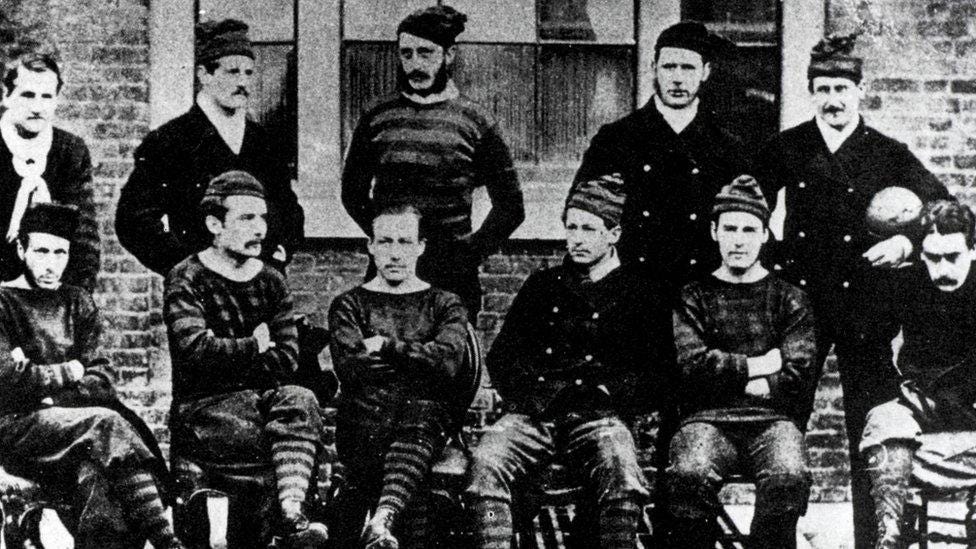
Despite these obstacles the competition slowly narrowed to its final stage. Two clubs emerged to contest the final, Wanderers and the Royal Engineers.
Their paths to the match reflected the unpredictable nature of early football. Walkovers, withdrawals and replay debates shaped the tournament almost as much as the football itself. Yet by March 1872 the moment had arrived.
Match at Kennington Oval
The final took place at Kennington Oval, better known as a cricket ground than a football venue. The pitch was muddy and uneven, the equipment basic, the rules still evolving.
Players wore heavy boots and thick clothing suited to the cold English spring. There were no substitutes. Injuries meant playing on or leaving your team short handed.
The Wanderers entered the match with a talented dribbler named Walpole Vidal, widely admired for his ability to glide through defenders. The Royal Engineers were known for organised passing, a style that would later influence the tactical development of football.
Early exchanges suggested the Engineers held the upper hand. Their passing movement unsettled the Wanderers and created pressure around the goal. Fortune intervened when an Engineer suffered a broken collarbone after a heavy collision. With no replacements allowed the team continued with ten men.
The advantage soon told. A loose ball fell to Morton Betts, who drove a fierce shot into the net. It proved to be the decisive moment. The Wanderers held their lead for the remainder of the match and secured a 1–0 victory.
Officials signalled the end not with whistles but by waving handkerchiefs. The winning captain lifted a small silver trophy. Few present could have guessed that the modest cup would become one of football’s most cherished prizes.
Legacy of a Humble Beginning
What strikes a historian about that first final is its scale. Two thousand spectators, a muddy cricket ground, and a competition that nearly collapsed under travel costs.
Yet within those humble circumstances lay the blueprint for modern football.
The FA Cup gave clubs a shared objective. It connected teams from different regions and backgrounds within a single structure. As the years passed the tournament expanded, attracting more entrants and larger crowds.
Football itself followed a similar path. What began among public schools and gentleman amateurs gradually spread to working class communities and industrial towns. By the early twentieth century clubs from cities such as Sheffield, Birmingham and Bolton were drawing vast crowds.
The FA Cup final grew alongside the sport. By 1923 the showpiece match had moved to the new Wembley Stadium. That year more than two hundred thousand people flooded the ground and surrounding areas for the final, a staggering contrast to the small gathering at Kennington Oval half a century earlier.
Such growth reflects football’s remarkable ability to capture imagination across social classes and generations. The FA Cup helped make that possible by creating a narrative each season, a journey from early rounds to a climactic final.
Every modern cup competition, from domestic tournaments across Europe to global events like the World Cup, owes something to the simple knockout format pioneered in England during the 1870s.
Why March 16, 1872 Still Matters
Looking back from the vantage point of modern football, with its packed stadiums and global television audiences, the first FA Cup final appears almost quaint.
Yet its importance lies precisely in that modest beginning. On that spring afternoon in South London the game discovered a structure that would help it grow. The match proved that organised competition could elevate football beyond local pastimes and school traditions.
One goal, struck through the mud by Morton Betts, began a legacy that continues every season. Each FA Cup run, every giant killing upset, every final played beneath Wembley arch traces its lineage to that original contest.
History often begins quietly. Sometimes it begins with a muddy pitch, a small silver trophy, and a crowd of two thousand wondering what might come next.
I grew up with the notion that the FA Cup was the be all and end all. The 1st one I can clearly remember is Arsenal-Liverpool in 1971.
It saddens me that now finishing 5th is deemed more important than winning The Cup.