

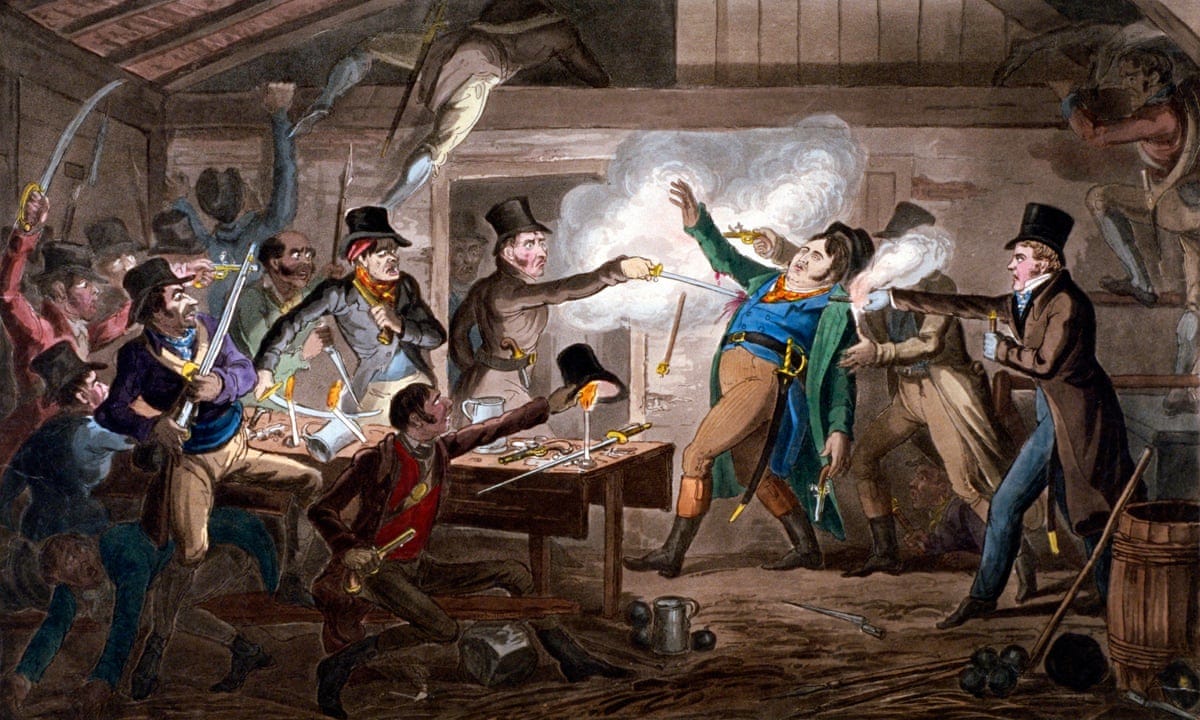
On this day in 1820, a narrow loft in Cato Street became the stage for a drama that exposed the raw nerves of a nation. Britain was exhausted by war, shaken by economic hardship and fearful of its own people. In that cramped room, a handful of men convinced themselves that murder would cleanse the state. Waiting in the shadows were informers and officers, ready to spring a trap.
The Cato Street Conspiracy was not a grand rising. It was a desperate gamble, conceived in anger and undone by betrayal. Yet it tells us more about the temper of post-Napoleonic Britain than many larger events. It speaks of hunger and exclusion, of political deafness, and of a government prepared to stretch the law to breaking point in order to protect itself.
Roots of Radical Anger
At the centre of the plot stood Arthur Thistlewood, a man of fierce temper and unbending conviction. He had already tasted confrontation during the Spa Fields unrest of 1816, when mass meetings in London spiralled into riot. That earlier episode ended in acquittal for treason, partly because a government spy’s testimony was deemed unreliable. The lesson Thistlewood drew was not caution, but vindication.
Britain in the late 1810s was fertile ground for agitation. Only a tiny fraction of the population could vote. Industrial towns had grown swollen and sullen, yet parliamentary representation remained frozen in a past age. Working men returned from war to find bread dear and employment scarce. Demands for reform were not abstract theories, they were cries from families who could not afford to eat.
Then came the bloodshed in Manchester in 1819, remembered as the Peterloo Massacre. Cavalry charged a peaceful crowd calling for parliamentary reform. Men, women and children were cut down. The government’s answer was not remorse but repression, passing the Six Acts to curb public meetings and radical publications.
In that climate, the idea of peaceful petition began to look futile to some. Thistlewood’s rhetoric hardened. He no longer spoke merely of reforming Parliament. He spoke of cutting out the rot.
Plot Born in Secrecy
The plan that took shape in early 1820 was stark in its ambition. Thistlewood and his associates would strike at the heart of government. The Prime Minister, Robert Jenkinson, 2nd Earl of Liverpool, and his cabinet were said to be dining together at a house in Grosvenor Square. The conspirators intended to burst in, kill them all, and proclaim a provisional government committed to popular rights.
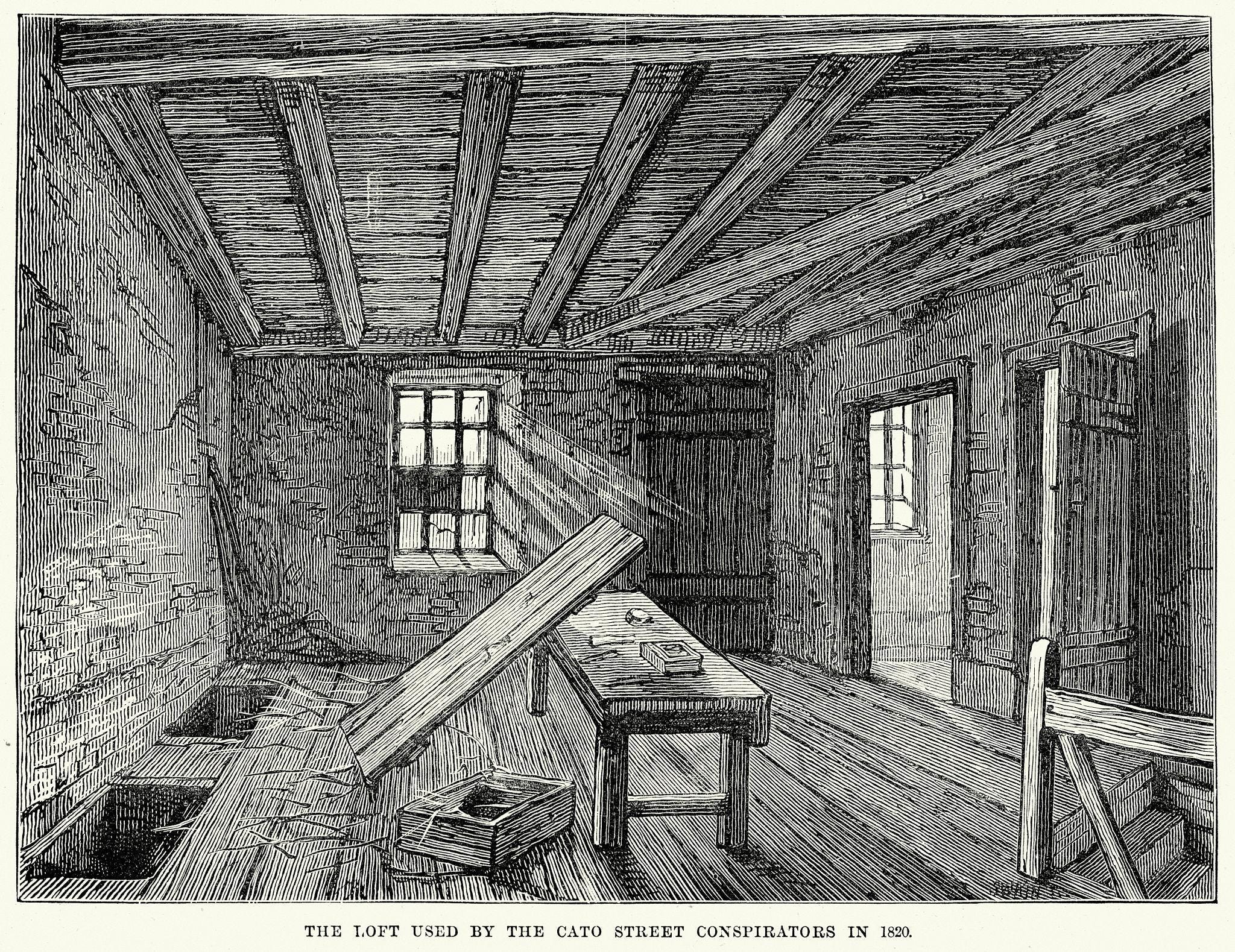
It was fantasy edged with steel. The men gathered above a stable in Cato Street armed themselves with pistols, swords and pikes. They imagined that the death of ministers would ignite a wider rising. London, in their vision, would answer blood with revolution.
Yet the state was already inside the room. An informer, George Edwards, had infiltrated the circle. He reported each muttered oath to the Home Secretary. More troubling still, there is evidence that he did more than observe. He encouraged, reassured and nudged the plotters forward when doubts surfaced.
The supposed dinner itself was a fabrication. A newspaper notice, planted to lure the conspirators on, announced a cabinet gathering that did not exist. The real ministers were nowhere near the target. The trap was set not to prevent a murder in progress, but to manufacture the moment of intervention.
When one conspirator visited the house and found no sign of any banquet, suspicion flickered. Edwards smothered it. The newspaper, he insisted, could not be wrong. In the end, belief triumphed over caution. On the evening of 23 February 1820, the men assembled, weapons laid out on a rough table, ready to march.
Raid in the Loft
The Bow Street Runners, early precursors of a police force, climbed the stairs with swords drawn. They were outnumbered, but surprise was on their side. The confrontation was swift and savage. Thistlewood stabbed an officer who attempted to arrest him. A lantern was smashed, plunging the room into darkness. Shots cracked through the gloom. Men stumbled and grappled.
Some conspirators were seized on the spot. Thistlewood escaped briefly through a window, scrambling down a rope ladder into the night. By morning he was captured, betrayed once more by the very network of informers that had shadowed him from the start.
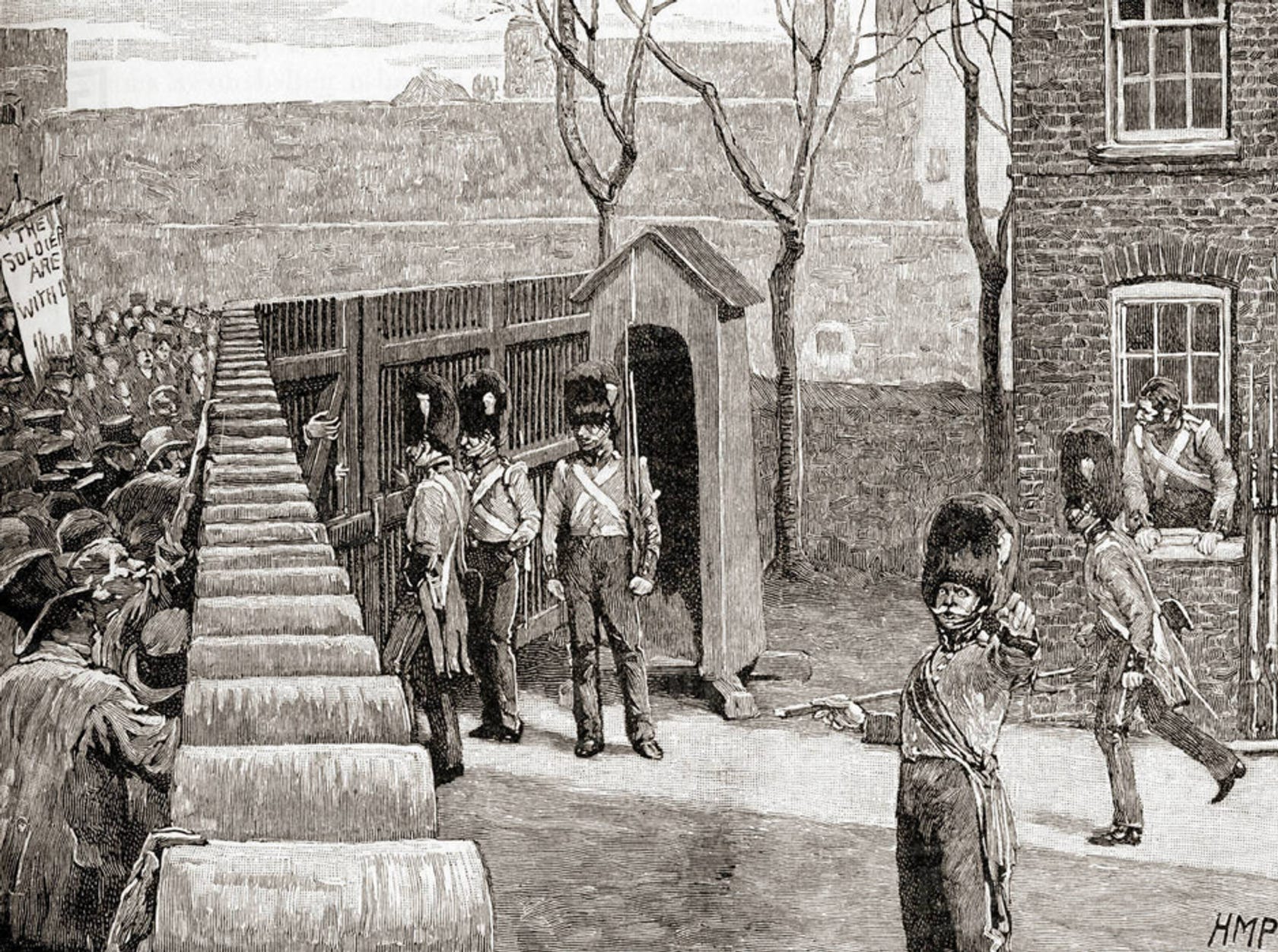
The aftermath was brisk and unforgiving. This time there would be no acquittal. The climate had shifted. The authorities were determined to make an example. Thistlewood and several of his comrades were convicted of high treason. They were publicly hanged and then beheaded, a grim ritual that echoed older centuries.
Crowds gathered to watch. Some came out of curiosity, others in sympathy, others still in satisfaction. The spectacle was meant to restore order through fear.
Justice, Espionage and Uneasy Legacy
The Cato Street Conspiracy poses a question that still unsettles. How far may a government go in defending itself? Informers are not new to politics, yet the line between detection and provocation can blur. When an agent encourages a crime in order to expose it, responsibility becomes shared in uncomfortable ways.
There were contemporaries who worried that the state had not merely uncovered a conspiracy but had helped sustain it. The use of planted stories and active incitement sat uneasily with claims of moral authority. Even those who despised Thistlewood’s violence could question the tactics used to bring him down.
At the same time, it would be naïve to cast the conspirators as harmless dreamers. They were prepared to kill. They believed that slaughtering elected ministers would usher in liberty. That belief rested on a profound misreading of public mood. Britain in 1820 was restless, but it was not poised for insurrection.
The plot failed, yet its causes did not vanish overnight. Parliamentary reform would come, slowly and unevenly, over the following decades. The Reform Act of 1832 widened the franchise, though still far short of democracy. The grievances that fuelled Cato Street became part of a longer struggle that reshaped British politics without the need for mass assassination.
What remains striking is the intimacy of the episode. History often deals in vast movements, armies on fields, laws passed in stately chambers. Here we have a handful of men in a cramped loft, convinced that they stood on the brink of transformation. Their world was small, smoky, tense. Outside, London carried on, unaware that within minutes it would witness a violent clash that might have altered its course.
On This Day in 1820, the Cato Street Conspiracy collapsed in confusion and blood. It revealed a government fearful of revolt and a fringe of radicals who had lost faith in lawful change. Between them lay a public weary of hardship and wary of extremes.
In telling this story, I am struck less by the melodrama than by the warning. Political systems that shut out the many invite fury from the margins. States that answer dissent only with suppression risk deepening the resentment they seek to crush. Violence, whether plotted in secret or sanctioned in response, leaves scars that endure beyond the gallows.
Cato Street did not bring revolution. It brought a reckoning of sorts, and a reminder that reform delayed can ferment into something darker. The loft is long gone, absorbed into the living city. Yet the questions raised there still hover, asking how a society balances order with justice, and how it listens before anger turns to steel.