

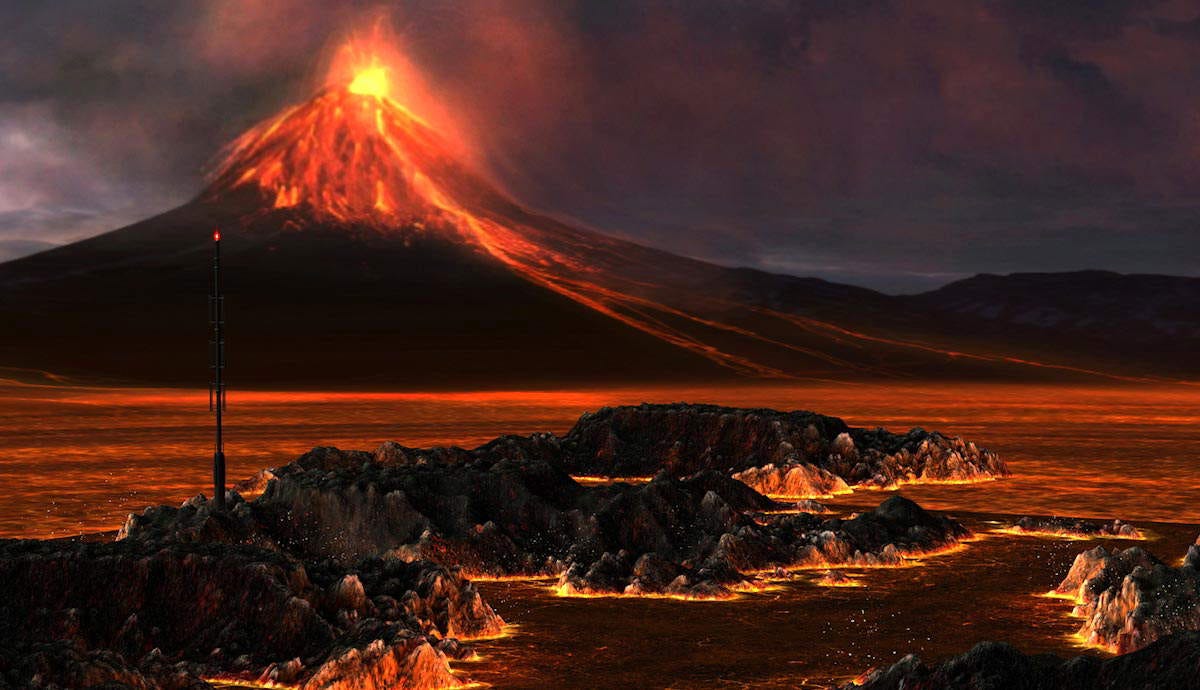
On this day in 1815, the earth tore open on the island of Sumbawa. Mount Tambora, long silent and almost forgotten, erupted with a force that defies easy description. It did not simply explode, it erased landscapes, swallowed communities, and sent a signal into the sky that the rest of the world would come to feel, whether it understood it or not.
In the villages that clung to Tambora’s slopes, life had continued in uneasy calm. Rumblings had been heard, ash had drifted, but such signs were dismissed, mistaken even for distant warfare. Then came the night when the mountain’s summit vanished. Fire rose in columns, the sky turned black, and the ground itself seemed to revolt. Winds of scorching ash and stone tore through settlements, leaving nothing that could be called familiar.
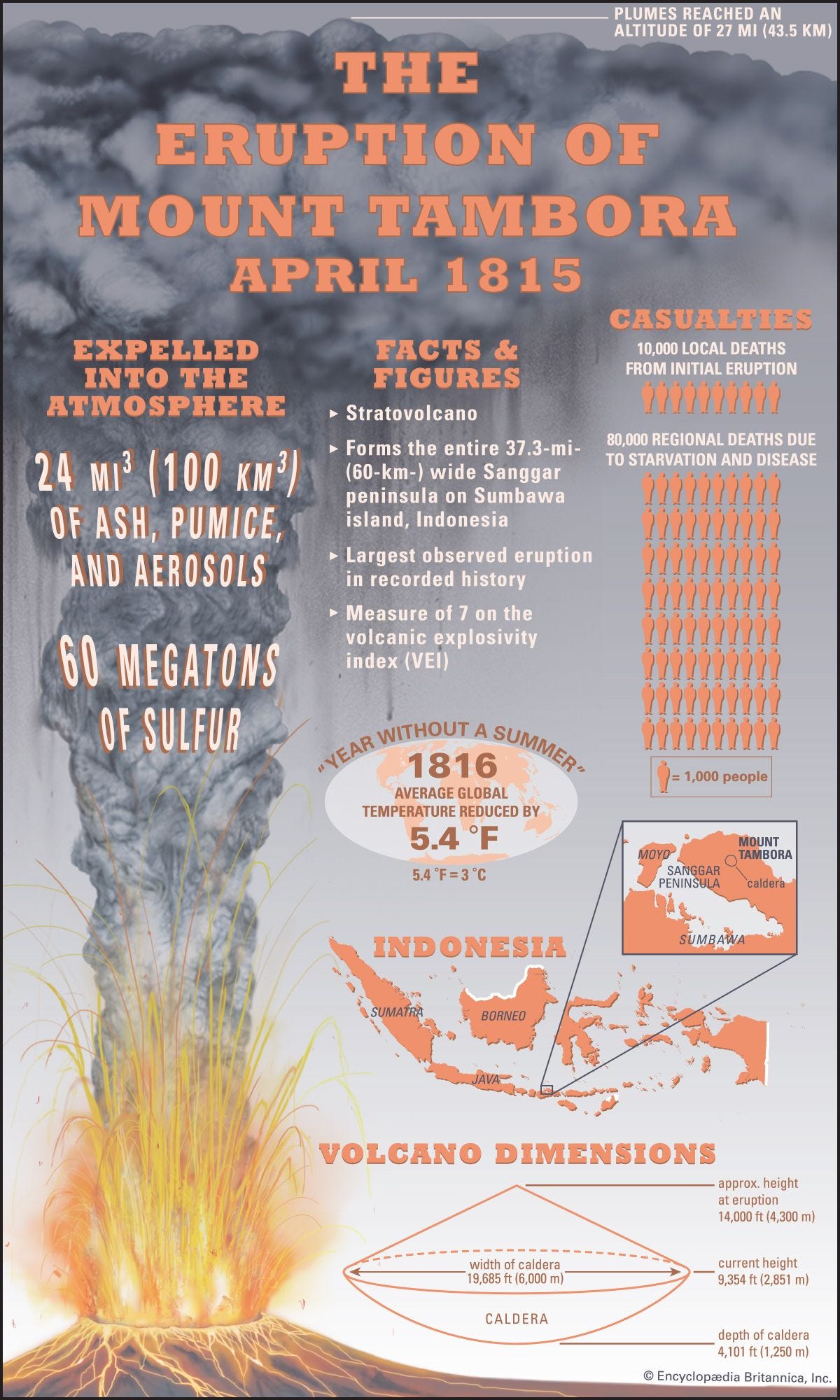
The human toll was immediate and merciless. Entire communities were wiped away in moments. Those who survived the first violence faced a slower unravelling, starvation, disease, and poisoned water. It is estimated that tens of thousands perished in the aftermath, their lives claimed not only by the eruption but by the long shadow it cast over the land.
Raffles and the Ash That Travelled
Hundreds of miles away, the British administrator Thomas Stamford Raffles sat beneath a sky that refused to brighten. Ash fell like an unnatural snowfall, thick enough to silence the day. The sounds that carried across the air resembled cannon fire, yet no battle had been declared.
Raffles, a man of curiosity and method, recognised that this was no ordinary disturbance. Orders were sent, expeditions launched, and when reports finally returned, they spoke of devastation on a scale beyond precedent. Villages buried under metres of ash, crops destroyed, and a population left to fend off hunger with dwindling supplies.
What Raffles could not fully grasp, though he suspected it, was that this disaster would not remain confined to the Indonesian archipelago. Tambora had done more than devastate its immediate surroundings. It had reached into the atmosphere and altered the balance of the planet itself.
Climate Chaos Reaches Europe
The ash cloud that rose from Tambora climbed high into the atmosphere and spread across the globe. It dimmed sunlight, cooled temperatures, and disturbed weather systems with a quiet persistence. The consequences unfolded slowly, but they were relentless.
Two months later, in June 1815, Europe found itself under skies that behaved out of season. Rain fell heavily over the fields of Belgium on the eve of a decisive confrontation. In a farmhouse near Waterloo, Napoleon Bonaparte prepared for battle, confident in his strategy and the loyalty of his troops.
Yet the ground told a different story. The rain had turned the battlefield to mud, slowing movement, blunting artillery, and delaying the French advance. That delay proved critical. Opposing forces had time to regroup, to reinforce, and ultimately to overcome. The defeat at the Battle of Waterloo marked the end of Napoleon’s ambitions and closed a chapter of European history.
It would be tempting to claim that Tambora alone brought about this outcome. History rarely offers such clean lines. Yet it is equally difficult to ignore the chain of cause and effect. A volcano in Indonesia influenced the weather in Belgium, and that weather shaped the conditions of a battle that decided the fate of a continent.
Year Without Summer
If Waterloo hinted at Tambora’s reach, the following year made it undeniable. 1816 became known as the Year Without Summer. Across Europe and beyond, temperatures dropped, harvests failed, and hunger spread.
In Switzerland, a young writer named Mary Shelley found herself confined indoors by relentless storms and cold. The landscape outside was bleak, the mood inside restless. From that confinement came imagination, and from imagination came a story that would endure.
Her novel, Frankenstein, was born in part from that strange, dark summer. It is a tale steeped in questions about creation, responsibility, and the limits of human ambition. One cannot help but see in it an echo of the natural world’s power, the same power that Tambora had displayed with such indifference to human life.
Elsewhere, the consequences were more immediate and more brutal. Crops failed across Europe. Rivers flooded, livestock died, and famine took hold in regions already weakened by war. Even in North America, snow fell in summer months, and communities struggled to adapt.
A Lesson Written in Ash
There is a tendency to view disasters in isolation, to see them as events with clear beginnings and endings. Tambora resists that simplicity. Its eruption was not a moment but a chain reaction, one that linked distant places and disparate lives.
What happened on Sumbawa did not stay on Sumbawa. It travelled in the air, in the weather, in the subtle shifts that turned seasons against expectation. It reached battlefields, farms, and drawing rooms. It influenced decisions, outcomes, and creations in ways that those living through it could scarcely comprehend.
Looking back, the story of Tambora carries a quiet warning. Human affairs, for all their complexity, remain vulnerable to forces beyond control. Empires may rise and fall through strategy and strength, but they are not immune to the wider workings of the planet.
On this day in 1815, a mountain erupted. The immediate destruction was terrible enough. Yet the true scale of the event lies in what followed, a reminder that the world is more connected than it appears, and that even the most remote places can shape the course of history.