

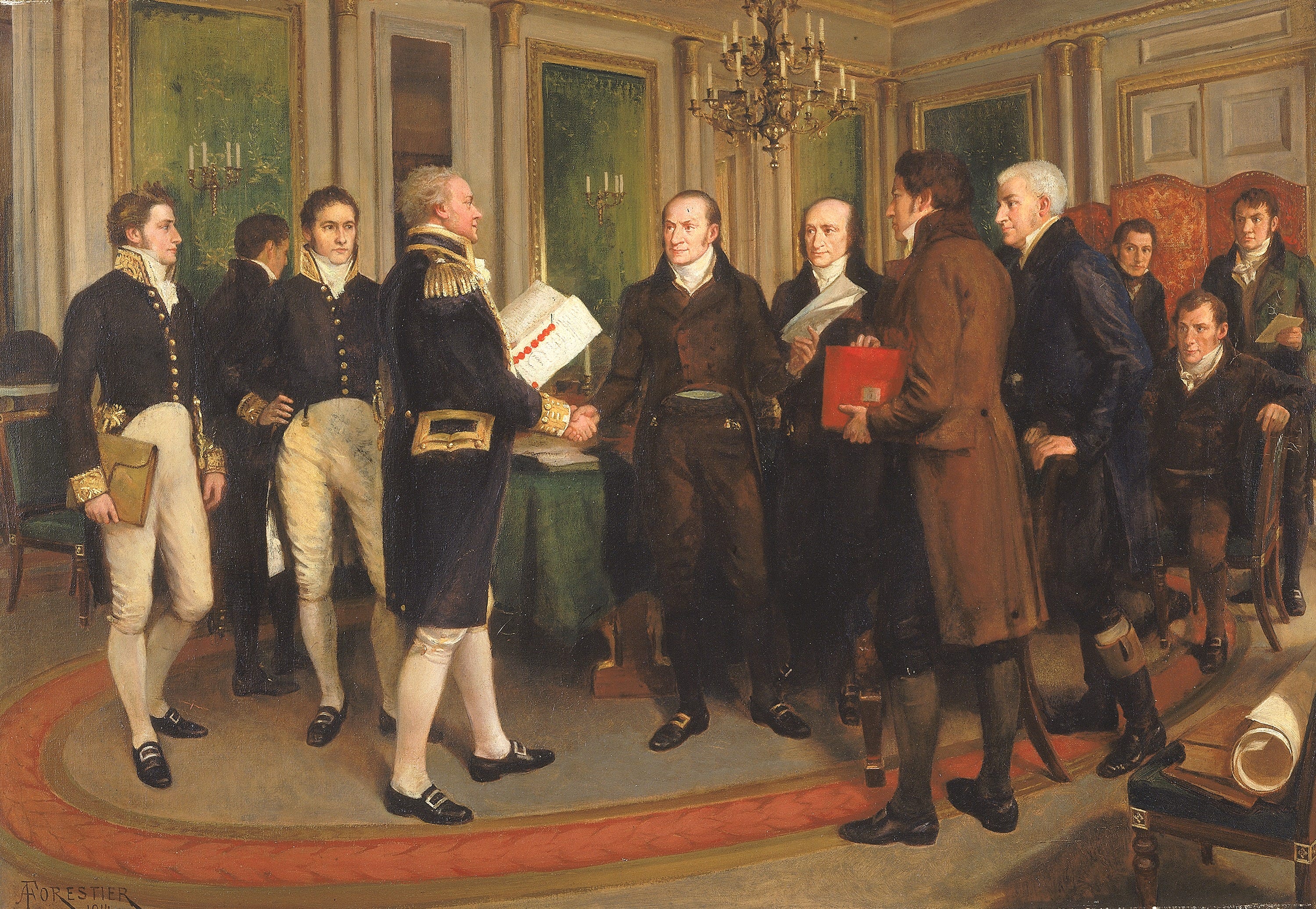
On this day in 1815, a document crossed a room in Washington and closed a war that had burned the American capital, emptied its treasury and shaken its confidence. The paper was the Treaty of Ghent. The man who delivered it was James Monroe. The moment was ceremonial, yet the weight behind it was anything but light.
The War of 1812 had begun with bravado and grievance. It ended in exhaustion and compromise. When Monroe placed the ratified treaty in British hands on 17 February 1815, he did more than conclude hostilities with Britain. He helped rescue a bruised republic from drift and humiliation, and in doing so set the stage for his own rise to the presidency.
War of 1812 humiliation and hard lessons
The conflict had opened in chaos. American leaders believed that British Canada would fall swiftly. Instead, early campaigns exposed poor preparation and muddled command. The surrender of Detroit in 1812 was a body blow. A fort handed over without a full fight, troops disarmed, prestige lost. It was the kind of defeat that lingers in the national memory.
The young United States was ill equipped for a sustained war with the British Empire. There was no central bank to steady finances. Supplies ran short. Political opposition at home weakened resolve. Britain, though distracted by the Napoleonic struggle in Europe, still possessed the world’s most formidable navy.
Tensions that had simmered since American independence had boiled over into open conflict at sea. Trade restrictions, impressment of sailors and frontier anxieties fed resentment. Yet resentment alone does not win wars. Organisation does.
By 1814, the war reached its most dramatic and humiliating chapter. British forces sailed into the Chesapeake, marched on Washington and set fire to public buildings. The capital burned. Smoke rolled through the night sky, a harsh reminder that independence did not guarantee security.
It was in this atmosphere that Monroe’s role became decisive.
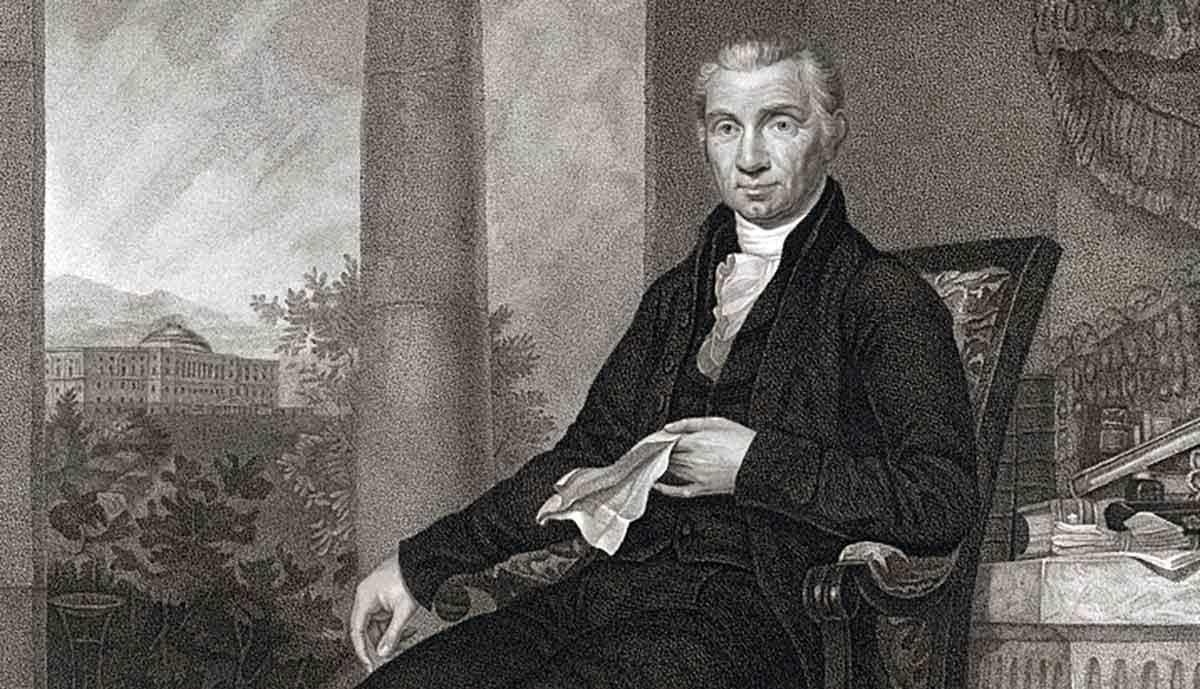
James Monroe’s gamble in a burning capital
Monroe had already served his country in diplomacy and politics. He had Revolutionary War credentials and presidential ambition. Yet ambition alone would have achieved little had it not been matched by nerve.
When British troops advanced on Washington in August 1814, confusion reigned. Defensive preparations were scattered. Senior figures misjudged British intentions. Monroe, serving in the cabinet, took it upon himself to act. He pushed for the removal of vital documents. He scouted enemy movements. He urged reinforcements.
After the rout at Bladensburg, the road to the capital lay open. As flames consumed public buildings, morale might have collapsed entirely. Instead, Monroe rallied militia, repositioned artillery and sought to restore order from near panic. His anger at any thought of surrender was not theatre. It was conviction that a republic cannot negotiate from its knees.
Soon he held both the State and War portfolios, a rare concentration of responsibility. Congress hesitated to fund a stronger army. Monroe borrowed money on his own signature to keep resistance alive. It was a gamble rooted in belief that defeat would cost more than debt.
The British eventually withdrew from Washington, their objectives limited and their resources stretched. Yet the shock of the capital’s burning hardened American resolve. National pride, wounded but not extinguished, demanded vindication.
Treaty of Ghent and fragile peace
While battles raged in North America, diplomats met in the Belgian city of Ghent. On Christmas Eve 1814, representatives of both nations signed what became known as the Treaty of Ghent. Its terms were sober and unspectacular. Territory would be restored to pre war lines. Prisoners would be returned. No sweeping concessions. No triumphant redrawing of borders.
In truth, the treaty recognised stalemate. Neither side had secured decisive advantage. Britain, weary from European war, had little appetite for prolonged conflict across the Atlantic. The United States, financially strained and militarily stretched, needed respite.
News travelled slowly. In January 1815, American forces under Andrew Jackson won a dramatic victory at the Battle of New Orleans, unaware that peace had already been signed. The triumph transformed public mood. What might have felt like compromise now felt like confirmation of strength.
When President James Madison submitted the treaty to the Senate, there was pride to steady wavering hearts. The Senate ratified it unanimously. The document required acceptance without amendment. It was to be taken or left. Lawmakers took it.
On 17 February 1815, Monroe formally delivered the ratified treaty to the British minister in Washington. The gesture was simple, yet it carried the full authority of a nation that had survived trial by fire. For Britain, the war had been a secondary theatre beside the Napoleonic struggle. For America, it had been existential.
Peace did not resolve every grievance. Maritime disputes lingered. Frontier tensions remained. Most grievously, Native American nations who had aligned with Britain found themselves abandoned, exposed to relentless expansion. The cost of American survival would be borne heavily by others.
Yet the treaty secured what mattered most to American leaders. Independence had been tested and endured. The republic remained intact.
Monroe’s legacy and era of good feelings
Monroe’s delivery of the Treaty of Ghent was both an ending and a beginning. He had steered through cabinet rivalry, military embarrassment and political scepticism. He had insisted on preparedness when others hesitated. He had absorbed risk to preserve credibility.
In the election of 1816, he rode a tide of national feeling to the presidency. His tenure ushered in what became known as the Era of Good Feelings, a period marked by relative political unity and the temporary eclipse of fierce party rivalry. The scars of war had not vanished, but shared survival fostered a sense of collective purpose.
It would be easy to paint the War of 1812 as a simple second war of independence. Reality was more complex. The treaty restored boundaries as they had been. It did not deliver sweeping territorial gain. It did not end all tensions with Britain in one stroke. Yet it confirmed that the United States could endure external assault without fragmenting.
From my vantage as a student of history, the importance of this day lies less in parchment and more in psychology. Nations, like individuals, are shaped by crisis. The burning of Washington could have become a symbol of failure. Instead, through resilience and political will, it became a prelude to renewed confidence.
Monroe understood that peace requires strength, but strength also requires prudence. His actions in 1814 and early 1815 reflected a belief that dignity must be defended, yet wars must end before they devour the future.
On this day in 1815, when James Monroe delivered the Treaty of Ghent, he marked the close of a bruising chapter in American history. The war had cost lives, treasure and trust. It had exposed weaknesses in administration and defence. It had deepened divisions at home and intensified suffering on the frontier.
But it had also forged a sharper sense of national identity. Out of smoke and setback emerged a conviction that the republic could stand among established powers without surrendering its principles.
History rarely offers neat victories. More often, it presents uneasy settlements and hard lessons. The Treaty of Ghent was one such settlement. In its measured clauses and mutual concessions lay a recognition that survival sometimes counts as triumph.
And so, on this day, we remember not only the ink drying on a treaty, but the resolve that carried a young nation through fire to a fragile peace.