

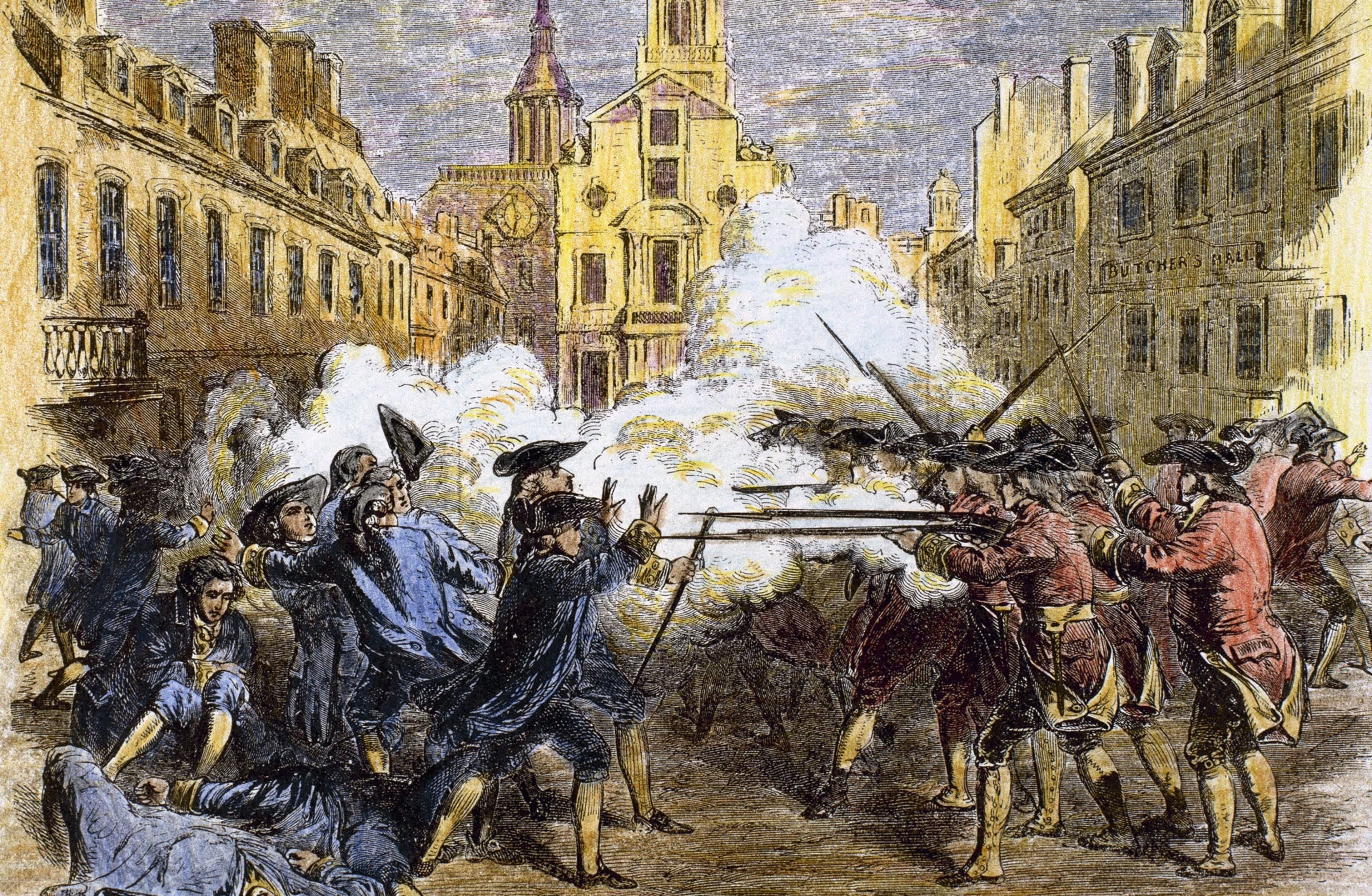
On This Day in 1770, a confrontation in the streets of Boston ended with gunfire, five dead colonists, and a political storm that would echo across the Atlantic. The event became known as the Boston Massacre, a phrase that still carries emotional force more than two centuries later. Yet when we look closely at that cold March evening, the truth appears far more complicated than the word massacre suggests.
The clash was not the result of a grand military plan or an organised uprising. It began with tension, suspicion and a crowd that grew too angry to control. British soldiers, already unpopular among many colonists, found themselves surrounded by an increasingly hostile mob. Snowballs were thrown first, then stones. Clubs appeared. Voices rose. Someone fired.
In the chaos that followed, soldiers discharged their muskets into the crowd. When the smoke cleared, eleven civilians had been shot. Five would die from their wounds.
The names of the dead became part of the story that followed. Among them was Crispus Attucks, a sailor who had once escaped slavery. There was Samuel Gray, a rope maker, and James Caldwell, a mariner. Samuel Maverick, only seventeen, died the next day. Another victim died weeks later from his injuries.
Five deaths in a city street might not sound like the opening chapter of a revolution. Yet history often turns on moments that seem almost accidental. What mattered was not only the violence itself, but how people chose to interpret it.
Colonial Tensions Before the Shooting
By 1770, resentment between Britain and its American colonies had been building for years. London expected loyalty and taxes. Colonists increasingly demanded a say in how they were governed.
British Parliament had imposed duties on imported goods ranging from glass and paper to tea. These taxes angered colonists who had no representation in Parliament. To many in America, it felt like rule without consent.
The British government responded not by softening its policies but by sending soldiers. More than a thousand troops were stationed in Boston to maintain order and enforce the law. Their presence changed the atmosphere of the city.
For some residents the soldiers were merely neighbours in uniform. Friendships formed, marriages even took place. Yet beneath the surface, resentment simmered.
Many Bostonians disliked seeing soldiers crowd their taverns or pitch tents on Boston Common. Others objected to the feeling of being watched by an occupying force. Soldiers were visible reminders that the Crown did not trust the colony to govern itself peacefully.
Tension lingered in daily life. Arguments between civilians and soldiers were common. Insults flew across tavern rooms and marketplaces. It did not take much to spark trouble.
On the evening of March 5, it took only a dispute involving an apprentice and a British officer.
Chaos in King Street
The trouble began with a claim that a British officer had failed to pay a bill owed to a tradesman. An apprentice accused the officer publicly. Words were exchanged, tempers flared, and a crowd began to gather.
A sentry guarding the nearby customs house intervened and escorted the officer to safety inside the building. Yet the guard soon found himself facing an angry and growing crowd.
Insults came first. Snowballs followed. Then stones.
Reinforcements arrived when Captain Thomas Preston led a small group of soldiers to the scene. Instead of calming the situation, their presence inflamed it. Armed soldiers facing an angry mob created a moment balanced on a knife edge.
Witnesses later described a crowd of dozens, perhaps more. Some carried clubs. Many shouted challenges, daring the soldiers to fire.
Then the situation collapsed into confusion. One soldier discharged his weapon. Others believed the order had been given and fired as well.
Preston shouted for a ceasefire, but the damage was already done. In the snow covered street, several colonists lay wounded or dead.
The incident lasted only moments. Its consequences would last decades.
Propaganda and Public Opinion
Violence alone did not transform the Boston Massacre into a turning point. Public reaction did that.
News of the shooting spread quickly across the colony. Stories circulated describing deliberate slaughter. Many colonists came to believe that British soldiers had intentionally fired on peaceful citizens.
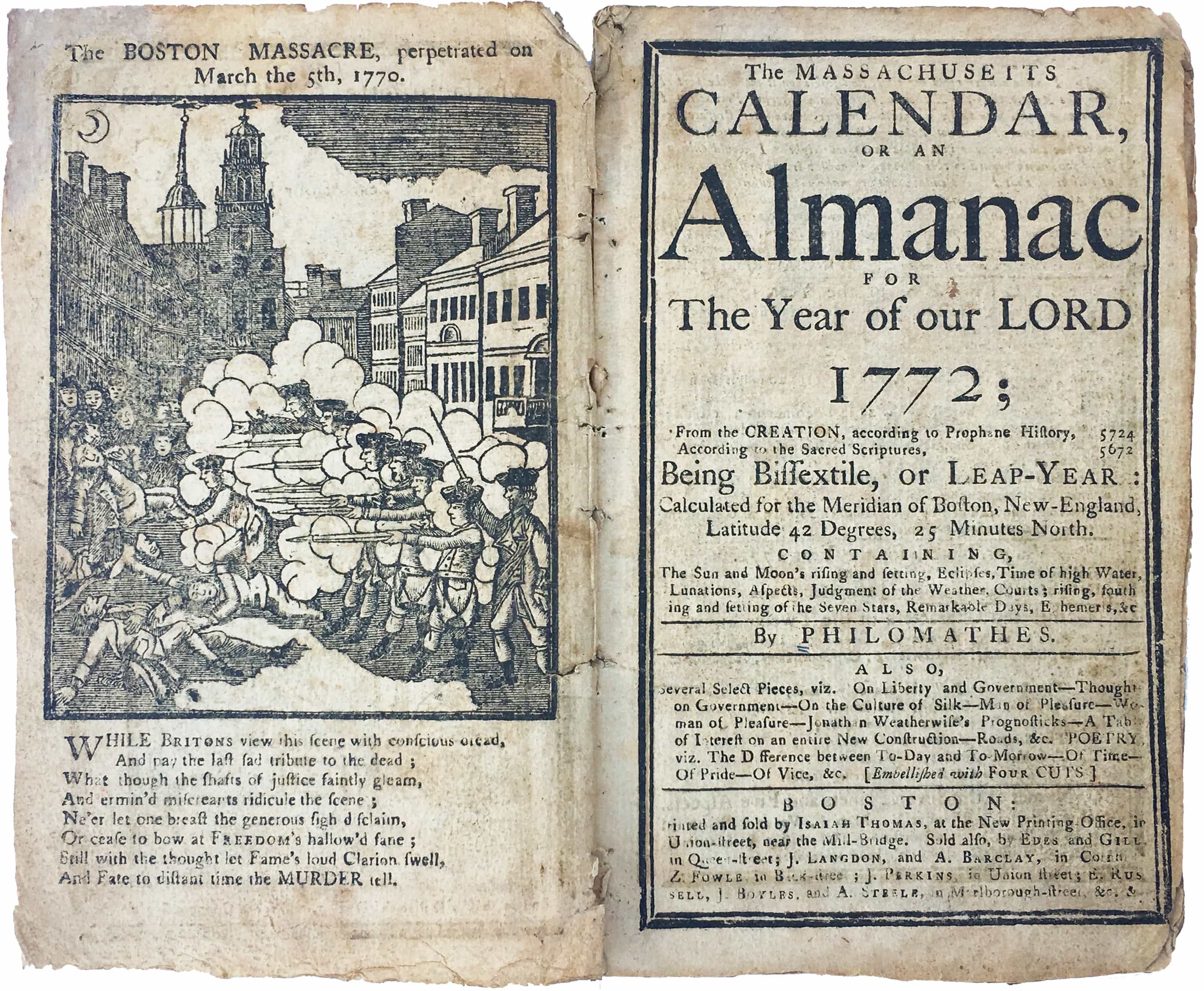
Printed illustrations helped shape this belief. One famous engraving showed soldiers lined up in formation, calmly firing into a defenceless crowd. In the image, the victims appeared helpless, while the soldiers looked disciplined and ruthless.
The power of such imagery cannot be overstated. At a time when many people never witnessed the event themselves, these images defined how the story was understood.
Anger grew. The phrase Boston Massacre itself carried a clear judgement. It framed the event as an act of brutality rather than a chaotic street fight.
In truth, eyewitness accounts were inconsistent. Some witnesses insisted they heard an order to fire. Others heard nothing. Some described violent behaviour by the crowd. Others claimed the soldiers attacked without cause.
Facts became tangled with emotion. Once the word massacre entered public discussion, the political battle for interpretation had already begun.
Trial That Tested Justice
In the months following the incident, Captain Preston and his soldiers were arrested and charged with murder. The trial drew enormous attention.
Public opinion in Boston was hostile. Many citizens already believed the soldiers were guilty. Yet the legal proceedings forced a careful examination of the evidence.
Witnesses offered conflicting testimony about what happened that night. Some claimed Preston ordered his men to fire. Others said they heard no command at all.
The defence argued that the soldiers feared for their lives. Surrounded by an aggressive crowd, struck by snowballs and stones, they acted in self defence.
In the end, the court could not prove that Preston had ordered the shooting. He was acquitted. Most of the soldiers were cleared as well. Two were convicted of manslaughter rather than murder.
Their punishment was severe but limited. They were branded on the thumb with the letter M, marking them permanently.
The verdict did little to calm colonial anger. Many Bostonians believed justice had failed. For them, the trial confirmed what they already suspected about British authority.
Spark That Fed Revolution
Looking back, the Boston Massacre was not the largest clash between colonists and British troops. It was not even the bloodiest event of the era.
Yet it became one of the most powerful symbols of colonial resistance.
The reason lies in timing and perception. Before March 1770, the idea of independence from Britain remained a minority view. Many colonists still hoped disputes could be resolved within the empire.
The shootings changed the mood. The image of British soldiers killing colonists on American soil carried enormous emotional weight. It turned political disagreement into moral outrage.
Within a few years, tensions escalated further. Protest movements grew stronger. In 1773, colonial activists destroyed shipments of tea in Boston Harbour. Britain responded with harsher measures.
By 1775, open conflict erupted at Lexington and Concord. The American War of Independence had begun.
Many later historians would look back to the Boston Massacre as the moment when rebellion first took hold in the public imagination.
Lessons Written in Snow
The Boston Massacre remains a reminder of how fragile order can be when trust collapses. A misunderstanding, a taunt, a thrown stone, any of these can tip a tense situation into violence.
It also shows how powerful narrative can be. The battle over what happened that night was almost as important as the event itself.
For some colonists, the massacre proved that British rule had become intolerable. For British authorities, it was evidence of a dangerous and unruly mob.
History rarely offers clean heroes and villains. The Boston Massacre instead reveals human fear, anger and misjudgement colliding in a crowded street.
Yet from that confusion came something far larger. Five deaths in the snow became a rallying cry. Within a generation, a new nation would emerge.
On This Day in 1770, Boston did not yet know it stood at the beginning of a revolution. But the echo of gunfire in King Street would carry further than anyone present could possibly have imagined.