

Rising from Ashes: The Samsung Story
On a spring day in 1936, the dusty streets of Daegu, a small trading hub under Japanese control in southeastern Korea, bore witness to a man at his breaking point. Lee Byung-chul, a frail, bespectacled young man of 26, stood outside a dimly lit gambling parlour, his pockets empty and his pride bruised. Life had not unfolded as he had envisioned. Illness had cut short his education in Tokyo. Now, back in his hometown, he was trapped in a monotonous routine, managing his father’s estate by day and seeking fleeting solace in games of chance by night.
Yet, something stirred within Lee that evening as he trudged home under the moonlight. The oppressive weight of societal expectations, the humiliation of colonial rule, and his sense of failure crystallised into a singular determination. If he was to redeem himself in the eyes of his family and make a mark on the world, he needed to chart his path. Lee vowed to build something that would outlast him and be a testament to Korean resilience and ingenuity.
The first attempt was modest, a rice mill in a nearby village. It failed within a year, swallowed by the turmoil of a nation inching toward war. Undeterred, Lee travelled across Korea and China, observing trade networks and industrial practices. He identified a niche: supplying foodstuffs to the Japanese war effort in Manchuria. With borrowed capital, he opened a small store in 1938, dealing in dried fish, noodles, and produce. He named it “Samsung,” which symbolises greatness and eternity, inspired by his ambition to create something as enduring as the stars in the sky.
However, Lee’s journey from provincial trader to global titan would not be linear. It would be shaped by wars, political upheavals, and economic crises, each testing his resolve and ingenuity.
June 25, 1950, brought a new chapter of chaos. North Korean forces surged across the 38th parallel, and Seoul fell within days. The invaders rounded up prominent citizens, accusing them of collaboration with imperialists. Lee, now a successful businessman, was targeted. When soldiers burst into his home, he diverted their attention, offering the location of a warehouse filled with goods. His quick thinking saved his family but cost him nearly everything.
Fleeing south to Busan with his wife and children, Lee found himself starting over. Amid the devastation of the Korean War, Samsung pivoted to meet the needs of a war-torn country. Lee expanded into textiles, sugar refining, and insurance, leveraging government connections and raw determination. By the 1960s, Samsung was a sprawling conglomerate, its ventures ranging from manufacturing to finance.
But growth alone was not enough. Lee wanted Samsung to lead, not follow. As the global economy shifted toward technology, he saw an opportunity to pivot again.
The 1980s marked a decisive turn. Recognising the potential of semiconductors, Samsung invested heavily in research and development. Lee’s leadership style, often described as authoritarian, demanded unwavering loyalty and discipline from his employees. Engineers underwent gruelling mental and physical training. One infamous exercise involved hiking 64 kilometres through freezing mountains to instil resilience and creativity under pressure.
This aggressive approach, while extreme, yielded results. By 1983, Samsung had developed its first DRAM chip, positioning itself as a contender in the global electronics market. Yet, success was not guaranteed. Competition from American and Japanese tech giants loomed significant, and internal inefficiencies threatened to derail progress.
Lee Kun-hee, who took the helm after his father’s death, recognised that Samsung’s future depended on a cultural shift. In the mid-1990s, he gathered executives in Frankfurt and delivered a blunt directive: “Change everything except your families.” His demand for quality culminated in a dramatic demonstration, 140,000 defective phones and other products were destroyed in a public bonfire. The message was clear: mediocrity would no longer be tolerated.
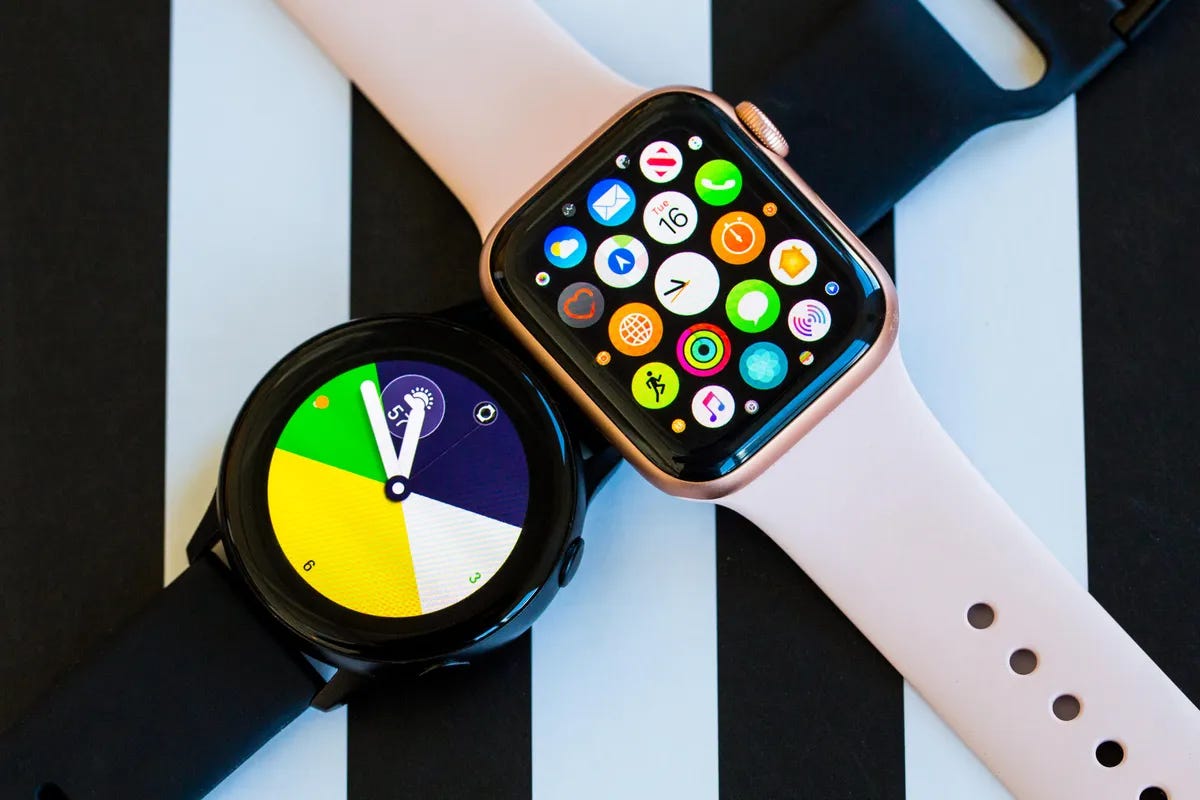
This commitment to excellence extended to design. Collaborations with global experts reshaped Samsung’s aesthetic, transforming it from a producer of useful gadgets to a purveyor of sleek, innovative devices. By the early 2000s, Samsung had emerged as a leader in mobile technology, rivalling giants like Apple.
The Sprint to the Future
January 2012, Cupertino, California. The sun cast long shadows across the Apple campus as Jony Ive stepped out of his sleek Aston Martin and made his way through the manicured grounds of the Infinite Loop. Ive, Apple’s senior VP of Design, carried the weight of a legacy he had helped craft alongside Steve Jobs. He had designed icons, the iPhone, the iPad, the MacBook, but now, with Jobs gone, the question loomed: could Apple still innovate?
Ive’s mind wandered as he paced through the halls, recalling one of Jobs’ final visions, technology that could improve lives by monitoring health. Silicon Valley was buzzing with whispers about wearables, and Fitbit had captured the public’s imagination with its simple yet transformative fitness tracker. As Ive reached his design studio, an idea crystallised: a device that could honour the art of timekeeping while catapulting Apple into a new frontier. On a nearby whiteboard, he wrote a word in his distinctive script: “Smartwatch.”
Ive’s team gathered around. The challenge was clear. The journey toward Apple’s next revolution began in a room where prototypes and sketches lay under black cloth.
Meanwhile, 5,600 miles away, Samsung’s headquarters in Seoul were bustling with activity. The Korean tech giant had quietly accelerated its plans for a wearable device, determined to leapfrog Apple to dominate the wrist. The Galaxy Gear, their prototype smartwatch, was being developed under intense secrecy, with engineers working through nights to meet impossible deadlines.
Samsung executives smelled opportunity. Apple, still reeling from Jobs’ death, seemed vulnerable. The latest iPhone had underwhelmed critics, and patent lawsuits added to their turmoil. If Samsung could bring its smartwatch to market first, it might solidify its position as a true innovator rather than a “fast follower.”
At a high-stakes meeting in Berlin in early 2013, Samsung executives debated how to differentiate their devices. J.K. Shin, Samsung’s head of mobile communications, made it clear: speed was paramount. “The Galaxy Gear must reach shelves before Apple launches anything,” he said firmly.
Back in Cupertino, the Apple boardroom was tense. Apple’s CEO, Tim Cook, presided over a discussion oscillating between cautious optimism and outright scepticism. Not everyone was sold on Ive’s smartwatch concept.
“Do people want another screen buzzing at them all day?” one executive asked. “We’ve spent years making phones indispensable. Won’t this just cannibalise our sales?”
But Ive had an answer for every objection. “The iPod Nano? People were already strapping that to their wrists. And we’ve already patented technology for kinetic charging and heart rate sensors. This isn’t a leap, it’s a step forward.”
Cook finally intervened. “We’re moving forward with this,” he said. “But let me be clear, if the prototype doesn’t amaze us, we kill it.”
By September 2013, Samsung unveiled the Galaxy Gear at the IFA Consumer Electronics Show in Berlin. It is promised to be the must-have accessory with vibrant colours and futuristic design. But the fanfare quickly gave way to disappointment. Reviewers panned the Gear for its clunky interface, limited compatibility, and woeful battery life. Consumers returned nearly a third of the units sold, citing discomfort and poor functionality.
Despite the failure, Samsung achieved one critical victory, beating Apple to market. In boardrooms across Cupertino, the pressure to deliver mounted.
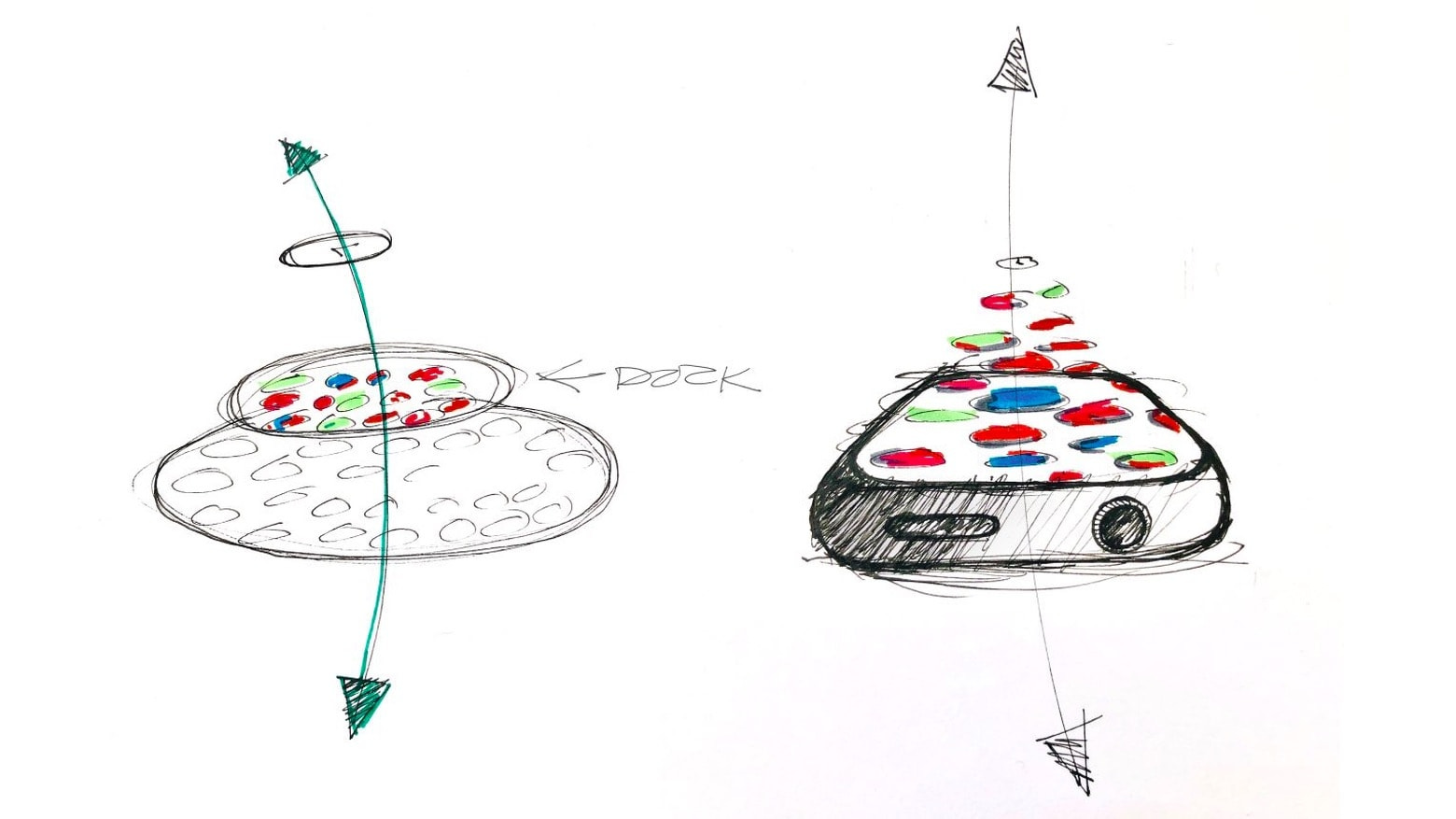
Apple’s response was meticulous. Jony Ive, alongside his trusted collaborator Marc Newson, debated every detail. Should the watch face be circular, echoing traditional timepieces? Or rectangular, reflecting Apple’s sleek, modern design language? Newson sketched a rounded rectangle, proposing a nod to Cartier’s iconic Tank watch but with Apple’s signature simplicity.
The design wasn’t the only challenge. Ive insisted the watch feel personal, almost alive. “Alerts should be intuitive,” he told his team. “A doctor’s message can’t feel like a tweet.” After countless iterations, they landed on subtle vibrations that mimicked human touch, a feature that would become a hallmark of the Apple Watch.
Ive knew that to succeed, Apple’s watch had to transcend its tech roots. It needed to be a fashion statement. In August 2014, Ive presented the Apple Watch to Anna Wintour, editor-in-chief of Vogue, in her Manhattan office. He unveiled various models, from minimalist aluminium to opulent 18-karat gold.
Wintour, known for her discerning eye, was impressed. “It’s lighter than I expected,” she said, turning her wrist to admire the watch. Her endorsement set the stage for the Apple Watch to debut not just as a gadget but as a cultural phenomenon.
When the Apple Watch launched in 2015, it dominated the market, shipping 12 million units and capturing two-thirds of global sales. Samsung, by contrast, saw its share plummet to less than 8%. Yet, the triumph wasn’t without caveats. Critics noted its reliance on the iPhone and its limited battery life. “It’s beautiful, but do you need it?” one headline quipped.
For Apple, the journey was far from over. The smartwatch represented more than a product, it declared that the company could still lead in innovation. For Samsung, the failure of the Galaxy Gear wasn’t the end; it was a catalyst for regrouping and reimagining its approach to wearables.
Saving Seconds, Changing Lives
On an unassuming October morning in 2016, Brian Green settled into his seat aboard a Southwest Airlines flight, ready for a routine business trip. He powered down his Samsung Note 7, a phone heralded as the epitome of innovation but now tainted by whispers of overheating. Moments later, chaos erupted as Green’s pants began to smoke. Passengers scrambled, abandoning bags as thick green-gray fumes filled the cabin. The device had combusted, marking one of over a hundred incidents involving Samsung’s defective batteries.
This incident wasn’t just a public relations disaster. It was a profound test of trust. Memes and mockery spread across the internet as Samsung’s stock plummeted by $17 billion. While Apple celebrated commanding half the smartwatch market with its Apple Watch, Samsung’s reputation smouldered, tarnished by exploding phones and waning consumer confidence.
The stakes for Samsung had never been higher. The smartwatch wars were heating up, and while Apple faced challenges of its own, critics dismissed the early iterations of the Apple Watch as “gimmicky”, the Cupertino-based tech giant still led the market. Samsung, meanwhile, struggled to emerge from the shadow of the Note 7 debacle.
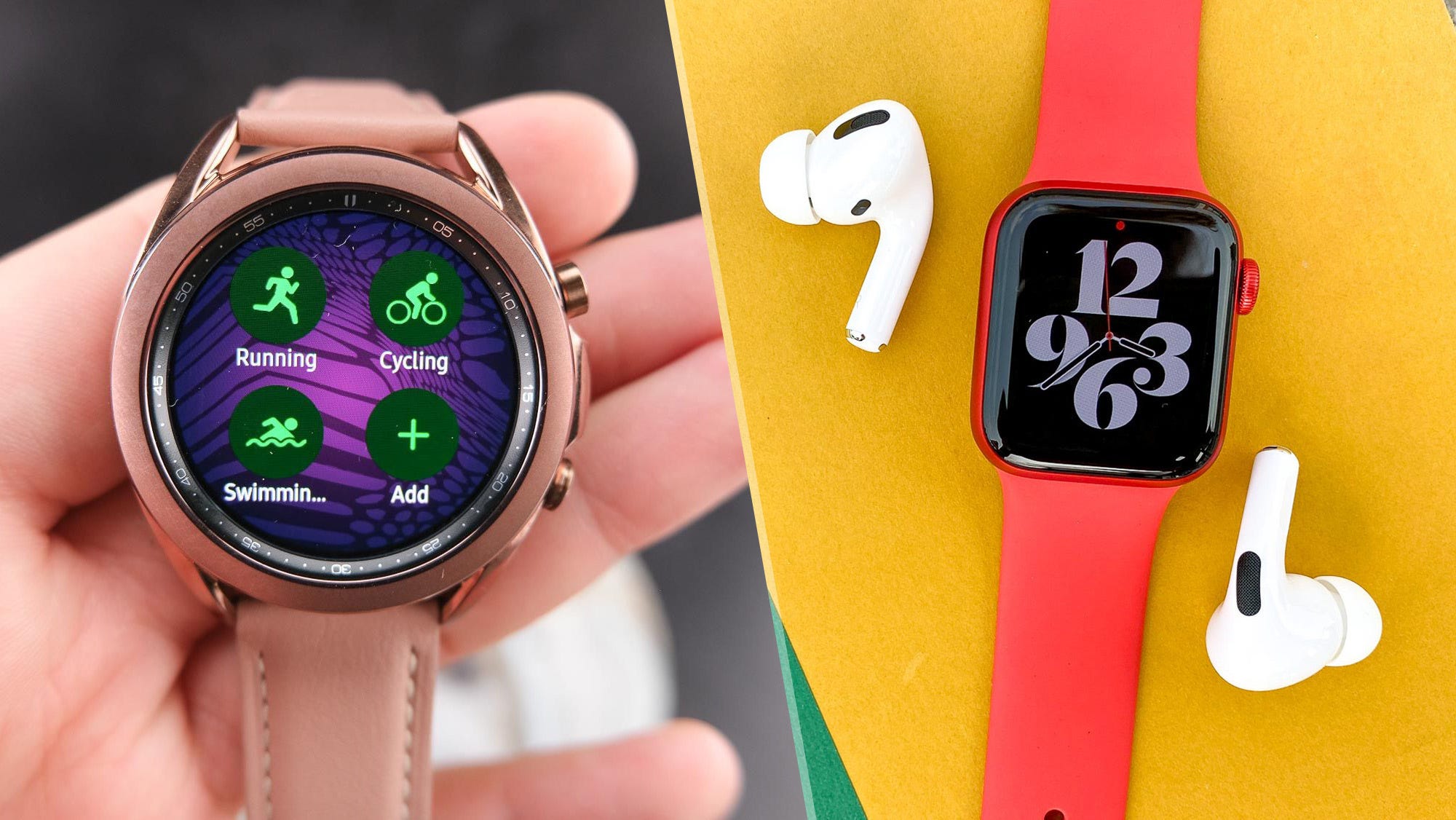
In 2017, Apple unveiled the Series 3 watch, a reinvention that cut the device’s reliance on the iPhone. With cellular connectivity, improved battery life, and a streamlined design, the Series 3 was hailed as a breakthrough. Apple CEO Tim Cook proudly announced at the product launch, “We’ve surpassed Rolex in revenue. Apple is now the largest watchmaker in the world.” The declaration wasn’t just about smartwatches; it was about prestige. In contrast, Samsung was scrambling to retain relevance, lagging behind Apple and newer competitors like Fitbit and Huawei.
Even as Apple celebrated its dominance, its watch was at the heart of an unexpected scandal. In a 2017 baseball game, the Boston Red Sox were caught using a smartwatch to relay decoded signals from opposing pitchers. What could have been a public relations nightmare instead became a cultural moment. The incident put Apple Watch in the limelight, boosting its visibility among younger, sports-loving audiences. By sheer accident, Apple’s product had become a headline generator.
While scandals grabbed headlines, real-world applications solidified the Apple Watch’s place on consumers’ wrists. In Texas, a middle-aged man named Kevin Foley, sitting in a darkened theatre, felt his heart race erratically. His Apple Watch buzzed with an alert: potential atrial fibrillation. Following the device’s advice, he sought medical attention, narrowly avoiding a severe cardiac event. Stories like Foley’s became cornerstones of Apple’s marketing, showcasing the watch’s transformative potential.
By 2018, Apple had taken the narrative further with the Series 4, which featured FDA-approved health tools like an electrocardiogram (ECG) app and fall detection. The message was clear: this wasn’t just a gadget but a lifesaver.
Not to be outdone, Samsung sought to reclaim its footing. With its sleek circular design and innovative rotating bezel, the Galaxy Watch was marketed as a stylish yet functional alternative to Apple’s square-faced timepieces. However, Samsung’s breakthrough came when it embraced Google’s Wear OS in 2021. This pivot to a broader ecosystem unlocked a treasure trove of apps, including those from heavyweights like Google Maps and Korea’s beloved KakaoTalk.
However, Samsung’s gains were hampered by its missteps. A poorly received “Night Owls” ad campaign in 2022, depicting a woman running alone through a deserted city at night, sparked international outrage for its tone-deafness in the wake of several high-profile attacks on women. Critics criticised the company, pointing out the watch’s much-touted safety features required cumbersome setup processes.
Privacy concerns emerged as the smartwatch evolved from a luxury gadget to a health-monitoring tool. In 2023, after the U.S. Supreme Court decided to overturn federal abortion protections, women worried that data from period-tracking apps on their smartwatches could be used against them. Like Melissa, a mother of two, many deleted third-party apps in favour of built-in trackers with enhanced privacy protections. But the damage to consumer trust lingered.
Apple, already entangled in lawsuits over its pulse oximeter’s accuracy for users with darker skin tones, faced new scrutiny. Meanwhile, Samsung seized the moment, focusing on less controversial features like sleep coaching, with adorable cartoon animal mascots tied to users’ sleep patterns. The “exhausted shark” and “nervous penguin” became overnight sensations, helping Samsung carve out a niche in the crowded smartwatch market.
By 2023, Apple boasted 100 million active smartwatch users, commanding 45% of the global market. Samsung trailed at 18%, bolstered by its partnership with Google but still overshadowed. Both companies focused on the next frontier: non-invasive blood glucose monitoring, a feature that could revolutionise wearable technology.
Yet challenges remained. Apple grappled with regulatory hurdles following a patent infringement lawsuit, while Samsung faced a persistent branding gap. The future of the smartwatch wasn’t just about technology; it was about storytelling, trust, and the ability to capture imaginations.
A New Era on the Wrist
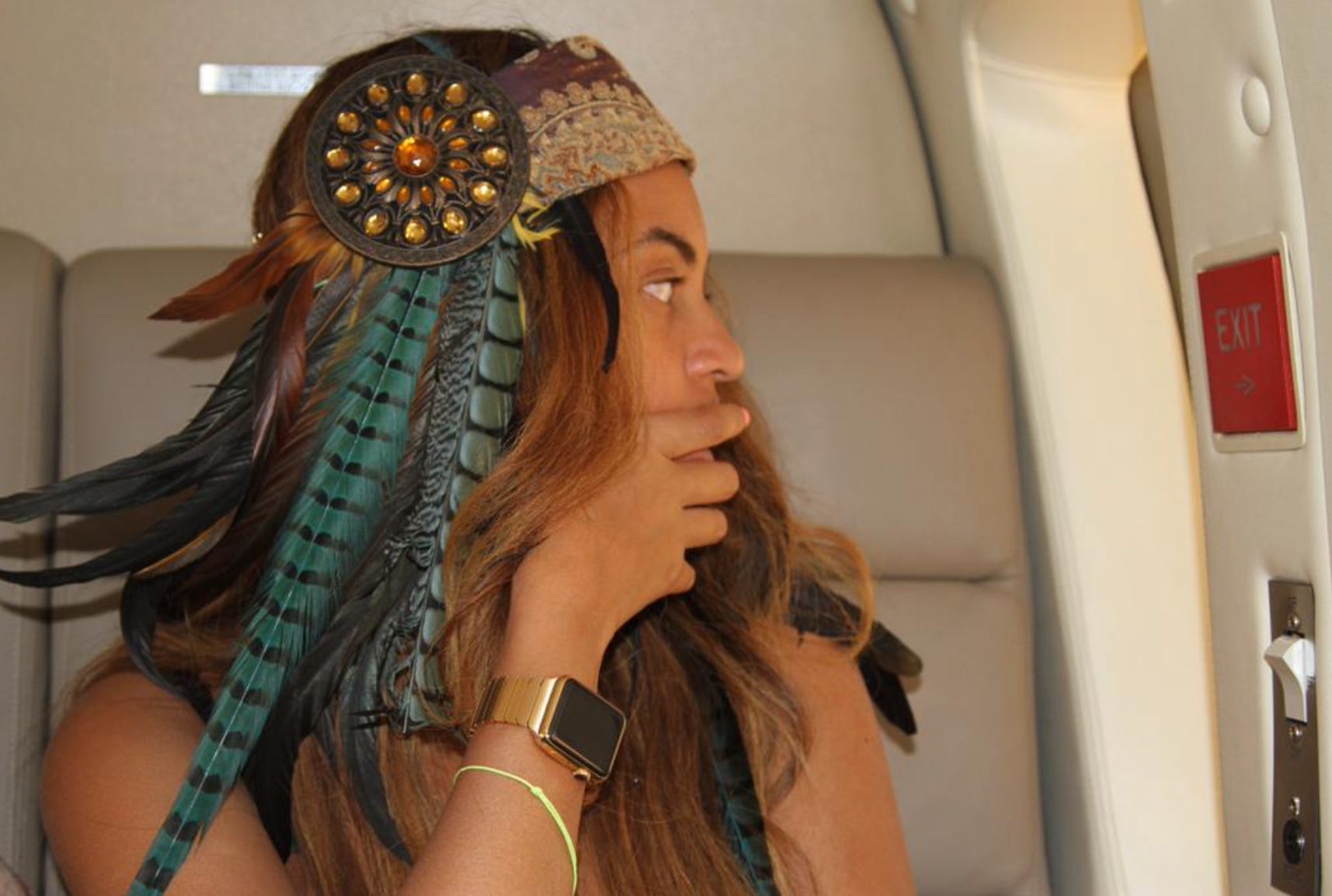
In the summer of 2015, the tech and fashion worlds collided. Apple introduced its Apple Watch with a glitzy campaign that featured luminaries like Karl Lagerfeld and Beyoncé, an unexpected pairing of cutting-edge technology and haute couture. This wasn’t just another device launch, it was Apple’s audacious attempt to reimagine the wristwatch, a product with roots in centuries of tradition, as the next must-have piece of wearable technology.
However, Apple’s vision didn’t immediately resonate with everyone despite the fanfare. The first Apple Watch was an ambitious but imperfect fusion of a fitness tracker, communication tool, and fashion statement. For many, it felt like a solution in search of a problem, a high-tech accessory that did little to justify its price tag. Yet, as history would prove, Apple had planted the seed for a revolution.
The Apple Watch wasn’t born into an easy market. The Swiss watch industry, long unshaken in its dominance, initially dismissed the newcomer. Apple’s early focus on luxury positioning, epitomised by the now-obsolete $10,000 gold Edition model, felt tone-deaf to many traditionalists. Collectors asked why anyone would invest in a wearable technology that would inevitably become outdated, unlike a mechanical heirloom designed to last generations.
For Apple, this was a critical misstep. The company quickly pivoted, shifting its messaging from exclusivity to utility. By emphasising health tracking, notifications, and integration with the iPhone, Apple reshaped its watch not as a competitor to Rolex but as a companion to its broader ecosystem. The strategy paid off. By 2023, Apple commanded 32% of the global smartwatch market, with its competitors struggling to keep up.
It wasn’t just sleek design or clever marketing that secured Apple’s dominance. The turning point came with the introduction of health-focused features that genuinely improved lives. Fall detection, electrocardiograms (ECGs), and alerts for irregular heart rhythms transformed the Apple Watch from a gadget into a life-saving tool. Stories of users crediting the device with identifying heart conditions or calling for help after an accident became powerful testimonials.
These innovations solidified Apple’s reputation as a pioneer in wearable health technology, but they also invited scrutiny. Lawsuits and controversies surrounding the accuracy of the watch’s sensors, particularly for users with darker skin tones, highlighted the challenges of blending consumer electronics with medical-grade technology. Still, Apple forged ahead, refining its algorithms and introducing new features like blood oxygen monitoring and, potentially, non-invasive glucose tracking.
As Apple thrived, the Swiss watch industry adapted rather than resisted. While early fears likened the rise of smartwatches to the Quartz Crisis of the 1970s, which decimated traditional watchmakers, the reality was more nuanced. Companies like Rolex and Patek Philippe doubled down on what made them unique, timeless craftsmanship and exclusivity, while some brands dipped a cautious toe into the smartwatch waters with hybrid designs.
Far from crushing the Swiss industry, Apple arguably revitalised interest in wristwatches. For many young consumers, the Apple Watch was their first foray into wearing a timepiece. Some, drawn by its practicality, remained loyal to smartwatches, while others, intrigued by the broader world of horology, began exploring mechanical watches. This symbiotic relationship blurred the lines between tradition and technology, fostering a new golden age for the wristwatch.
While Apple battled Swiss scepticism, it faced fierce competition in the smartwatch market, particularly from Huawei and Samsung. Leveraging its artificial intelligence and hardware expertise, Huawei introduced a smartwatch with non-invasive glucose monitoring before its rivals. For its part, Samsung carved out a niche with its rotating bezels and seamless integration with Android devices.
Yet both companies struggled to match Apple’s ecosystem advantage. The Apple Watch’s deep integration with the iPhone and proprietary software made it the clear choice for loyal Apple users. Meanwhile, Huawei and Samsung split the Android market, each securing a smaller slice of the pie.
As the smartwatch market matured, questions emerged about its future. Were we approaching peak adoption, or was there room for further innovation? Apple’s Vision Pro headset hinted at a broader strategy: wearables could extend beyond the wrist. Similarly, advancements in augmented reality glasses suggested a future where smartwatches might no longer be the primary interface for on-the-go information.
However, the Apple Watch remains central to Apple’s vision. The company continues to push the boundaries, exploring new materials, expanding health capabilities, and refining its user experience. Meanwhile, competitors innovate in their ways, ensuring that the race for the wrist remains dynamic.
The Apple Watch has done more than claim market share, it has redefined what a watch can be. From tracking steps to saving lives, it has woven itself into the fabric of daily life for millions. And while its gold-plated ambitions may have fallen short, its broader impact on technology and culture is undeniable.
As we look to the future, the smartwatch’s evolution reminds us of a timeless lesson: true innovation isn’t just about invention, it’s about reinvention.
Corporate Clashes Series by Samuel H. Vance
‘Apple Watch and Samsung: Redefining Time’ is a serialised extract from Samuel H. Vance’s Corporate Clashes series of books.
You can order Corporate Clashes on Amazon
