


October 1996, Yankee Stadium. The cheers for the Atlanta Braves echo through the stands as Ted Turner, the 57-year-old media mogul, claps enthusiastically. Yet, as the game resumes, Turner’s smile fades. His focus drifts not to the Braves’ potential World Series victory but to Rupert Murdoch, the man threatening CNN’s dominance. Murdoch’s new venture, the Fox News Channel, looms large in Turner’s thoughts.
Turner’s concern is justified. While CNN revolutionised the news landscape as the first 24-hour news network, Fox News is poised to challenge that position aggressively. Time Warner, now the parent company of Turner Broadcasting, refuses to carry Fox News in several major markets. The tension escalates as Murdoch retaliates with a campaign to provoke Turner and draw public attention. A small plane circles Yankee Stadium trailing a banner: “Hey Ted, be brave. Don’t censor Fox News.”
Turner masks his irritation with a forced smile, knowing full well that Murdoch has cameras trained on his reaction. He whispers to his wife, Jane Fonda, “He’s playing dirty, as usual.” Her response is calm but pointed: “And you’ve never thrown a punch?” The game continues, but Turner’s mind is already strategising his next move in the escalating battle of the airwaves.
Both audacity and scepticism marked the genesis of CNN in 1980. Turner’s vision for a 24-hour news channel seemed impractical to many. Turner unveiled his ambitious plan at the Western Cable Show in Anaheim, California. “We’ll deliver constant updates, news, business, sports, all day, every day,” he announced to a room of sceptical cable operators. A journalist questioned the feasibility: “NBC spends millions on just a few hours of news. How can you fill 24 hours on a fraction of their budget?” Turner replied with conviction: “By redefining how news is delivered.”
The challenge was monumental. How could CNN fill 24 hours when breaking news wasn’t always available? Senior producer Ted Kavanau addressed this issue with a bold solution: “When news is scarce, we’ll replay existing stories until new ones come in.” His team rallied, and CNN went live on June 1, 1980, setting the stage for a new era in journalism.
CNN’s breakthrough moment came unexpectedly on March 30, 1981, during an assassination attempt on President Ronald Reagan. While traditional networks awaited their scheduled evening broadcasts, CNN delivered a real-time, unpolished stream of updates. Anchors emphasised transparency: “Details are still unclear, but here’s what we know so far.” This raw, immediate coverage captivated viewers and demonstrated the power of 24-hour news.
Despite this success, CNN struggled financially in its early years, losing millions monthly. Critics questioned its viability, but Turner remained steadfast. “To understand the world, people need to see it unfold as it happens,” he insisted. His determination led to CNN’s expansion into international markets, transforming it into a global news powerhouse by the mid-1980s.
Turner’s vision extended beyond American borders. He believed that offering balanced, international perspectives could foster understanding. This approach gained traction in 1991 during the Gulf War. CNN’s live coverage from Baghdad offered a firsthand view of the conflict, setting it apart from competitors. Turner’s gamble, investing heavily in Middle East coverage, paid off, as millions tuned in to witness history in real time. A colleague reflected, “Ted always saw the big picture, and this time, so did the world.”
Murdoch’s Fox News took a different path. Instead of emulating CNN, it embraced a provocative style, blending news with opinion. An executive described the strategy as “talk radio with visuals.” Fox News paid cable providers to carry its channel to secure distribution, bypassing the traditional model. Murdoch justified the expense: “We’re investing in future dominance.”
The rivalry between CNN and Fox News became as much about ideology as ratings. While CNN sought impartiality, Fox News catered to a distinct demographic, reshaping cable news. Murdoch’s calculated moves pushed Fox News into millions of homes, igniting a media revolution.
The battle between CNN and Fox News underscores a fundamental truth: the ability to adapt and innovate is crucial in media. Turner’s CNN succeeded because it redefined news delivery, while Murdoch’s Fox News thrived by offering a distinct alternative. Both pioneers understood that staying relevant required responding to change and driving it.
Today, their legacies endure, reminding us that the relentless pursuit of a vision, whether through revolution or reinvention, can reshape industries and redefine expectations.

Battle for the Airwaves
January 1996, midtown Manhattan. Rupert Murdoch and Roger Ailes stand together in the heart of News Corp’s headquarters before a crowd of reporters. For Murdoch, the announcement of Fox News Channel marks the culmination of years of preparation to disrupt the 24-hour news cycle. For Ailes, recently ousted from NBC, it’s a chance at reinvention.
Murdoch introduces the venture with characteristic confidence. “As the pace of change accelerates, people want more than headlines, they want to understand how the news impacts them personally,” he explains. The room buzzes as Ailes adds his pitch: “We’re here to give audiences news that matters to them. No fluff, no spin, just the facts.”
But the scepticism is palpable. A reporter raises his hand, asking, “How will Fox News remain unbiased given its leadership’s political connections?” Ailes answers with a practised smile: “We’re committed to being fair and balanced. Our goal is to serve the viewer, not an agenda.”
Yet the road ahead is fraught with challenges. Fox News’ $80 million annual budget is a fraction of CNN’s, and Turner Broadcasting, now part of the powerful Time Warner conglomerate, is prepared to block Fox News at every turn. One Time Warner executive privately muses, “If Murdoch wants a fight, he’ll get one, but not on our networks.”
June 1996. In a sleek Manhattan office overlooking the skyline, Rupert Murdoch sits across from John Malone, the head of TCI, the nation’s largest cable provider. Murdoch knows Fox News could be dead on arrival without Malone’s support. The two exchange wary glances, each aware of the other’s influence.
Murdoch begins, “We’re prepared to invest significantly to ensure Fox News is a success. We’ll cover all distribution costs for three years.” Malone doesn’t blink. “Rupert, space is limited, and my subscribers already have CNN and MSNBC. Why should I sacrifice a channel people watch for one they may not?”
Murdoch leans forward. “Because this network will serve an audience that feels overlooked. There’s room for a news channel with a fresh perspective.” After a moment of silence, Malone responds, “Fine. I’ll clear the way, but I want a stake in Fox News.”
Murdoch agrees, and TCI becomes a critical ally. But the battle isn’t over. Time Warner remains a formidable obstacle, refusing to carry Fox News in major markets like New York. “They’re playing hardball,” Murdoch tells Ailes. “We need to hit back.”
September 1996. Time Warner’s refusal to carry Fox News sets off a media firestorm. At a city hall meeting in New York, Ailes delivers a scathing critique: “Time Warner is trying to deny viewers choice. They’ve turned cable into a monopoly controlled from Atlanta.” His point of reference to Ted Turner is unmistakable.
Never one to back down, Turner responds in kind during a deposition. “Murdoch’s tactics are transparent. He’s trying to strong-arm his way into the market with political muscle.” The clash spills into the press, with the Murdoch-owned New York Post publishing inflammatory stories about Turner. One headline reads, “Is Ted Turner Losing His Grip?”
The confrontation escalates as Fox News turns to political allies for support. Mayor Rudy Giuliani, a Murdoch confidant, attempts to force Time Warner’s hand by reallocating public access channels to Fox News. The move triggers lawsuits, but the narrative of Fox as the scrappy underdog gains traction.
By mid-1997, the stalemate began to break. At a media summit in Sun Valley, Idaho, Murdoch and Time Warner’s CEO, Jerry Levin, meet to negotiate. Murdoch, ever the strategist, presents a compromise. “Let’s phase Fox News into your systems. Start with three million homes this year and expand gradually.”
Levin hesitates but recognises the pressure mounting from political and public scrutiny. He agrees, albeit with concessions: higher launch fees and limited stakes in other ventures. The deal was costly for Murdoch but secured Fox News’ future. “The war is won,” Murdoch tells his team, “but the real battle, winning viewers, starts now.”
October 1996. Fox News Channel launches with a bold strategy: blend traditional news with dynamic opinion programming. The aim is precise, differentiate from CNN’s polished objectivity by offering a more conversational, audience-focused approach.
The gamble paid off during the Clinton-Lewinsky scandal. While CNN and MSNBC stick to formal reporting, Fox News leverages its talk-show format to dissect every detail. Hosts debate morality and politics, engaging viewers who crave analysis over headlines. By early 1999, Fox overtook MSNBC, cementing its position as CNN’s primary rival.
Yet, the competition remains fierce. CNN’s global coverage gives it an edge during international crises, while Fox thrives on domestic drama. As the news cycle shifts, so too does each network’s dominance, a testament to the unpredictable nature of the media landscape.
The fight between Fox News and CNN reshaped television journalism, offering a case study of the power of persistence and adaptation. Murdoch’s willingness to invest in distribution and Ailes’ instinct for audience engagement turned a fledgling channel into a formidable competitor. Meanwhile, CNN’s expansion into global reporting underscored the value of staying true to core principles.
Ultimately, both networks emerged as forces to be reckoned with, proving that innovation and determination are the ultimate keys to success in the battle for the airwaves.

News Wars: Anchors of Influence
September 11, 2001. Atlanta. In CNN’s bustling newsroom, Kevin McAllister, the managing editor, has both hands full, one clutching a phone, the other monitoring live feeds streaming from New York City. The grim reality of the World Trade Center attack is unfolding in real-time, and chaos grips the newsroom. “Get everyone en route to Manhattan now,” McAllister barks into one receiver. His gaze shifts to the screens showing graphic scenes of devastation outside the Twin Towers. He shouts across the room, “That footage, too raw. Keep it off the air!”
Walter Isaacson, CNN’s new leader, paces behind him. Isaacson, who took the helm two months earlier to shore up CNN’s lead over Fox News, surveys the footage. “This is the story of the century,” he says firmly. “Let’s not hold back, but ensure we show humanity, not horror.”
Across the country, similar scenes of urgency play out in Fox News’ headquarters. Though CNN is trailing in viewership, Fox has started positioning itself as the voice of patriotism. Both networks pivot their formats on that fateful day, introducing the now-ubiquitous scrolling ticker. While CNN planned to launch its ticker in November, the events of 9/11 accelerated the timeline. Still, Fox beat them to it by 22 minutes.
That night, as President George W. Bush vowed retribution, CNN held the ratings crown, drawing 7.7 million viewers compared to Fox’s 4.4 million. It seemed CNN was poised to dominate the post-9/11 era. But war, as the saying goes, is unpredictable, and so is the media landscape.
As America prepared to invade Afghanistan, CNN’s global footprint was an invaluable asset. With over 70 correspondents across the Middle East, the network had an unmatched ability to cover the unfolding conflict. By contrast, Fox News had a skeleton crew of just four international reporters.
However, Fox wasn’t playing CNN’s game. Instead of trying to replicate its rival’s global infrastructure, Roger Ailes, Fox’s chief, focused on cultivating a brand of unapologetic patriotism. Fox labelled al-Qaeda operatives “terror goons” while anchors wore American flag pins on air. “We’re here to bolster the American spirit,” Ailes would later tell his team. “People want to believe in their country, especially in times of crisis.”
Fox’s strategy wasn’t limited to tone. It also poached CNN talent, including veteran correspondent Steve Harrigan, who defected after feeling undervalued. “Fox offered me stability and respect,” Harrigan said in an interview, alluding to CNN’s cost-cutting measures. His defection marked a symbolic shift, highlighting Fox’s growing appeal as a serious contender in the international news arena.
As the war on terror escalated, CNN and Fox adopted starkly different approaches to coverage. CNN’s reporting adhered to traditional journalistic standards, emphasising analysis and objectivity. In contrast, Fox leaned into its opinion-heavy programming, catering to a domestic audience eager for reassurance and unity.
The divergence was particularly evident in prime time. Fox’s top-rated show, The O’Reilly Factor, regularly guests with opposing viewpoints, only for host Bill O’Reilly to eviscerate them on-air. The aggressive style resonated with viewers who saw it as a bold alternative to CNN’s measured tone. “People don’t tune in for neutrality,” a Fox producer observed. “They tune in for passion.”
By early 2002, Fox’s strategy began paying off. While CNN still attracted larger audiences for breaking news, Fox excelled in maintaining viewership during quieter periods. Its core audience grew, not by poaching CNN’s viewers but by tapping into an underserved demographic of cable news sceptics. This distinction helped Fox achieve a significant milestone: overtaking CNN in total day ratings.
January 2002. Roger Ailes called a celebratory meeting at Fox News’ Manhattan headquarters. “For the first time, we’ve beaten CNN in daily viewership,” he announced with a triumphant grin. “But don’t let it go to your head. This is just the beginning.”
Ailes was right. The ratings victory marked a turning point, but sustaining it required innovation. Fox capitalised on its momentum by renegotiating higher carriage fees from cable providers, doubling its monthly revenue. These funds were reinvested into talent acquisition and expanded programming, reinforcing Fox’s dominance.
Meanwhile, CNN grappled with an existential dilemma: Should it follow Fox’s formula or double down on its identity as the “most trusted name in news”? Under the leadership of Walter Isaacson, the network opted for the latter. “Our strength lies in credibility,” Isaacson argued at an executive retreat. “Let’s stick to what we do best.”
The Iraq War of 2003 allowed both networks to cement their influence. CNN deployed its extensive team of correspondents, delivering frontline reports with gravitas. Fox, by contrast, infused its coverage with emotional appeal, patriotic music, bold graphics, and relentless optimism about the U.S. mission. Both approaches found their audiences, but Fox’s resonated more deeply with a country seeking reassurance.
The iconic image of Saddam Hussein’s statue toppling in Baghdad became a case study of how the networks diverged. Fox framed it as a defining moment of victory, while CNN offered nuanced context about the broader implications of the war. The contrast encapsulated their respective missions: CNN as the chronicler of facts, Fox as the champion of a narrative.
The post-9/11 era and ensuing wars reshaped cable news, but perhaps more importantly, they revealed the power of differentiation. CNN’s global reach and journalistic rigour set it apart, while Fox’s emotionally charged storytelling built an unshakable bond with its viewers.
As the two networks continue their rivalry, the lessons of those years endure. Success in media isn’t just about covering the news, it’s about understanding your audience’s needs, fears, and aspirations. For Fox, that meant becoming a source of comfort and identity. For CNN, it meant holding the line on impartiality in a world increasingly divided by ideology.
Echoes of Power: The Media and Political Divide
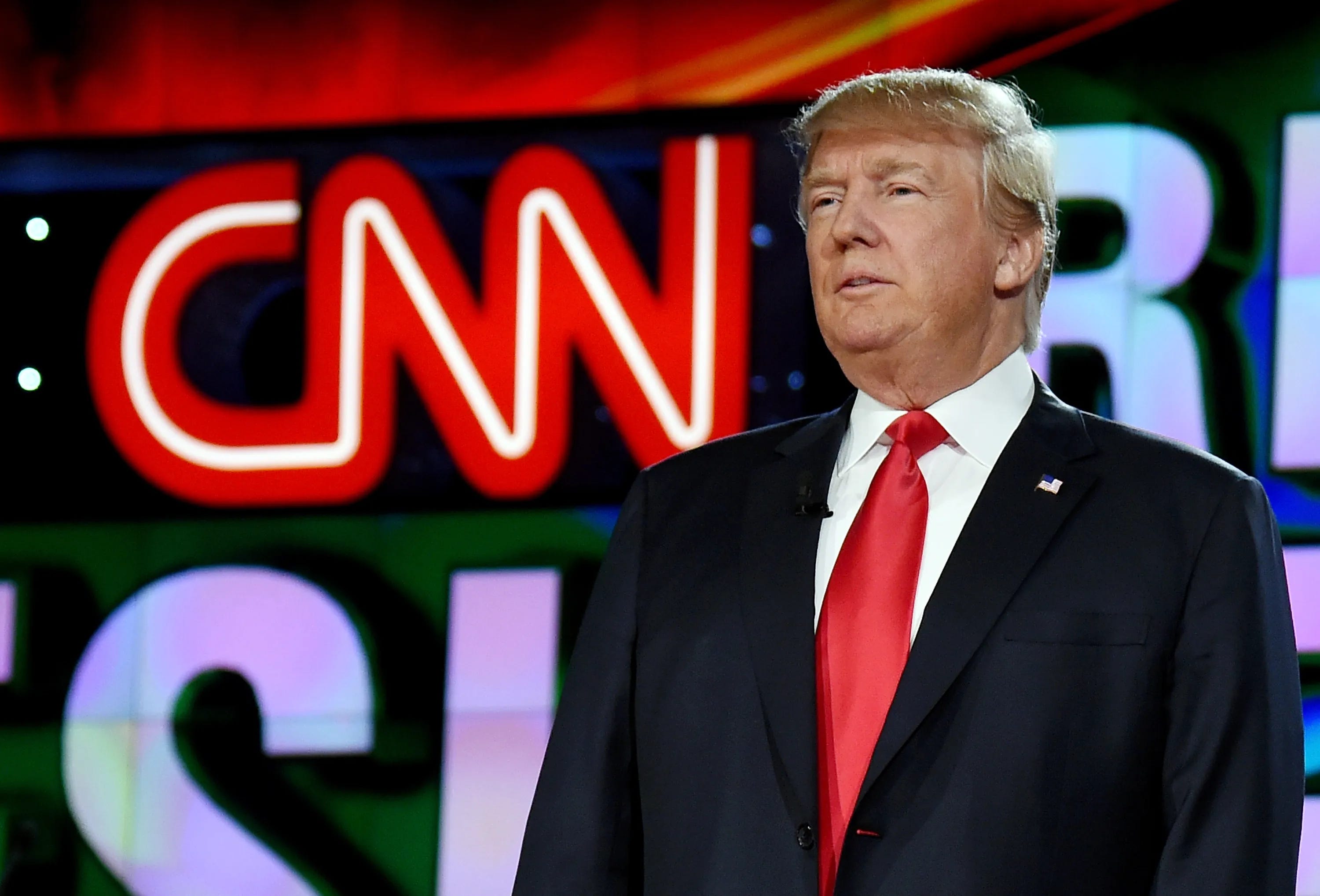
February 2017, Washington D.C. In CNN’s bustling control room, the air is electric. Producers huddle around a massive panel, overseeing dozens of live feeds. On one screen, Kellyanne Conway stands poised on the South Lawn of the White House. The senior advisor’s cream-coloured suit is as sharp as her readiness to spar. It’s been 18 days since Donald Trump’s inauguration, and his public battle with CNN has only intensified. Dubbed “fake news” by the President, the network is aware of today’s interview’s stakes.
Jake Tapper, one of CNN’s leading anchors, readies himself to confront Conway on Trump’s claim that the media underreports terrorism. “We’ve got the footage queued,” a producer says, his tone crisp with anticipation. Another producer mutters, “She looks shiny on screen,” prompting CNN chief Jeff Zucker to glance up. Zucker, known for his hands-on approach, waves it off. “She’s fine,” he says, pacing behind the team.
Zucker and Trump share a storied history. As the former head of NBC Entertainment, Zucker had greenlit The Apprentice, transforming Trump from a tabloid fixture into a household name. Now, as adversaries, their relationship fuels ratings. “Keep Jake’s reactions on screen,” Zucker directs. “This one’s going to make waves.”
The interview begins with a volley of questions about Trump’s controversial statements. Tapper challenges Conway on claims that the media ignores terrorism. Footage of CNN reporters covering recent attacks plays on split-screen, accompanied by a chyron that reads: “Extensively Covered: Terror Attacks on Trump’s List.”
“Kellyanne,” Tapper presses, “we report these events constantly. Isn’t it misleading to suggest otherwise?”
Conway counters with her signature rhetorical dexterity: “The President’s point is that the magnitude of the threat is often downplayed.” Zucker watches intently, a faint smile playing on his lips. He knows that the clash, however contentious, will serve both sides. For CNN, it reinforces their credibility; for Trump, it bolsters his narrative of a biased media.
Ratings climb. Inside CNN’s headquarters, the mood is triumphant. Yet Zucker is acutely aware that the network’s new role as Trump’s media foil is a double-edged sword. While it has boosted viewership, CNN’s prime-time ratings surged by 70% over the past year, it has also polarised the audience. Those who distrust CNN now loathe it; those who value it view it as a bulwark of truth.
Meanwhile, Fox News charts a different course. While CNN leans into its role as Trump’s critic, Fox positions itself as his staunchest ally. Fox’s newly appointed CEO, Suzanne Scott, focuses on fortifying the network’s conservative base. From opinion shows that champion Trump’s agenda to programming that amplifies his grievances, Fox refines its identity as the President’s preferred platform.
The strategy bears fruit. During the 2018 midterms, Fox debuted its proprietary voter analysis poll, designed to outpace rivals in accuracy and speed. At 9:32 PM, the network calls the House of Representatives for the Democrats, a full hour ahead of CNN. “We’re not just the fastest,” a Fox executive declares, “we’re the most reliable.”
By 2019, the media landscape reflects the nation’s deepening divisions. At CNN, Zucker embraces the network’s role as a polarising force. “Conflict drives engagement,” he tells his team, emphasising the ratings boost from Trump-era controversies. Fox, meanwhile, perfects its formula of opinion-driven programming.
The two networks diverge not only in content but in strategy. CNN’s digital dominance continues, with 121 million unique monthly visitors dwarfing Fox’s 105 million. Yet Fox’s revamped website narrows the gap, prioritising loyal users over casual clicks. By the year’s end, Fox’s digital growth rivals CNN’s longstanding online supremacy.
November 3, 2020. Election night is a high-stakes drama, with Fox and CNN vying for supremacy. Fox seizes the moment with its Arizona call for Biden, a decision rooted in its voter analysis data but met with immediate backlash from Trump’s base. Inside the White House, Trump fumes, urging aides to pressure Rupert Murdoch into reversing the call. Fox stands firm, yet the fallout is swift. Enraged viewers defect to fringe networks like Newsmax, seeking an echo chamber for Trump’s baseless claims of voter fraud.
The days that follow bring chaos. CNN declares Biden the winner on November 7, solidifying its journalistic stance. Fox, however, faces an existential dilemma. To retain its audience, it amplifies unsubstantiated claims about Dominion Voting Systems. Anchors tread carefully, balancing journalistic caution with the need to placate loyal viewers.
In early 2021, the repercussions of Fox’s post-election strategy became clear. Dominion sues for $1.6 billion, alleging defamation. Internal documents unearthed during discovery reveal that some Fox executives and anchors privately dismissed Trump’s fraud claims as baseless while promoting them on-air. Rupert Murdoch admits under oath that Fox commentators “endorsed” false narratives.
The lawsuit culminates in a staggering settlement of nearly $800 million. The fallout reshapes Fox’s programming, leading to Tucker Carlson’s abrupt departure. Yet, despite these setbacks, Fox’s ratings rebound. By the end of 2023, it remained the top-rated cable network, averaging 1.9 million viewers in prime time.
CNN, meanwhile, needs help to reclaim its footing. Its ill-fated streaming venture, CNN Plus, collapses within a month, and viewership dwindles as the network experiments with a less aggressive tone. By the year’s end, CNN had trailed Fox and MSNBC, fracturing its identity.
The rivalry between Fox and CNN underscores a profound truth: the business of news is as much about understanding audiences as it is about delivering facts. Fox succeeded by forging an emotional connection with its viewers, offering information and affirmation. In its pursuit of impartiality, CNN alienated some and enthralled others but ultimately struggled to adapt to a media ecosystem driven by tribal loyalty.
One lesson remains apparent in the ever-evolving media world: success isn’t just about reporting the news, it’s about shaping the story your audience wants to hear.
Corporate Clashes Series by Samuel H. Vance
‘Newsroom Rivals: Fox News and CNN’ is a serialised extract from Samuel H. Vance’s Corporate Clashes series of books.
You can order Corporate Clashes on Amazon
