

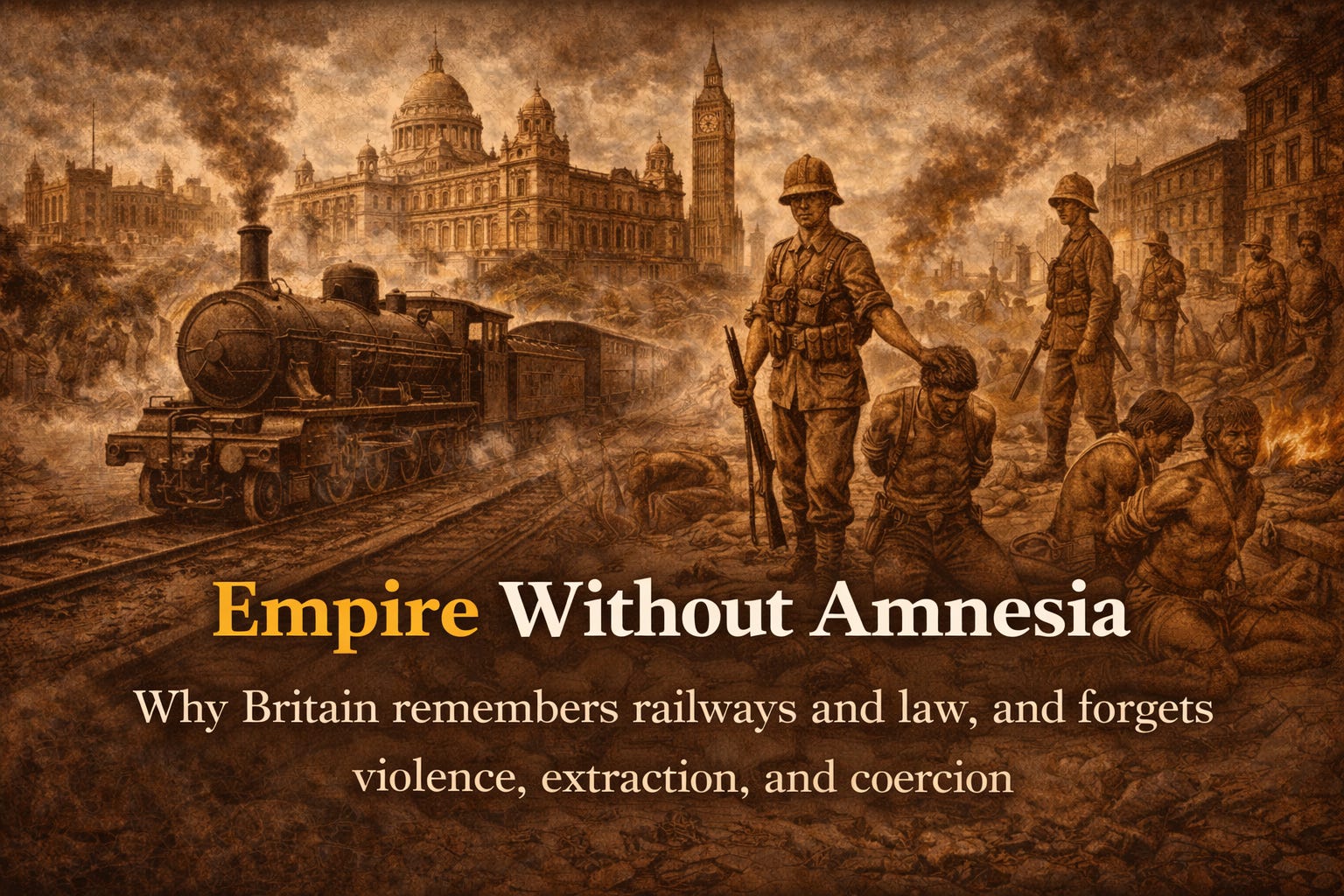
Walk into a modern museum gift shop and you will find tea towels, mugs, and tasteful illustrations of steam trains and grand buildings. The past is comforting when it is portable. Empire has been reduced to a brand, polished, selective, reassuring. Somewhere between the souvenirs and the captions, memory quietly edits itself.
This is how amnesia works. Not through denial, but through emphasis.
Empire as a story of benefits
Ask how empire is often described and the language is strikingly consistent. Railways. Administration. Trade. Law. A sense of order brought to chaotic places. These claims are not entirely invented. Infrastructure was built. Systems were imposed. Commerce expanded.
What is missing is the ledger.
Railways existed to move resources out, not prosperity in. Legal systems protected imperial interests before local lives. Trade enriched the metropole while hollowing out economies elsewhere. Order was maintained through force, surveillance, and punishment.
Empire did not accidentally produce violence. It required it.
Extraction dressed as development
The wealth that fuelled Britain’s industrial rise did not emerge from ingenuity alone. It flowed from colonies stripped of raw materials, labour, and autonomy. Cotton, sugar, tea, rubber, minerals. Each commodity carried human cost.
Land was seized. Agriculture was reoriented away from subsistence and towards export. Local industries were dismantled to prevent competition. Famine followed policy, not weather. When millions starved, officials debated efficiency rather than responsibility.
Development was a one way street. Growth at the centre depended on depletion at the edges.
Violence without villains
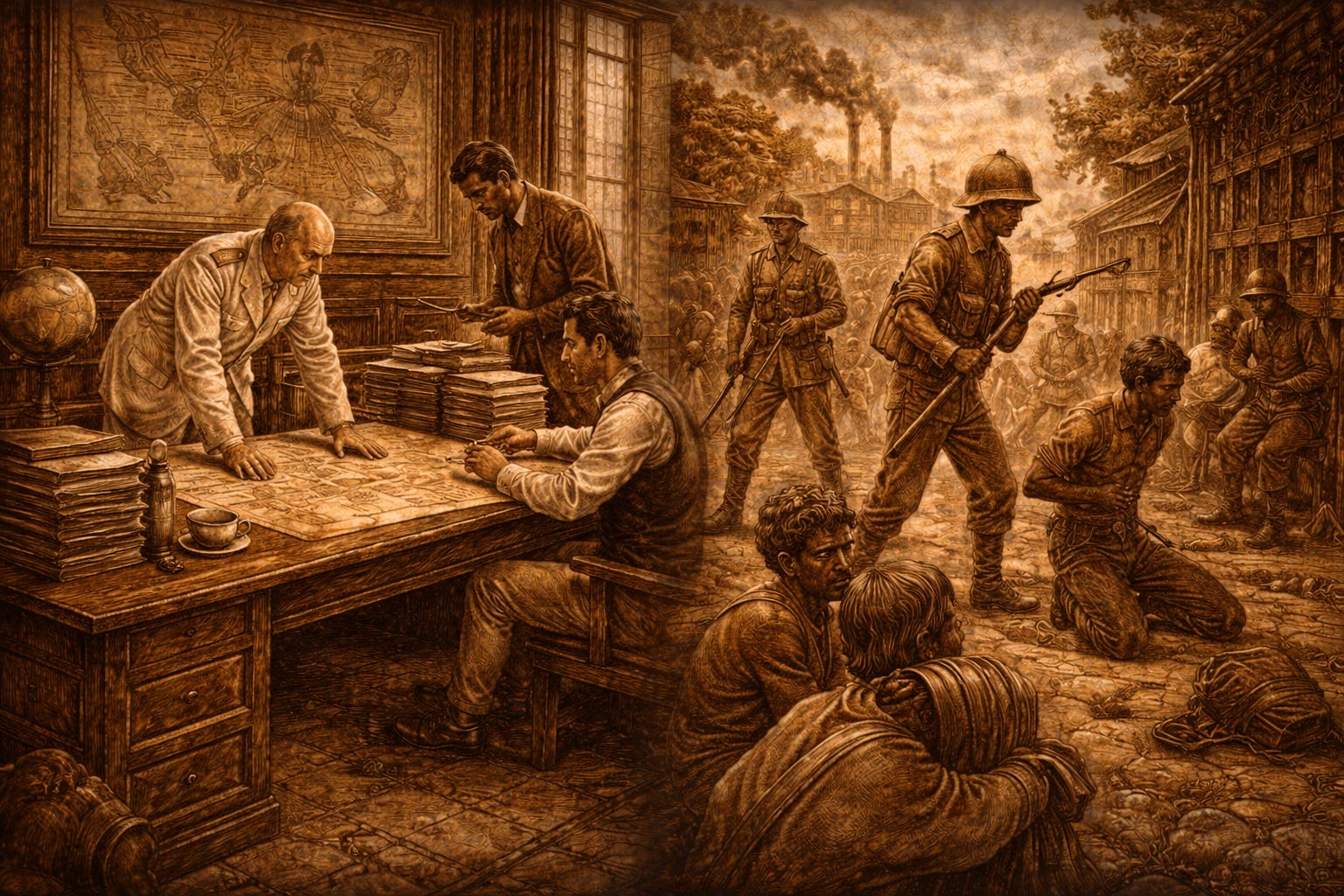
One of the most effective tricks of imperial memory is to remove agency. Violence appears as background noise rather than deliberate action. Rebellions are described as disturbances. Crackdowns as regrettable necessities.
But violence was organised, systematic, and sanctioned. Mass executions, collective punishment, detention camps, and torture were tools of governance. They were debated, authorised, and repeated.
When atrocities surface, they are framed as exceptions. A few bad apples. An excess of zeal. This framing protects the larger structure from scrutiny. Empire becomes well intentioned but flawed, rather than fundamentally coercive.
Silence as inheritance
The greatest success of empire may be what it taught its successors about forgetting. Archives were destroyed. Records sanitised. Stories marginalised. Descendants of the colonised were expected to assimilate into a narrative that had already decided what mattered.
At home, education reinforced selective memory. Empire became backdrop rather than subject. A stage for explorers and administrators, not for those who endured its rule. Nostalgia filled the gaps left by silence.
This inheritance shapes how debates unfold today. Calls to acknowledge imperial violence are dismissed as anachronistic or divisive. Pride is defended as though honesty were an attack.
Why amnesia persists
Amnesia survives because memory threatens identity. To confront empire honestly is to question the story Britain tells about itself. Benevolent. Fair minded. Reluctantly powerful.
There is also fear of consequence. Acknowledgement raises uncomfortable questions about responsibility, inequality, and continuity. It exposes how past extraction echoes in present global disparities.
Forgetting is easier. Selective pride is lighter to carry than reckoning.
Ending where we began
Return to that museum shop. The objects are neat. The story is smooth. Nothing demands reflection beyond admiration. Yet history does not owe us comfort.
Empire was not a misunderstanding. It was a system that transferred wealth through coercion and maintained control through violence. Remembering that does not erase achievements. It places them in context.
Amnesia is not neutrality. It is a choice. And like all choices about the past, it shapes the future we are willing to imagine.
I'm unable to subscribe..why please
Nice reader 😄💯